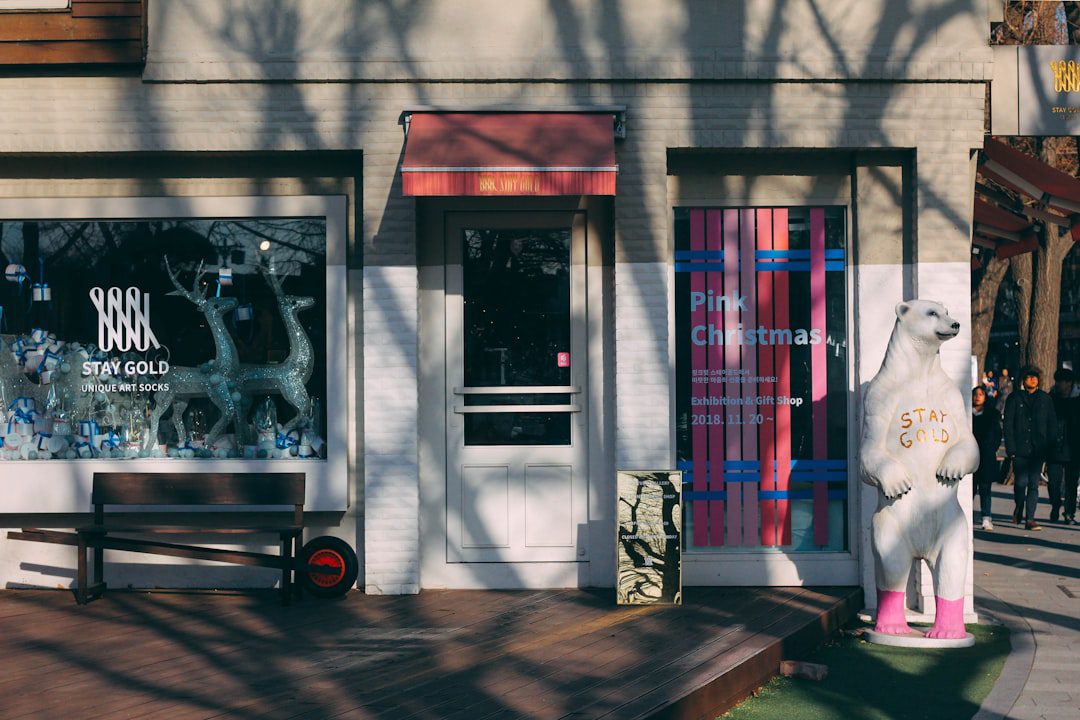
I was standing outside the Gentle Monster flagship store on Gangnam’s tree-lined Garosu-gil about fifteen years ago—when the brand was still relatively unknown to international visitors—and I remember thinking, “This isn’t a glasses shop. This is an art installation that happens to sell eyewear.”
Fast forward to today, and Gentle Monster has become Seoul’s most photographed retail destination, attracting queues of Instagram-hungry tourists from around the world. But here’s what most visitors don’t realize: Seoul’s design store scene extends far beyond one eyewear brand. The city is absolutely bursting with Korean design-forward boutiques that are just as visually stunning and culturally significant.
After 35 years of living here, I’ve watched Seoul transform from a pragmatic shopping city (hello, Myeongdong) into a genuine design capital where architecture, aesthetics, and commerce blend into immersive experiences. Whether you’re a designer, an Instagram addict, or just someone who appreciates beautiful retail spaces, this guide will take you to Seoul’s most stunning design stores—and give you the insider tips that’ll make your visits actually memorable.
Gentle Monster: More Than Just Sunglasses
Let me start with the obvious: Gentle Monster has become synonymous with Korean design retail. The brand was founded in 2002 by Hye-jin Kim, and it’s evolved from a small eyewear store into an international phenomenon with stores in Paris, Tokyo, and New York. But Seoul remains the creative heart, and the flagship locations here are genuinely unlike anything you’ll find elsewhere.
Garosu-gil Flagship (Gangnam)
The original Garosu-gil store is the one that put Gentle Monster on the map internationally. It’s housed in a narrow, multi-story building that looks like something out of a dystopian film—all black surfaces, minimal signage, and an almost fortress-like exterior. When you step inside, each floor is a completely different artistic concept.
Ted’s tip: The store is deceptively large—it spans five floors, and many visitors only see the first two before leaving. Go all the way up. The rooftop terrace offers one of the best views of Gangnam’s residential streets, and it’s where locals often grab photos without the crowds of the street level.
The products aren’t the focus here; they’re secondary to the experience. You’ll find sunglasses priced anywhere from ₩200,000 to ₩450,000, but visitors often spend 30-45 minutes just exploring the space without buying anything. That’s by design—literally.
| Garosu-gil Location Details | Information |
|---|---|
| Address | 517 Nonhyeon-ro, Gangnam-gu |
| Nearest Subway | Gangnam Station (Line 2), Exit 10 (15-min walk) |
| Hours | 11 AM – 9 PM daily |
| Price Range | ₩200,000 – ₩450,000 |
| Best Time to Visit | Weekday mornings (9-11 AM) for fewer crowds |
| Photography | Permitted throughout |
Myeongdong & Apgujeong Locations
Gentle Monster has secondary flagship locations in Myeongdong (the tourist shopping district) and Apgujeong (the luxury hub). The Myeongdong store is smaller and more crowded—expect tour groups. The Apgujeong location, near the Dior boutique, is sleeker and caters more to wealthy Seoulites buying expensive frames.
If you’re already in Apgujeong exploring the luxury shopping scene, the Gentle Monster there is worth a stop. But for the true experience, Garosu-gil is where you want to be.
The Seoul Design District: Beyond Gentle Monster
Now, here’s what the Instagram tourism industry doesn’t want you to know: some of Seoul’s most stunning design retail spaces aren’t household names, and they’re infinitely less crowded than Gentle Monster.
Seongsu-dong: Seoul’s Brooklyn Moment
I first started hearing about Seongsu-dong from younger creatives in the early 2010s. It’s an old industrial district in eastern Seoul that’s been slowly transformed into a hub for independent designers, galleries, and concept stores. It has that exact vibe of Brooklyn before it got too expensive—authentic, still slightly rough around the edges, genuinely cool.
Unlike Gangnam’s polished retail aesthetics, Seongsu-dong stores are raw. You’ll find exposed brick, minimalist Japanese-inspired interiors, and Korean designers who actually care more about their craft than Instagram metrics (though their spaces are absolutely Instagram-worthy by accident).
Ted’s tip: If you’re visiting Seongsu-dong, go on a Thursday or Friday afternoon, not weekends. The weekends have become increasingly touristy, and many locals have started avoiding the neighborhood for that reason. Weekday afternoons give you the authentic Seongsu experience.
| Seongsu-dong Design Stores | Specialty | Approximate Price Range |
|---|---|---|
| Pleine Vies | Independent fashion design (Korean & intl) | ₩80,000 – ₩250,000 |
| Salon | Minimal lifestyle, pottery, home goods | ₩40,000 – ₩200,000 |
| Dosan Shop | Korean designer clothing & accessories | ₩120,000 – ₩300,000 |
| Comme des Garçons Dover Street Market | High-end experimental fashion | ₩200,000 – ₩1,000,000+ |
| Stayble | Contemporary Korean furniture design | ₩150,000 – ₩500,000 |
For a deep dive into this neighborhood, I’ve written a comprehensive Seongsu-dong guide that covers restaurants, galleries, and all the design stops worth knowing about. The design store scene there has evolved significantly since I first started exploring it.
Myeongdong: High-Volume Design Retail
Myeongdong is where most international tourists first experience Korean design retail. It’s crowded, loud, and absolutely chaotic—but it’s also where you’ll find flagship stores of major Korean and international brands concentrated in a few blocks.
For this guide, I’m focusing on the design-forward boutiques rather than the mass-market chains. Look for stores like Puerta (Korean minimalist fashion), Irium (contemporary design concept store), and various smaller independent boutiques tucked into the upper floors of the multi-story buildings.
The energy here is completely different from Garosu-gil or Seongsu-dong. It’s transactional, energy-focused, and unapologetically commercial. But some of the design moments are genuinely beautiful if you look past the crowds.
Hannam-dong: Expat-Forward Design & Gallery Culture
Hannam-dong, nestled between Itaewon and Gangnam, has quietly become one of Seoul’s most interesting neighborhoods for contemporary art galleries and upscale design retail. It’s less touristy than Itaewon, more artistically ambitious than Gangnam, and genuinely where culturally-engaged Seoulites (both Korean and expat) spend their weekends.
The design stores here tend to be high-end and curatorial. You’ll find gallery-boutiques that blend contemporary art with limited-edition design products. Prices are higher, but the quality and artistic intention are unmatched elsewhere in Seoul.
I’ve written extensively about Hannam-dong’s gallery and dining scene, so I’ll just highlight that this is the place to go if you want design retail that feels less like shopping and more like cultural exploration.
Key Hannam Design Stops
| Store/Gallery | Focus | Subway Access |
|---|---|---|
| Salon de Rare | Korean contemporary design & crafts | Hansung University Station (Line 6) |
| Art Space Pool | Gallery-shop hybrid, curated objects | Hansung University Station (Line 6) |
| Hyundai Department Store (Hannam) | Luxury & Korean designer collection | Itaewon Station (Line 6), 10-min walk |
Insadong & Bukchon: Traditional Design Meets Modern Retail
Insadong and Bukchon Hanok Village represent a completely different aesthetic from Gentle Monster’s futuristic minimalism. These neighborhoods blend traditional Korean design sensibilities with contemporary retail, creating spaces that feel historically rooted but visually innovative.
What Makes This Different
In Insadong and Bukchon, you’ll find stores dedicated to traditional Korean crafts—ceramics, textiles, paper arts (hanji)—but presented with modern design sensibility. It’s not about nostalgia; it’s about evolution. Korean designers are taking ancestral craft techniques and reimagining them for contemporary life.
I’ve written about Insadong’s full retail and gallery scene, but for design-specific stores, here are my top picks:
| Traditional Design Stores | Specialty | Best For |
|---|---|---|
| Dugahun | Korean paper, stationery, craft tools | Thoughtful gifts, personal use |
| Icheon Ceramic Art Village (nearby day trip) | Pottery classes & finished ceramics | Hands-on experience, unique pieces |
| Ssamzie-gil (Bukchon) | Multi-store design complex in hanok | Curated Korean design ecosystem |
| Korea House Craft Shop | Traditional crafts with cultural context | Understanding Korean heritage |
Ted’s tip: If you’re interested in Korean ceramics beyond just shopping, I’ve put together a comprehensive guide on pottery classes and ceramic shopping. Many of these design stores also offer workshops where you can actually make things—that’s a much richer experience than just buying finished pieces.
Yeonnam-dong & Hongdae: Design Meets Street Culture
These neighborhoods are the opposite of Gangnam’s polished perfection. Yeonnam-dong and Hongdae are where young Korean designers experiment, where independent boutiques come and go, and where the aesthetic is intentionally anti-commercial.
Why Design Lovers Should Go Here
The design stores in Yeonnam-dong and Hongdae aren’t trying to be Instagram-worthy. That’s precisely what makes them worth visiting. Many are run by individual designers who work out of their shops, and you often end up having conversations about their creative process rather than just transacting.
I’ve explored Yeonnam-dong thoroughly in another guide, but the design district extends through several blocks on both sides of the main street (Yeonnam-ro).
Expect to find: independent clothing designers, experimental graphic design stores, vintage furniture refurbished by artists, bookstores that function as design objects, and plenty of cafes that are design statements themselves.
The Reality of Shopping Here
One honest note: these neighborhoods are becoming increasingly touristy. Some stores I loved five years ago have been replaced by Instagram-bait bubble tea shops. But the authentic ones remain, and they’re worth seeking out. The key is going on weekday mornings when you’ll actually have space to breathe and potentially chat with the shop owners.
Euljiro & Warehouse Design Districts
Euljiro is Seoul’s industrial design district—a neighborhood that was literally a manufacturing hub and is being transformed into a creative workspace. It’s the most “authentic” design district in Seoul if you’re looking for the opposite of commercial polish.
I’ve written a dedicated Euljiro guide covering the neighborhood comprehensively, but for design retail specifically: you’ll find textile workshops, printer studios that function as retail spaces, design ateliers, and shared studio spaces where independent designers sell directly to visitors.
| Euljiro Design Types | What You’ll Find | Price Range |
|---|---|---|
| Textile Design Studios | Fabrics, scarves, clothing from artisans | ₩30,000 – ₩150,000 |
| Shared Design Ateliers | Multiple independent designers, mixed media | ₩20,000 – ₩300,000 |
| Print Studios & Galleries | Limited edition prints, posters, design books | ₩15,000 – ₩80,000 |
| Upcycled/Sustainable Shops | Repurposed materials, eco-conscious design | ₩40,000 – ₩200,000 |
Ted’s tip: Euljiro is still somewhat “undiscovered” compared to Gangnam or Seongsu-dong. Many studios are only open Thursday through Sunday, and some operate on appointment only. Check ahead if there’s a specific designer or studio you want to visit. This prevents disappointment and shows respect to the creators.
Korean Stationery & Design: A Retail Category Unto Itself
Here’s something that surprised me when I first moved to Korea: stationery here isn’t just functional—it’s a design category. Korean stationery has influenced global design trends, and the stores dedicated to it are genuinely beautiful.
I’ve written a comprehensive guide to Korean stationery stores, but here’s the design retail angle: places like Munhak and various small stationery boutiques in Hongdae and Gangnam are curating beautiful objects. They’re not trying to be cool; they just naturally are because Korean designers approach even utilitarian items with aesthetic intention.
These stores are significantly less crowded than Gentle Monster and often more visually inventive. A single stationery store might have 200 varieties of masking tape, each with different typography and graphic treatments. That level of detail is pure design philosophy.
K-Beauty Design: Where Cosmetics Become Art
Korean cosmetics retailers like Olive Young might seem purely functional, but they’re actually masterpieces of design retail. The brand creates stores that are as carefully designed as any luxury boutique, with each product placement and color grouping intentional.
Beyond Olive Young, independent Korean beauty brands like Amorepacific, Sulwhasoo, and newer brands like COSRX have retail spaces that merit visiting for the design experience alone—before you even consider the products.
The K-beauty shopping guide covers the product side; this is just noting that these spaces represent Korea’s excellent design thinking applied to the cosmetics category. The packaging itself is often collectible.
Practical Guide: How to Shop Seoul’s Design Stores Like a Local
Best Times to Visit
| Time Period | Crowding Level | Best For |
|---|---|---|
| Weekday mornings (9-11 AM) | Very low | Photography, browsing, owner interactions |
| Weekday afternoons (2-5 PM) | Low | Serious shopping, trying items on |
| Weekday evenings (6-9 PM) | Medium | Atmosphere, crowds but manageable |
| Weekend afternoons | Very high | Social experience, energy, events |
| Early morning (7-8 AM) | Closed/minimal | Photography of storefront architecture |
Using Seoul’s Subway Efficiently
Most of Seoul’s design stores are accessible via subway. I recommend learning the basic subway system—it’s remarkably efficient and English-signage is comprehensive. Download the Naver Map or Kakao Map apps; they’re significantly better than Google Maps for Seoul navigation.
Language & Communication
Many independent design store owners speak minimal English. This is actually a good thing—it means you’re in an authentic space, not a tourist-oriented one. Download the Papago translation app (better for Korean than Google Translate). Most importantly: be genuinely interested in the design. Designers everywhere appreciate curiosity over commercial interest.
Photography Etiquette
Ted’s tip: Always ask before photographing inside a store, especially smaller independent boutiques. At major flagships like Gentle Monster, photography is expected and encouraged. At intimate designer ateliers, ask first. Many will appreciate that you asked and might give you the best angles or context about their work.
Budget Considerations
| Store Type | Average Item Price | How to Budget |
|---|---|---|
| Gentle Monster (Eyewear) | ₩200,000 – ₩450,000 | Budget for browsing; only buy if genuinely needed |
| Seongsu-dong Independent Boutiques | ₩80,000 – ₩300,000 | Mix of affordable pieces & splurge items |
| Hannam-dong Galleries | ₩100,000 – ₩1,000,000+ | Viewable; purchase only if collecting |
| Euljiro Studios | ₩20,000 – ₩200,000 | Most accessible; great value for unique pieces |
| Korean Stationery Stores | ₩2,000 – ₩30,000 | Most affordable; perfect for souvenirs |
Insider Itinerary: A Perfect Design Store Day in Seoul
If you have one full day to experience Seoul’s design retail scene like a local, here’s how I’d structure it:
Morning (8 AM – 12 PM): Seongsu-dong
Start with a 7 AM coffee at one of Seongsu-dong’s minimalist cafes. By 8 AM, hit the design stores before crowds arrive. Pleine Vies and Salon are the anchors; spend 45 minutes each. Walk around the neighborhood to discover smaller studios. Most locals are already here by 9 AM for coffee and browsing.
Lunch (12 – 1 PM): Stay in Seongsu-dong
The neighborhood has excellent restaurants. Grab something light; you’re here for the experience, not the meal.
Afternoon (1 – 4 PM): Euljiro
Take the subway from Seongsu to Euljiro (Line 2 to Line 6 transfer, about 15 minutes). Spend 2-3 hours exploring textile studios, design ateliers, and independent shops. This is less polished than Seongsu but more authentically artistic. Get a coffee from one of the shared studio cafes.
Late Afternoon/Evening (4 – 8 PM): Garosu-gil or Hannam-dong
Either head to Garosu-gil for the Gentle Monster flagship (most iconic) or Hannam-dong for a more gallery-focused experience. Both neighborhoods have excellent evening energy. End with dinner at a design-forward restaurant. You’ll have completed a full arc: cutting-edge independent design (Seongsu), raw industrial creativity (Euljiro), and polished aesthetic retail (Garosu-gil or Hannam).
Ted’s tip: Don’t try to do everything in one day. Seoul’s design retail scene deserves time. If you can, do this over 2-3 days: one day for Gangnam (Garosu-gil, Gentle Monster), one for Seongsu-dong and Euljiro, and one for Hannam-dong and the traditional areas (Insadong, Bukchon) if you want that contrast.
Why Design Retail Matters in Seoul
After 35 years here, I’ve watched Korean design philosophy evolve from “Western luxury equals status” to genuine cultural confidence. Korean designers aren’t imitating anymore; they’re innovating.
Seoul’s design stores represent this shift. They’re not selling you products; they’re showing you how Korean aesthetics approach problems differently. Minimal doesn’t mean empty. Functionality doesn’t mean boring. Details matter at every scale, from typography on a stationery label to the way light hits a store’s interior surfaces.
When you visit these stores, you’re not just shopping. You’re witnessing a culture’s creative confidence at a specific moment in time. That’s what makes it worth experiencing beyond just the Instagram photos.
Frequently Asked Questions
Is Gentle Monster overpriced for sunglasses?
Yes and no. The frames themselves are quality, but you’re primarily paying for the design brand and the experience. If you’re a sunglasses collector or photographer, it’s worth one visit. If you just need affordable shades, hit up any Olive Young or a standard optician instead. Think of Gentle Monster as an art installation that happens to sell wearables.
Can I actually buy things at Korean design stores, or are they just for photos?
Both. Major stores like Gentle Monster and most Seongsu-dong boutiques actively want your business. Independent designer studios absolutely want to sell—that’s often their livelihood. The photography-first energy is real, but these are legitimate retail spaces. Just be respectful: don’t photograph someone’s work without asking, and if you’re browsing without buying, that’s fine, but at least spend 20 minutes genuinely looking.
What’s the best design store for gifts?
Korean stationery stores offer the best value and most universally appreciated gifts. Items like quality notebooks, tape, and pens are affordable (₩5,000–20,000) and represent genuine Korean design thinking. Alternatively, small pieces from Euljiro studios—textiles, prints, ceramics—are more unique and still reasonably priced (₩30,000–100,000).
Do these stores have English-speaking staff?
Major flagships like Gentle Monster have English speakers. Independent boutiques in Seongsu-dong, Euljiro, and Yeonnam-dong are hit-or-miss. Use the Papago app for translation. Honestly, the language barrier often makes the experience richer—you’ll communicate through visual appreciation of design, which is more authentic.
Are designer items here cheaper than in other countries?
Sometimes. Korean brands sold at Korean prices can be cheaper than international markups. However, luxury brands like Gentle Monster price similarly worldwide due to global supply chains. The value isn’t in prices; it’s in access to Korean-designed items not widely available internationally.
Can I visit multiple design stores in one afternoon?
Yes, but I wouldn’t recommend it. Most design stores deserve 45 minutes to an hour minimum. You’ll appreciate them more if you spend real time rather than doing a rushed tour. Pick two neighborhoods and do them thoroughly over two afternoons rather than hitting six stores in one day.
Are these stores pet-friendly for photography?
Some are, some aren’t. Gentle Monster and major boutiques typically aren’t. Independent studios are more flexible but varies by owner. Always ask before bringing a pet. Many Seongsu-dong cafes with adjacent design spaces are dog-friendly, but the stores themselves aren’t necessarily.
What’s the best subway line to access most design stores?
Line 2 (circular line) connects Gangnam (Gentle Monster), Line 6 connects to Hannam-dong, and the transfer between them gets you to Seongsu-dong and Euljiro. No single line covers everything, but Seoul’s transfer system is excellent. Download Naver or Kakao Map for real-time navigation.
Final Thoughts
Seoul’s design retail scene is one of those aspects of the city that tourists rarely explore but locals obsess over. It represents Korean culture at its most confident: ambitious about aesthetics, unafraid of minimalism, and committed to detail at every scale.
Whether you spend ₩450,000 on a pair of Gentle Monster frames or ₩5,000 on a notebook from a small stationery store, you’re engaging with the same design philosophy. You’re seeing how Korean creators think about beauty, function, and human experience.
The Instagram photos are nice. But the real value is understanding that design isn’t decoration in Korea—it’s a language. Seoul’s design stores are where that language becomes visible.
Spend your time here deliberately. Ask questions. Talk to shop owners. Take photos but look beyond them. That’s how you experience Seoul’s design culture like someone who actually lives here.
— Ted K
Image Credits: Photos sourced from Unsplash. By using this site, you agree to our Privacy Policy and Disclaimer.