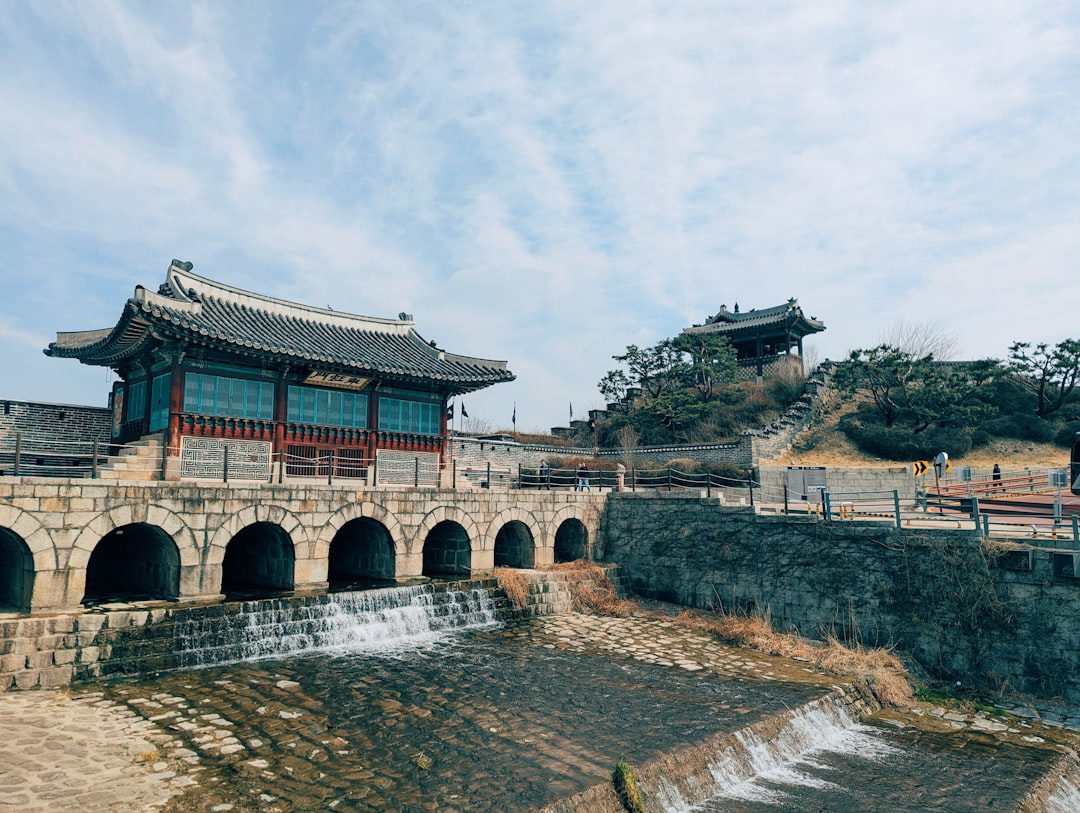
I’ll never forget the first time I walked the full perimeter of Hwaseong Fortress back in 1989. I was young, my Korean was barely functional, and I’d rented a bicycle thinking I could explore Suwon in an afternoon. Seven kilometers later, soaked in sweat and completely disoriented, I realized I’d underestimated both the fortress’s scale and the July heat. But standing atop Paldalmun Gate as the sun set over the walls that King Jeongjo built for his father, I understood why this place matters—not just to Korea’s history, but to anyone who wants to understand the country’s heart.
Thirty-five years later, Hwaseong Fortress remains one of the most rewarding day trips from Seoul. It’s a UNESCO World Heritage Site, one of Korea’s most important historical monuments, and a place where you can actually walk the 5.7-kilometer defensive wall, touch 200-year-old brickwork, and feel history beneath your feet. Whether you’re a history buff, architecture enthusiast, or just looking for a meaningful escape from Seoul’s intensity, Suwon’s fortress delivers.
Here’s everything you need to know to visit Hwaseong Fortress like someone who’s spent decades exploring it.
What Is Hwaseong Fortress & Why It Matters
Hwaseong Fortress (화성) isn’t just old stonework—it’s a masterpiece of 18th-century military engineering and a monument to a father-son relationship that changed Korean history. Built between 1794 and 1796 under the direction of King Jeongjo, the fortress was constructed as a new capital city (though it never became one) dedicated to his father, Crown Prince Sado, who had died tragically.
What makes Hwaseong extraordinary is how it blends military strategy with architectural beauty. Unlike many Korean fortifications built haphazardly over centuries, Hwaseong was designed according to scientific principles and construction records meticulously documented in the Hwaseong Sungnyemun (a 40-volume construction journal). The fortress features innovative defensive structures—angled bastions, gun ports, signal towers—that demonstrate Korea’s advanced understanding of fortification design.
In 1997, UNESCO recognized Hwaseong as a World Heritage Site for its outstanding universal value. The fortress represents one of the finest examples of 18th-century military architecture in East Asia. But beyond the academic significance, it’s a place where you can walk where generals once stood, peer through embrasures used to defend against invasion, and understand how Korea protected its capital centuries ago.
Ted’s tip: The fortress was partially destroyed during the Korean War and carefully reconstructed in the 1970s-80s using period-appropriate materials and historical records. What you’re walking on today is authentic, not a theme park recreation.
Getting There: Subway & Train Options from Seoul
The beauty of visiting Hwaseong is that it’s incredibly accessible from Seoul. You have multiple options, and I’ve done all of them. Here’s the breakdown:
Option 1: Subway (Most Popular & Budget-Friendly)
This is how most visitors get to Suwon, and it’s straightforward. Take the Seoul Metro Line 1 southbound from any central station (Myeongdong, Seoul Station, Gangnam all work) directly to Suwon Station. The journey takes about 40-50 minutes depending on your starting point, and costs approximately ₩5,000-₩8,000 depending on distance.
Once you arrive at Suwon Station, you’ll need to transfer to local buses or taxis. The nearest fortress entrance (Paldalmun Gate) is about 3 kilometers away. I recommend taking Bus 11, 13, or 37 from the bus stop outside Suwon Station (near the south exit). The ride takes 15-20 minutes and costs ₩2,450. Ask the bus driver to let you know when you reach “Hwaseong” or “Paldalmun”—most drivers are used to foreign visitors making this trip.
Ted’s tip: Get a Suica/T-money card before you leave Seoul—you can buy one at any convenience store for ₩2,500. It works on all Suwon buses and makes transfers seamless.
Option 2: KTX (Fastest, Most Expensive)
If you’re short on time, take the KTX bullet train from Seoul Station or Yongsan Station to Suwon Station. It takes only 20-30 minutes and costs around ₩16,000-₩20,000 per person. However, unless you’re combining this with other regional travel, the subway is more economical for a day trip.
Option 3: Organized Tour (Most Hands-Off)
If you prefer not to navigate public transit, several English-language tour companies operate daily from Seoul, including pickup from major hotels. Tours typically cost ₩120,000-₩180,000 per person and last 8-10 hours, including transportation, a guide, and sometimes lunch. I’ve found these useful when introducing friends to Korea, but if you’re comfortable with public transit, you’ll save money and have more flexibility.
| Transportation Method | Travel Time | Cost (Roundtrip) | Best For |
|---|---|---|---|
| Subway + Bus | ~70 min total | ₩15,000-₩20,000 | Budget travelers, flexibility |
| KTX Train | ~45 min total | ₩32,000-₩40,000 | Time-conscious travelers |
| Rental Car | ~60 min | ₩80,000-₩120,000 | Groups, multiple stops |
| Organized Tour | ~10 hours | ₩120,000-₩180,000 | No navigation, guided experience |
Fortress Basics: Hours, Tickets & Entry Points
The fortress itself is divided into several distinct areas, and your visit experience depends partly on which sections you prioritize.
Admission & Hours
Here’s the great news: walking the outer walls of Hwaseong Fortress is completely free. The fortress perimeter is open to the public at no charge, and you can explore it any time, day or night. However, if you want to enter the interior buildings and gatehouses, you’ll need a ticket.
| Facility | Hours | Adult Price | Student Price |
|---|---|---|---|
| Hwaseong Fortress (entire complex) | 24 hours (wall) | Free | Free |
| Paldalmun Gate + Interior Buildings | 9 AM – 6 PM | ₩5,000 | ₩2,500 |
| Suwon Hwaseong Museum | 9 AM – 6 PM | ₩5,000 | ₩2,500 |
| Combined Ticket (Museum + Gate) | 9 AM – 6 PM | ₩8,000 | ₩4,000 |
| Night Illumination (seasonal) | 6 PM – 11 PM | Free | Free |
The fortress is open 24/7 for walking the walls, which is honestly one of my favorite ways to experience it. Visiting at sunset (around 5-6 PM in winter, 7-8 PM in summer) offers dramatic light without needing to pay for the interior buildings.
Main Entry Points
The fortress has four main gates, but here are the most accessible entry points for visitors:
| Gate | Korean Name | Location/Subway | Why Visit |
|---|---|---|---|
| Paldalmun (South Gate) | 팔달문 | Line 1, Suwon Stn, Bus 11/13 | Most impressive, best-preserved |
| Changnyongmun (North Gate) | 창용문 | Line 1, Suwon Stn, Bus 36 | Less crowded, scenic views |
| Hwaseomun (East Gate) | 화서문 | Line 1, Paldal Station | Modern museum, easier walk |
| Janghando (West Gate) | 장항문 | Bus access only | Least visited, authentic feel |
Ted’s tip: I always start at Paldalmun Gate. It’s the most visually impressive and easiest to reach from Suwon Station. The gate was reconstructed in 1979 using original architectural drawings, and it’s genuinely breathtaking—especially if you see it first rather than after walking 5 kilometers.
Walking the Wall: Routes & What You’ll See
The real magic of Hwaseong happens when you walk it. The complete perimeter is 5.74 kilometers, which takes about 90 minutes at a leisurely pace. However, most visitors don’t do the entire loop. Here’s how to plan your route:
The Full Perimeter Walk (5.7 km, 90 minutes)
If you’re energetic and have 3-4 hours, walk the entire fortress. Start at Paldalmun (south gate) and move counterclockwise. You’ll encounter Hwasomun (east gate), Changnyongmun (north gate), and Janghando (west gate) before returning to Paldalmun. The path is mostly paved, with some stairs and uneven sections. Bring water—there are almost no vendors along the wall.
What you’ll see along the way:
- Bastions (치):
- Observation posts: Watch towers (망루) positioned at intervals. Each one commanded views of approach routes.
- Gun ports: Narrow openings in the wall where musketeers fired during the fortress’s active military period.
- The moat: Still visible in sections, particularly on the east side, this water barrier provided additional defense.
The fortress features seven bastions (turrets) designed for defensive firepower. The most impressive are Banggyeseong (northeast) and Buksusong (northwest). These angled structures allowed defenders to fire on attackers approaching the wall from multiple angles.
The Scenic Half-Day Route (2.5 km, 45 minutes)
If you’re not interested in a full fortress marathon, this is my favorite route and honestly what I recommend to most visitors. Start at Paldalmun, walk east to Hwasomun (east gate) via the most scenic stretch, then return to Paldalmun. This covers the most architecturally significant sections and offers the best views.
Key Structures to Understand
When you’re walking the wall, here are the architectural features that separate Hwaseong from other Korean fortresses:
| Feature | Korean Name | Function | Where to See |
|---|---|---|---|
| Bastion/Turret | 치(Bastion) | Angled gun emplacements for crossfire | Northeast corner (most visible) |
| Gate House | 옹성/치성 | Controlled entry/exit, defensive position | All four main gates |
| Crenellations | 철옹성 | Gaps for shooting, defense from projectiles | Entire wall perimeter |
| Water Gate | 수문 | Allowed water in/out, defended with gates | East side, near Hwasomun |
| Signal Tower | 봉화대 | Communicated alerts via smoke/fire | North gate area |
Ted’s tip: If you only have an hour, spend it walking from Paldalmun to Hwasomun (east gate). This section showcases the most sophisticated defensive features and gives you a real sense of why this fortress impressed military historians worldwide.
Museums & Interior Attractions Worth Your Time
Beyond the walls, there are several museum and exhibition spaces that deepen your understanding of Hwaseong’s significance. Here’s what I recommend:
Suwon Hwaseong Museum (₩5,000)
Located near Paldalmun Gate, this museum opened in 2009 and contains the most comprehensive exhibition on fortress construction, daily life during the Joseon Dynasty, and King Jeongjo’s vision. The collection includes:
- Original architectural drawings and construction tools
- Models showing how the fortress was built
- Military equipment and weapons from the period
- Reconstructions of daily life inside the fortress
- Detailed explanations of defensive strategies (with English signage)
Most visitors spend 45 minutes to an hour here. The museum is comfortable, air-conditioned, and provides excellent context before you walk the walls. I typically visit the museum first, then walk the fortress—it helps you understand what you’re seeing.
Hwaseong Haengnang (The Temporary Royal Palace Site)
On the northeast corner of the fortress, near Banggyeseong bastion, you’ll find the reconstructed site where King Jeongjo stayed during inspection visits. It’s not a museum but rather a historical marker with information boards. It’s free to visit and provides context for understanding the fortress as a royal residence, not just a military installation.
Traditional Korean Martial Arts Demonstrations
On weekends (April-October), the fortress hosts demonstrations of traditional archery and martial arts performed in period costume near Paldalmun Gate. It’s touristy but genuinely entertaining, and it shows you what the fortress felt like when it was an active military center. Check the Suwon tourism website for current schedules and times.
Best Time to Visit & Seasonal Highlights
After 35 years of visiting Hwaseong in every season, I can tell you each has its appeal—and its challenges.
Spring (April-May)
This is peak tourist season, and for good reason. Temperatures are mild (15-22°C), and the festival season begins. In late April, the fortress hosts the Hwaseong Cultural Festival, featuring parades in period costume, traditional music performances, and demonstrations. The walls are gorgeous against cherry blossoms, though you’ll share the experience with large crowds.
Summer (June-August)
Hot and humid. Temperatures climb to 28-35°C, and mid-summer brings intense UV. However, if you visit early morning (before 9 AM) or evening (after 5 PM), it’s manageable. The fortress is beautifully illuminated at night during summer months, creating a different but stunning experience. Expect crowds during school holidays (mid-July to mid-August).
Autumn (September-November)
My favorite season. Temperatures are perfect (15-25°C), crowds thin out after September, and the fortress gains an atmospheric quality as light changes. In October, Hwaseong Night Tour events offer guided walks with storytelling and traditional music. The fortress walls glow beautifully against autumn foliage—bring a camera.
Winter (December-February)
Cold (0-8°C) but clear. The fortress is least crowded in winter, which I actually prefer. The walls and bastions have a stark, dramatic quality against gray skies. Bundle up, bring hand warmers, and you’ll have an almost meditative experience. The fortress is open 24/7, so you can catch it illuminated at night.
| Season | Temperature | Crowds | Best Activities |
|---|---|---|---|
| Spring | 15-22°C | Very High | Festivals, photography |
| Summer | 28-35°C | High | Night walks, early morning |
| Autumn | 15-25°C | Medium | Guided tours, foliage walks |
| Winter | 0-8°C | Low | Night illumination, peaceful walks |
Ted’s tip: If you’re flexible with dates, visit in October or early November. You’ll dodge the school holiday surge, temperatures are perfect for walking, and autumn colors add a dimension you don’t get in other seasons.
Nearby Attractions & Extending Your Day Trip
Hwaseong Fortress can be a full day on its own, but if you have extra time, Suwon has several worthwhile attractions nearby:
Suwon Traditional Korean Food Culture (갈비 & 통닭)
Suwon is famous for Suwon galbi (grilled beef ribs), a regional specialty that’s lighter and more tender than Seoul’s version. After your fortress walk, head to the Galbi District (갈비골목) near Suwon Station’s south exit. Most restaurants are clustered within walking distance. Expect ₩35,000-₩50,000 per person for high-quality galbi with side dishes. This is where locals eat, not tourists—a perfect post-fortress meal.
Suwon is also known for dak-gui (roasted whole chicken), which rivals galbi. Try places like Noksim Dak-gui near Paldal Station for ₩25,000-₩35,000 per whole chicken.
Paldo Arboretum (팔도수목원)
Located on the western edge of the fortress, this botanical garden has 3,600+ plant species and is especially beautiful in spring and autumn. It’s less crowded than the fortress and offers a different side of Suwon. Entrance is ₩5,000 (adults). Open 9 AM – 6 PM.
Suwon City Museum
If you want deeper historical context about Suwon beyond the fortress, this museum covers the city’s entire history from ancient times. It’s near Changnyongmun (north gate) and costs ₩5,000. Most visitors spend 1-1.5 hours here.
K-Drama Filming Locations
Several Korean dramas and films have been shot around Suwon and the fortress. If you’re interested in K-drama filming locations, ask at the Suwon Tourism Information Center (near Paldalmun) for a map of nearby film sites. Many are literally within walking distance of the fortress walls.
Yongin MBC Dramia (용인 MBC드라미아)
About 30 minutes from Suwon by bus, this Korean drama and film theme park recreates sets from famous K-dramas. If you’re a K-drama fan, it pairs well with a Suwon day trip. Admission is ₩18,000-₩25,000. I’ve included a full guide to K-drama filming locations that covers this in detail.
| Attraction | Distance from Paldalmun | Cost | Time Needed |
|---|---|---|---|
| Hwaseong Museum | Walking distance | ₩5,000 | 45-60 min |
| Suwon Galbi District | 2 km (bus/taxi) | ₩35,000-50,000 | 60-90 min |
| Paldo Arboretum | Adjacent to fortress | ₩5,000 | 60-90 min |
| Suwon City Museum | 2 km (north gate) | ₩5,000 | 60-90 min |
| Yongin Dramia | 30 km (bus/taxi) | ₩18,000-25,000 | 120-180 min |
Practical Tips for Your Visit
What to Pack
- Comfortable walking shoes: The wall has uneven sections and stairs. Avoid flip-flops or new shoes that’ll cause blisters.
- Water: Bring at least 1.5 liters. There are vending machines near the main gates, but not along the wall itself.
- Sun protection: Sunscreen, hat, and sunglasses. The walls offer minimal shade.
- Power bank: If you’re taking photos or using navigation, bring a portable charger.
- Cash: Most food vendors near the fortress accept card, but bring ₩50,000-₩100,000 just in case.
Accessibility Considerations
The fortress walls have stairs and uneven sections that aren’t fully wheelchair accessible. However, Paldalmun Gate and the immediate fortress interior are accessible. The museums and some observation areas are wheelchair accessible. If you have mobility concerns, ask at the information center about which sections are navigable for your situation.
Photography Tips
The fortress is incredibly photogenic. The best light is golden hour (hour before sunset). If you’re shooting in peak season and want fewer crowds in shots, arrive before 9 AM or visit after 4 PM. The wall perimeter offers diverse compositions—close-ups of stonework, wide fortress panoramas, detail shots of architectural elements.
How to Get Help
The Suwon Tourism Information Center is located near Paldalmun Gate and has English-speaking staff. They distribute free maps showing walking routes, nearby restaurants, and attractions. Hours: 9 AM – 6 PM daily. Phone: +82-31-228-4672.
Ted’s tip: Download the offline map of Suwon on Google Maps before you go. Internet connectivity can be spotty near the fortress, and having a map prevents frustration when you’re trying to navigate between sections.
Itinerary: How to Structure Your Day
Here’s a realistic timeline that I recommend for first-time visitors:
| Time | Activity | Location | Duration |
|---|---|---|---|
| 7:00-8:30 AM | Travel from Seoul | Subway/KTX | 45-50 min |
| 8:30-9:30 AM | Breakfast in Suwon | Near Suwon Station | 30-40 min |
| 9:30-10:00 AM | Visit Hwaseong Museum | Paldalmun area | 30-45 min |
| 10:00 AM-12:00 PM | Walk walls (Paldalmun to Hwasomun) | Fortress perimeter | 2 hours |
| 12:00-1:30 PM | Lunch at galbi or local restaurant | Galbi District or near fortress | 60-90 min |
| 1:30-3:30 PM | Optional: Second walk section or Paldo Arboretum | Fortress/Arboretum | 120 min |
| 3:30-4:30 PM | Rest, café/snacks | Near Paldalmun | 60 min |
| 4:30-5:30 PM | Return to Seoul | Suwon Station | 50 min travel |
This timeline allows you to experience the fortress without feeling rushed, and gets you back to Seoul by early evening. If you want to stay later for a sunset walk or evening illumination, you can adjust accordingly.
Frequently Asked Questions
How long does it take to see everything at Hwaseong Fortress?
A complete experience—museum, museums, and full wall walk—takes 5-6 hours. A minimal visit (just walking part of the wall) takes 1-2 hours. Most people spend 3-4 hours total. Plan accordingly based on your interests and energy level.
Can I walk the fortress at night?
Yes! The fortress perimeter is open 24/7, and the walls are beautifully illuminated after dark (especially in summer and autumn). Walking at night is magical but bring a flashlight and sturdy shoes. The paved sections are well-lit, but some older sections are darker. I recommend visiting at twilight rather than deep night—better safety and still gorgeous.
Is the fortress crowded? When should I go to avoid crowds?
Yes, especially April-May and summer vacations. To avoid crowds, visit on weekdays (especially Tuesday-Thursday), before 9 AM, or after 4 PM. Early autumn (late September to early October) is sweet spot—good weather, fewer tourists. Winter is least crowded overall.
Do I need a guide to visit Hwaseong?
No, but a guide adds significant value. The information center offers free guides during business hours, or you can book private English-speaking guides through the tourism office (₩70,000-₩100,000 for 2-hour tour). Alternatively, rent an audio guide from the museum (₩5,000)—they’re available in English and quite good.
What’s the difference between Hwaseong and other Korean fortresses?
Hwaseong is unique because it was built according to scientific principles documented in detailed construction journals. Unlike most Korean fortresses that evolved over centuries, Hwaseong was planned as a complete, unified defensive system. It features more sophisticated bastions, angled gun emplacements, and defensive innovations ahead of its time. Most other Korean fortresses are older (Namhansanseong, Janggyeong) but less architecturally refined.
Can I bring food or picnic at the fortress?
Yes! There are no restrictions on bringing picnic foods. Many Koreans bring kimbap and snacks for a fortress picnic—it’s actually quite popular on weekends. However, there are few shaded areas, so pick a spot carefully or visit when it’s cooler (spring/fall).
Is Hwaseong Fortress worth a day trip from Seoul?
Absolutely. It’s Korea’s best-preserved fortress, UNESCO-listed, easily accessible, affordable, and genuinely educational. Even if you’re only in Korea for a few days, a Suwon day trip is worthwhile. Combined with local food and nearby attractions, it easily fills a full day.
What should I know about Korean fortress architecture?
Korean fortresses were built to defend cities and strategic positions. They typically feature walls, gates, observation towers, and bastions. Hwaseong is special because it combines practical military design with architectural beauty. If you want to compare, nearby Namhansanseong is older (17th century) but less well-preserved. My article on day trips from Seoul covers several historical sites worth exploring together.
Final Thoughts
Standing on the walls of Hwaseong Fortress as the sun sets over Suwon, you’re not just looking at 200-year-old stonework. You’re witnessing the vision of a king who wanted to create a perfect city, the architectural innovation of an 18th-century engineer, and the careful restoration of modern Korea honoring its past. It’s the kind of place that reminds you why people travel—to understand cultures, to see how humans solve problems across centuries, and to realize that some beauty transcends time.
I’ve walked these walls hundreds of times over 35 years, and I still notice new details. The precise geometry of the bastions, the wear patterns on the stone, the views of modern Suwon contrasting with fortress walls that predate electricity. That’s what Hwaseong does—it anchors you in history while reminding you that you’re standing in a living, evolving city.
So go. Take the subway from Seoul, spend four hours walking walls and exploring history, eat galbi in the Galbi District, and come back to Seoul with a deeper understanding of Korea’s past. Your future self will thank you.
— Ted K
Image Credits: Photos sourced from Unsplash. By using this site, you agree to our Privacy Policy and Disclaimer.