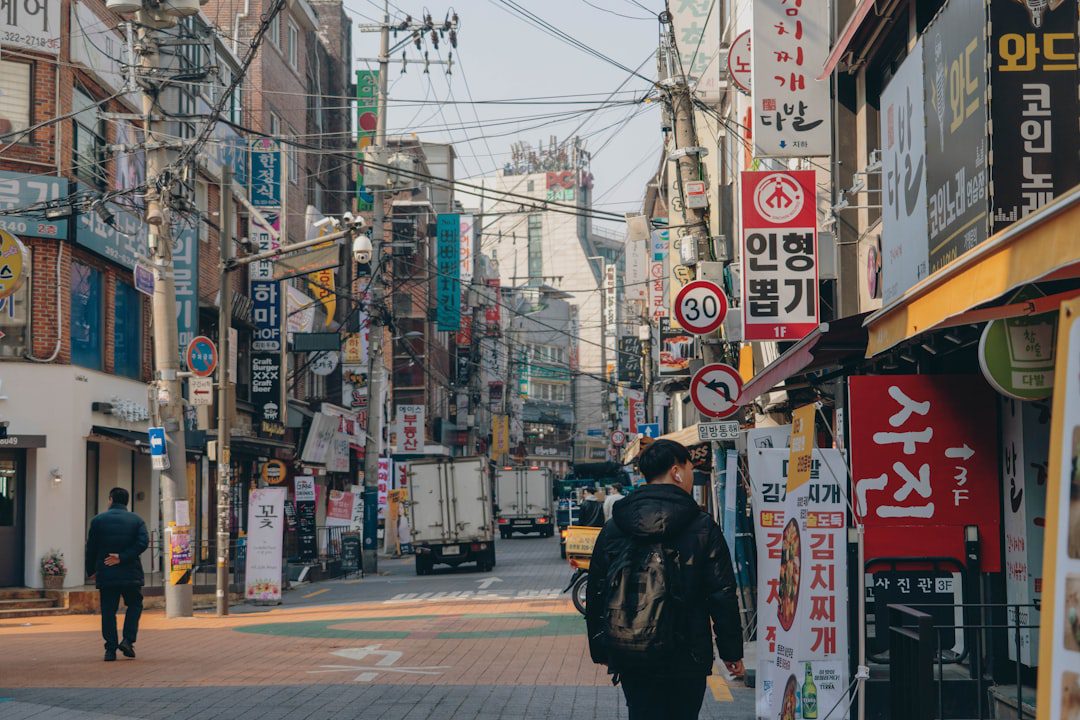
I still remember the first time I wandered into Sinchon in 1989—back when the neighborhood was just beginning to explode with energy. The street was packed with university students, indie music playing from tiny clubs, and this electric sense that something creative was happening. Thirty-five years later, Sinchon and Ewha have evolved dramatically, but that youthful, experimental spirit? It’s still very much alive.
These two adjacent neighborhoods—separated by the Ewha Womans University campus and connected by some of Seoul’s best walking streets—represent something unique in the city. This isn’t Gangnam’s polished luxury or Hongdae’s established coolness. This is where Seoul’s youngest, most ambitious, and most creative people actually hang out. The energy is raw, the prices are reasonable, and you’ll find yourself discovering hidden gems on nearly every block.
Whether you’re chasing the best Korean street food, hunting for vintage fashion, experiencing Korea’s iconic student bar culture, or just soaking in the vibe of neighborhoods where real Seoulites live, Sinchon and Ewha are absolutely worth your time. Here’s everything you need to know.
Geography: How Sinchon & Ewha Connect
Let me be clear about one thing that confuses most visitors: Sinchon and Ewha are technically separate neighborhoods, but they function as one cohesive area for travelers. Think of them as two sides of the same coin.
Sinchon (신촌) sits on the west side of the Ewha Womans University campus. It’s where you’ll find the main commercial streets, nightlife clusters, and most of the dining action. The heart of Sinchon is roughly bounded by Line 2 (Sinchon Station, Exit 2) down to the subway station area.
Ewha (이화) encompasses the university campus area and extends eastward. This side is quieter, more pedestrian-friendly, and packed with independent cafes, boutiques, and what locals call “감성” (sensibility)—that trendy, aesthetic quality Korean students go crazy for.
The two connect beautifully via a network of walking streets. You can easily spend 4-6 hours exploring both neighborhoods without feeling rushed.
| Neighborhood | Main Station | Known For | Vibe |
|---|---|---|---|
| Sinchon | Line 2, Exit 2 | Nightlife, street food, shopping | Lively, crowded, energetic |
| Ewha | Line 2, Exit 2 or 3 | Cafes, independent shops, walkability | Trendy, quieter, artsy |
Ted’s tip: Visit both areas on the same trip. Exit Sinchon Station, explore Sinchon’s commercial streets first (it’s busier during the day and evening), then walk toward Ewha’s quieter shopping streets as the night progresses. This gives you a complete picture of student culture.
The Heart of Sinchon: Shopping & Street Culture
Sinchon’s main commercial street is one of Seoul’s most underrated shopping destinations. Unlike Myeongdong’s tourist crush or Gangnam’s luxury focus, Sinchon feels organic—it’s where Korean students actually spend their money.
Sinchon Main Street (신촌 거리)
Exit Sinchon Station at Exit 2 and you’re immediately on the main drag. This street stretches about 1.5 kilometers and is packed with fashion boutiques, cosmetics shops, restaurants, and cafes. What makes it special is the mix of major brands and tiny independent shops—you’ll see a Zara storefront next to a one-room boutique selling handmade jewelry.
The clothing here skews toward trendy, youthful styles. Korean fashion is huge in Sinchon—lots of mini skirts, oversized blazers, vintage-inspired pieces, and cutting-edge designs that you won’t see in bigger commercial districts. Prices are reasonable (₩30,000-80,000 for a typical shirt, ₩50,000-150,000 for pants).
You’ll also find clusters of cosmetics shops. Korean beauty is a religion here, and these stores stock everything from mainstream brands like Etude House and The Saem to harder-to-find indie brands. Skincare enthusiasts can spend hours browsing. If you want the local perspective, read our Korean skincare routine guide before you shop.
Vintage & Thrift Shopping
One of the biggest trends in Sinchon over the last 10 years has been the explosion of vintage and secondhand shops. Korean Gen Z are obsessed with sustainable fashion and retro aesthetics. You’ll find entire buildings dedicated to vintage clothing, with tiny shops stacked floor-to-floor.
Key vintage clusters:
- Around Exit 5-6 area: Multiple vintage malls where you can browse 20+ shops in one building
- Luxury secondhand shops: If you’re looking for authenticated designer pieces at lower prices, several shops specialize in pre-owned Prada, Gucci, and Louis Vuitton
- Quirky thrift: For the most adventurous shoppers, there are shops that sell everything from 1970s Korean clothing to vintage band merchandise
Ted’s tip: Vintage prices in Sinchon are typically 30-50% cheaper than equivalent thrift in Western cities. A vintage leather jacket might run ₩80,000-120,000. Haggle gently if the shop has handwritten prices—it’s expected and often successful.
Ewha’s Walking Streets: Indie Culture & Cafes
If Sinchon is about commerce and nightlife, Ewha is about aesthetics and discovery. The neighborhood’s pedestrian shopping streets are designed for wandering—narrow alleys, indie boutiques, concept cafes, and photo-worthy corners at every turn.
Ewha Womans University & Campus Surroundings
The centerpiece of Ewha is the university campus itself, which occupies a steep hillside. The main gate (back gate) sits at the top of a famous walking street lined with cafes, restaurants, and boutiques. This street is CROWDED during semester (September-December, March-June) but quieter during breaks.
The architecture here is worth noting—the university’s main buildings are modernist and photogenic. Many K-dramas have filmed here. Even if you don’t have university access, the surrounding streets are public.
Popular Ewha Shopping Streets
| Street Name | Length | Best For | Crowd Level |
|---|---|---|---|
| Ewha Main Gate Street | 800m | Cafes, restaurants, Instagram spots | Very high |
| Kkachisan-ro (까치산로) | 1km | Independent boutiques, vintage | Medium-high |
| Noksapyeong Side Streets | Variable | Hidden gems, quiet cafes | Low-medium |
| Gyeongui Line Park Area | 1.5km+ | Outdoor shopping, walking, nature | Low |
The main gate street is Instagram heaven—colorful storefronts, flower shops, concept cafes with perfect aesthetics. But it’s also packed, especially on weekends. If you want the “real” Ewha experience, venture into the side streets where you’ll find quieter cafes and more genuine student culture.
Ted’s tip: The best time to experience Ewha’s street culture is weekday afternoons (2-5 PM) when classes are ending and students are out grabbing coffee. The energy is incredible, and the streets feel alive with actual student life rather than just tourism.
Street Food & Student Eats
One of my favorite things about Sinchon is the street food scene. This is food made by students for students—affordable, delicious, and constantly evolving. You won’t need a reservation or much money; you’ll eat standing up at a street stall or in a tiny shop with 4 seats.
Must-Try Street Foods
| Food | Price | Where to Find It | Why It’s Special |
|---|---|---|---|
| Tteokbokki (spicy rice cakes) | ₩3,000-5,000 | Street carts on main street | Addictive, perfect for walking |
| Hotteok (sweet pancakes) | ₩2,000-4,000 | Seasonal carts (fall/winter) | Warm, sweet, nostalgic |
| Bungeoppang (battered fish cakes) | ₩3,000-5,000 | Street carts near Sinchon Station | Chewy, savory, shareable |
| Korean fried chicken (chimaek) | ₩12,000-18,000 | Small chicken shops throughout | Crispy, pairs with beer |
| Gimbap (rice rolls) | ₩3,000-6,000 | Kimbap restaurants on every corner | Quick, affordable, filling |
Student-Friendly Restaurants
Beyond street food, there are excellent affordable restaurants. A typical set meal (₩8,000-12,000) includes rice, soup, and multiple side dishes. Look for restaurants with laminated menus showing pictures—those are designed for quick student meals and takeout.
Korean ramyeon (instant noodles) is a student staple. Sinchon has several famous ramyeon restaurants where a bowl costs ₩5,000-8,000 and you can add toppings like cheese, eggs, or kimchi. Check out our complete ramyeon guide for more details.
Ted’s tip: Eat dinner early (before 7 PM) to avoid the massive rush. By 8-9 PM, restaurants are packed with students. Also, many food stalls close by 8 PM, so hit street food while the sun is still out.
Cafes: Where Students Actually Study
Korean cafe culture is obsessive, and Sinchon and Ewha are ground zero. Cafes here are designed as third spaces—you’ll see students camping out for 5+ hours with a single coffee, laptop out, studying for exams.
What makes these cafes special isn’t fancy latte art (though some have that). It’s the atmosphere—thoughtful music, aesthetic interiors, affordable prices. A typical coffee costs ₩4,000-6,000, and most cafes allow you to stay for hours without pressure.
The best cafes are hidden in the side streets of Ewha—you’ll stumble on them while walking. Look for storefronts with plants in the window, hand-written menus, and a certain “감성” (aesthetic sensibility). These are student-run or student-owned, and they’re where you’ll feel actual Seoul life.
Student Bar Culture & Nightlife
Here’s where Sinchon truly distinguishes itself. This is Korea’s most famous student bar district, and the nightlife scene is unlike anywhere else in Seoul.
Understanding Korean Student Bars (주점)
Korean student bars aren’t like Western bars. They’re cheap drinking establishments where students gather in groups. The culture is communal—you’ll see tables of 8-10 people squeezed into a tiny space, everyone ordering one bottle of soju or beer to share, snacking on cheap food.
The vibe is incredibly social. Groups sing together, laugh loudly, toast constantly (the drinking culture is central to Korean social bonding). The music is usually K-pop at volume. It’s chaotic, fun, and completely authentic.
Key things to know:
- Bars are TINY—many fit 15-20 people max
- Prices are remarkably cheap (soju ₩8,000-12,000 per bottle, beer ₩5,000-8,000)
- Most have food menus (fried chicken, snacks) or you can order delivery
- Crowds peak 11 PM – 2 AM
- English isn’t widely spoken, but students are usually friendly to travelers
Want the deeper dive on Korean drinking culture? Check our complete guide to Korean drinking and anju (snacks).
Where to Find Student Bars
Most student bars cluster around certain blocks. The concentration is heaviest in the side streets near Sinchon Station, particularly in the alleyways running parallel to the main street (Exits 4-6 area).
You’ll recognize these areas by the atmosphere: neon signs, students in groups entering alleys, upbeat K-pop blaring, drunk laughter echoing through streets. It’s unmissable at night.
Important: Unlike nightclubs or sophisticated bars, student bars don’t care about dress codes—students show up in whatever they wore to class. But respect the culture: these are spaces for Koreans, and while you’ll be welcomed, join in the fun rather than observe.
If you want a more visitor-friendly bar experience, head to nearby Euljiro or Yeonnam-dong where there are more English-speaking bars and international visitors.
Clubs & Live Music Venues
Beyond student bars, Sinchon has clubs and live music venues catering to students and young professionals. These are smaller, edgier venues than Seoul’s mainstream clubs.
| Venue Type | Cover Charge | Typical Hours | Music Style |
|---|---|---|---|
| Indie clubs | ₩10,000-15,000 | 10 PM – 5 AM | K-indie, alternative, hip-hop |
| Live music venues | ₩20,000-30,000 | 8 PM – midnight | Varies (rock, pop, jazz) |
| Noraebang (karaoke) | ₩15,000-25,000/hour | All day/night | K-pop, ballads, English songs |
Noraebang is massively popular in Sinchon. You’ll find dozens of karaoke rooms stacked in buildings. Groups book private rooms and sing for 1-3 hours. It’s a crucial part of Korean social life and genuinely fun even if you’re not a singer.
Ted’s tip: Go to a noraebang with a mix of Koreans and international friends. The Korean friends will help you navigate the song selection (system is different from Western karaoke), and you’ll have a more authentic experience. Most places have English songs, but the catalog is heavily skewed toward K-pop.
Getting There & Practical Information
Subway Access
Both neighborhoods are accessible via Line 2 (the circular line that loops around central Seoul).
| Station | Line | Best For | Exit Notes |
|---|---|---|---|
| Sinchon (신촌) | Line 2 | Main commercial street, nightlife | Exit 2 for main street, Exit 5-6 for side streets |
| Ewha Womans Univ. (이화여대) | Line 2 | Ewha walking streets, cafes | Exit 2 or 3 for main gate area |
| Noksapyeong (녹사평) | Line 6 | Alternative access to Ewha side | Less touristy option |
From Seoul Station: Take Line 2 (direction Sangbong) for 10-15 minutes, get off at Sinchon or Ewha Womans University.
From Gangnam: Take Line 2 (direction Sangbong) for 20-25 minutes.
Best Times to Visit
| Time Period | Crowd Level | Best For | Notes |
|---|---|---|---|
| Weekday daytime (9 AM – 5 PM) | Low-medium | Shopping, cafes, exploring | Most relaxed experience |
| Weekday evening (5 PM – 10 PM) | Medium-high | Dinner, early nightlife | Students grabbing food/drinks |
| Weekday late night (10 PM+) | High | Bars, nightlife culture | Peak bar/club scene |
| Weekend daytime | Very high | Shopping (if you like crowds) | Sinchon main street packed |
| Weekend late night (midnight+) | Extreme | Maximum student culture | Chaotic, loud, authentic |
Semester break periods (December-early January, late July-August) are noticeably quieter. If you want authentic student culture, visit during the academic year.
Other Neighborhoods Nearby
Sinchon and Ewha are well-positioned to connect with other interesting areas:
- Yeonnam-dong: Just north of Sinchon (5-minute walk), another student/artsy neighborhood with trendy cafes and galleries. More polished than Sinchon. Read our Yeonnam-dong guide.
- Hongdae: 10 minutes west by subway (one stop on Line 2), the original student art district. More established and touristy than Sinchon but with excellent street art and live music.
- Seongsu-dong: East side by subway (15 minutes), industrial-chic neighborhood with galleries, vintage cafes, and upscale dining. Different vibe but worth pairing with Sinchon. Check our Seongsu guide.
Money-Saving Tips for Sinchon & Ewha
These neighborhoods are already affordable compared to other Seoul districts. Here’s how to maximize value:
- Eat street food for meals: A complete street food meal (tteokbokki + hotteok + bungeoppang) costs ₩8,000-10,000 total.
- Share bottles at bars: Korean drinking culture is built on sharing. One bottle of soju or beer (₩8,000-12,000) serves 2-3 people.
- Coffee, not meals at cafes: Cafes are inexpensive for drinks (₩4,000-6,000) and you can stay for hours. Avoid ordering food—their snacks are marked up.
- Vintage shopping beats new: Vintage clothes are 50% cheaper than new boutiques for often better quality.
- Nightlife strategy: Many bars give free snacks with drinks. Order one bottle, snack for free, enjoy the scene. Student bars expect you to order one thing and stay a while.
Ted’s tip: Budget for Sinchon/Ewha: ₩30,000-50,000 per person per day (food + drinks + light shopping). If you’re actively shopping or hitting clubs/live venues, add ₩30,000-50,000.
Safety & Cultural Notes
Sinchon and Ewha are safe neighborhoods with heavy foot traffic and student police presence. Standard Seoul safety rules apply. However, here are specific cultural considerations:
- Drunk students: Thursday-Saturday nights, streets can get rowdy with intoxicated groups. Stay alert but not alarmed—it’s normal student behavior.
- Walking at night: Neighborhoods are well-lit and busy. Walking solo is safe, but stick to main streets and avoid truly isolated alleys.
- Bathroom access: Many bars don’t have public bathrooms. Use the restroom before entering, or ask the bar staff.
- Tipping: Tipping is not customary in Korea. No tip needed at restaurants, bars, or cafes.
- Language: English isn’t widely spoken in student areas. Download a translation app or learn basic Korean phrases. Students are usually patient and helpful.
- Dress code: No dress code for student bars—come as you are. Clubs are also casual. Comfortable walking shoes essential.
Frequently Asked Questions
Is Sinchon good for non-drinkers?
Absolutely. Sinchon excels for shopping, street food, cafes, and street culture. The nightlife is famous, but you can experience the neighborhood fully during the day or early evening. Ewha side is perfect for non-drinkers—independent cafes, boutiques, and walking streets. Street food stands and restaurants offer plenty of social hangout without alcohol.
What’s the difference between Sinchon and Ewha?
Sinchon is the commercial/nightlife hub—busier, more crowded, more chains mixed with independent shops. Ewha is quieter, more artsy, focused on aesthetics and independent businesses. Think Sinchon = energy and action, Ewha = discovery and aesthetics. Both connected, both worth visiting.
Can I visit as a tourist without speaking Korean?
Yes, but it’s more challenging than touristy areas like Myeongdong. Many signs have English, and young Koreans often speak some English. Use translation apps for menus and signage. The experience is actually richer because you’re in spaces designed for locals, not tourists—expect the authenticity to be worth the slight language barrier.
Are student bars welcoming to foreigners?
Generally yes, especially if you respect the space. Go in groups, engage with locals, smile, and participate in the vibe. English speakers exist but don’t expect it. Avoid going alone late at night—the culture is group-oriented. If you want a more foreigner-friendly bar experience, nearby neighborhoods like Euljiro have more English-speaking bars.
What’s the best time of day to visit?
Depends on what you want. Weekday afternoons (3-5 PM) for authentic student cafe culture. Weekday evenings (6-9 PM) for dinner and early shopping. Late night (11 PM-2 AM) for nightlife and bars. Weekends are busier overall. For the least crowded shopping, go weekday mornings (10 AM-12 PM).
How long should I spend in Sinchon/Ewha?
Half day minimum (4-5 hours) to get the vibe. Full day (6-8 hours) is ideal—morning for exploring and shopping, lunch at a student restaurant, afternoon for cafes, evening for dinner and nightlife. If you’re doing the comprehensive experience, plan 8-10 hours across multiple visits (daytime + evening).
Is it expensive to eat and drink here?
It’s one of Seoul’s most affordable areas. Street food meals run ₩5,000-8,000. Student restaurants ₩8,000-12,000. Drinks at bars are cheap (soju ₩8,000-12,000/bottle shared). Cafes ₩4,000-6,000. This is budget-friendly territory compared to Gangnam or other Seoul neighborhoods.
What should I bring or wear?
Comfortable walking shoes are essential—you’ll be on your feet for hours navigating uneven streets. Casual clothing (what you’d wear to class). If planning nightlife, no special dress code needed. In winter, these neighborhoods get cold with wind; bundle up. A small backpack for shopping is helpful. Translation app on your phone is practically required.
Final Thoughts
Sinchon and Ewha represent something special in Seoul—neighborhoods that haven’t been completely polished for tourism, where actual young Seoulites spend their time, money, and social energy. There’s a rawness here, an authenticity that you miss in Seoul’s more famous districts.
When I first came to Korea in 1989, Sinchon was the epicenter of student activism and independent culture. Today it’s more commercialized, but that spirit remains. You’ll see students sketching design concepts in cafes, debating philosophy at midnight bars, shopping for clothes that express their identity rather than follow trends. The student culture is real and palpable.
My advice: Don’t just visit Sinchon and Ewha as a tourist checking boxes. Sit for two hours in a cafe with a coffee. Strike up a conversation with a group at a student bar. Wander the side streets of Ewha without a map. Let yourself experience student Seoul the way students actually live it. That’s when these neighborhoods reveal their magic.
These are neighborhoods that reward curiosity and openness. Come with that mindset, and you’ll understand why generations of Seoul students have called this area home.
— Ted K
Image Credits: Photos sourced from Unsplash. By using this site, you agree to our Privacy Policy and Disclaimer.