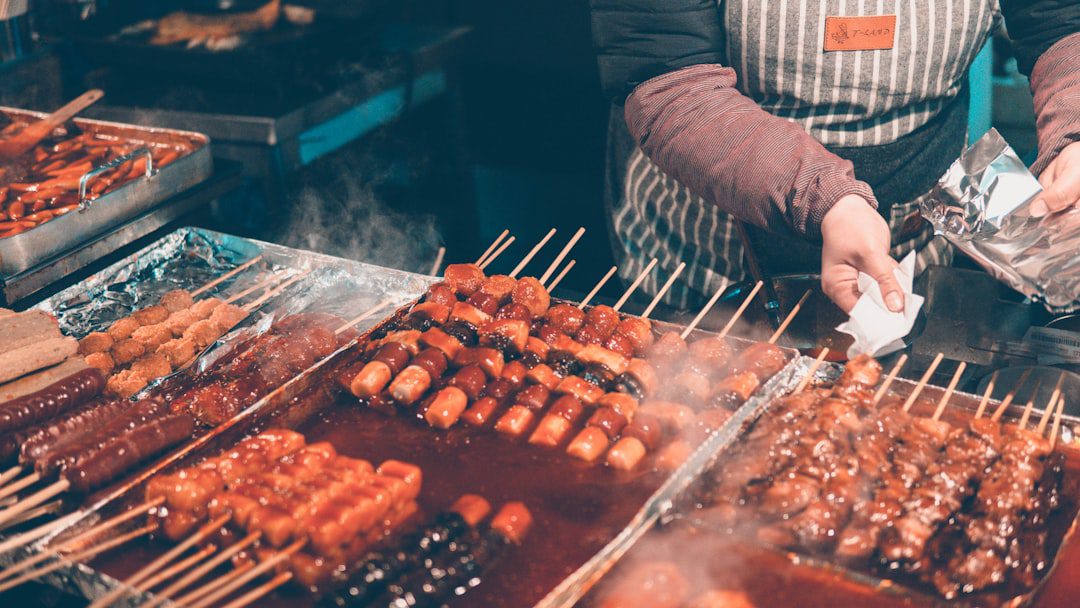
I remember my first week in Korea back in 1989, standing confused in what felt like organized chaos at Namdaemun Market with a crumpled map and a wallet full of won I didn’t know how to spend. A vendor selling bojagi wraps took pity on me, spent twenty minutes teaching me haggling etiquette, and suddenly everything clicked. Thirty-five years later, I still visit traditional markets every single week—not as a tourist, but as someone who genuinely needs a new belt, or fresh ginseng, or just the experience of being alive in a crowd of 10,000 other people who are all trying to get a better deal on dried squid.
Korean traditional markets are nothing like the sanitized shopping districts of Myeongdong or the sterile malls of Gangnam. These are living, breathing ecosystems where haggling is an art form, where vendors have worked the same stall for 30 years, where the smell of grilled fish mingles with fabric softener and where you’ll find things you didn’t know existed. They’re also where real Korea happens—this is where Korean grandmothers buy their daily vegetables, where office workers grab lunch, where visitors can experience authentic Korean commerce the way it’s been done for centuries.
Whether you’re hunting for souvenirs, sampling incredible street food, or just soaking in atmosphere, here’s everything you need to know about Korea’s traditional markets.
Namdaemun Market: Seoul’s Largest & Most Historic
Namdaemun (남대문시장) has been operating since 1414—that’s over 600 years of buying, selling, and haggling. It’s the largest traditional market in Korea and covers roughly 215,000 square meters spread across multiple streets in central Seoul. Unlike some markets that cater mainly to tourists, Namdaemun is genuinely mixed: you’ll see elderly Korean women buying vegetables alongside couples taking Instagram photos, office workers grabbing tteokbokki, and businesspeople in suits hunting for quality fabrics.
Location & How to Get There
Address: Jung-gu, Seoul (multiple entrances across the market area)
Nearest Subway: Line 4 Hoehyeon Station (Exit 4, 5) or Line 1 Seoul Station (Exit 6)
I usually recommend exiting at Hoehyeon—it dumps you right at the main market entrance. The walk from Seoul Station is longer but gives you a sense of the neighborhood’s geography.
What to Buy at Namdaemun
| Category | What You’ll Find | Price Range |
|---|---|---|
| Clothing & Accessories | Belts, scarves, socks, underwear, handbags | ₩5,000–₩50,000 |
| Fabrics & Textiles | Cotton, silk, linen, specialty fabrics by the meter | ₩8,000–₩30,000/meter |
| Dried Goods & Tea | Ginseng, dried mushrooms, kelp, sesame, jujubes | ₩10,000–₩100,000+ |
| Kitchen Tools | Knives, cutting boards, traditional brass bowls, sieves | ₩3,000–₩50,000 |
| Kitchenware & Pottery | Ceramic dishes, spoons, chopsticks, brass items | ₩2,000–₩40,000 |
| Cosmetics & Personal Care | Face masks, creams, traditional beauty products | ₩3,000–₩20,000 |
| Handicrafts & Souvenirs | Small wooden items, bookmarks, traditional crafts | ₩5,000–₩30,000 |
| Fresh Produce | Vegetables, fruits, herbs (wholesale prices) | ₩2,000–₩15,000 |
Where to Eat at Namdaemun
Namdaemun has legendary street food vendors. The tteokbokki (spicy rice cakes) is famous enough that locals from other districts take the subway specifically to eat here. I usually grab a small cup for ₩5,000–₩8,000. There’s also incredible mandu (dumplings), sundae (Korean sausage), and countless pojangmacha (tent restaurants) serving proper meals.
Ted’s tip: The food stall called “Namdaemun Tteokbokki” near the Hoehyeon Station entrance is perpetually packed for a reason. Go midweek morning if you want to avoid standing in line for 20 minutes.
Hours & Practical Info
| Day | Hours |
|---|---|
| Monday–Friday | 10:00 AM–7:00 PM (some shops close 6 PM) |
| Saturday | 10:00 AM–7:00 PM |
| Sunday | 11:00 AM–6:00 PM (many shops closed) |
| Holidays | Often closed or limited hours |
Namdaemun can get extremely crowded on weekends and public holidays. If you’re sensitive to crowds, visit on a Tuesday or Wednesday morning. The smell is intense—a mixture of raw fabric, dried seafood, and fried food—so don’t be shocked.
Gwangjang Market: Seoul’s Oldest Food Market
If Namdaemun is about stuff, Gwangjang Market (광장시장) is about eating. It’s technically been around since 1905, making it Korea’s oldest continuously operating traditional market, and the food culture here is absolutely unmatched. It’s smaller and more intimate than Namdaemun, focused almost entirely on fresh produce, meat, fish, and prepared foods. Walking through Gwangjang feels less like visiting a tourist attraction and more like stepping into someone’s lunch hour.
Location & Access
Address: Jongno-gu, Seoul
Nearest Subway: Line 1 Jongno 3-ga Station (Exit 5) – literally 1-minute walk
Jongno 3-ga is perfect because the exit drops you right at the market entrance. The surrounding neighborhood (Jongno-gu) also has tons of other attractions if you want to make a morning of it.
Gwangjang’s Food Scene
This is where Gwangjang dominates. The main food vendors operate from shared seating areas—you order from multiple stalls and sit at communal tables. It’s social, chaotic, and absolutely authentic.
| Dish | Description | Price |
|---|---|---|
| Bindaetteok (Mung Bean Pancake) | Crispy fried mung bean cake with sprouts & kimchi | ₩4,000–₩5,000 |
| Kimbap | Rolled rice with vegetables, egg, crab stick | ₩3,500–₩5,000 |
| Tteokbokki | Spicy rice cakes in red sauce | ₩4,000–₩5,500 |
| Sundae (Korean Sausage) | Steamed blood sausage with potato, lung, intestine | ₩3,000–₩4,000 |
| Nakji Bokkeum (Stir-fried Octopus) | Tender octopus with vegetables in sesame oil | ₩7,000–₩9,000 |
| Hotteok (Sweet Red Bean Pancake) | Crispy outside, gooey brown sugar & cinnamon inside | ₩4,000–₩5,000 |
| Yukhoe (Korean Beef Tartare) | Raw beef seasoned with soy, garlic, pear | ₩15,000–₩20,000 |
| Fresh Seafood & Produce | Fish, shrimp, vegetables, herbs (wholesale) | ₩5,000–₩30,000 |
Ted’s tip: Don’t miss the bindaetteok vendors. The ones who’ve been there 20+ years make it with a special recipe that includes way more gochugaru (red chili flakes) than standard versions. Ask the vendor to make it “맛있게” (mah-sit-geh, meaning “tasty”) and they know to add extra flavor.
What to Buy Beyond Food
Gwangjang isn’t just food. There’s also a textile section (fabrics, yarn, traditional Korean fabrics) and some small craft vendors, but honestly, people come for the food and the energy. If you’re interested in Korean fabrics and traditional textiles, Namdaemun is better, but Gwangjang’s food scene is unbeatable.
Hours & Best Times to Visit
| Day | Hours | Best Time |
|---|---|---|
| Monday–Saturday | 9:00 AM–6:00 PM | 11 AM–1 PM (lunch rush, authentic energy) |
| Sunday | 9:00 AM–5:00 PM | Fewer crowds, some shops closed |
| Holidays | Often limited or closed | Check ahead |
Gwangjang during lunch hour (11 AM–1 PM) is chaos in the best way. Businesspeople, students, grandmothers, and tourists all crammed in eating at communal tables. It’s intimate, loud, and very real. If you go midmorning or late afternoon, it’s calmer but less atmospheric.
Hidden Gem Markets: Beyond the Tourist Trail
If you want to experience Korean markets the way locals do, venture beyond Namdaemun and Gwangjang. These markets are where real commerce happens, where prices are genuinely wholesale, and where you’ll rarely see another tourist.
Yangnyeong Medicine Market (약령시장)
Address: Jung-gu, near Daehak-ro
Subway: Line 1 Jonggak Station (Exit 6) – 10-minute walk or Line 5 Euljiro 4-ga (Exit 1)
Hours: 9:00 AM–6:00 PM daily
This is Korea’s largest medicinal herbs market, operating since 1920. It’s absolutely incredible if you’re into traditional Korean medicine, ginseng, herbal supplements, or just want to see something genuinely local. The air smells like a thousand different dried plants—earthy, medicinal, overwhelming in the best way.
You can buy everything from Korean red ginseng (인삼, ₩30,000–₩200,000+ depending on quality) to dried angelica, cordyceps, and specialty herbal formulas. Vendors will often mix custom tea blends or medicinal packages if you explain what you need. Prices here are legitimately cheaper than elsewhere because you’re buying at wholesale.
Ted’s tip: Most vendors here don’t speak English. Download a translation app, bring pictures of what you want, or go with a Korean friend. But they’re incredibly patient with tourists who respect their time and actually want to learn.
Mangwon Market (망원시장)
Address: Mapo-gu, Seoul
Subway: Line 2 Mangwon Station (Exit 2)
Hours: 7:00 AM–8:00 PM daily
Mangwon Market is smaller and less touristy than Namdaemun or Gwangjang, but it has incredible character. It’s partially open-air with some covered sections, selling fresh produce, fish, meat, and prepared foods. There’s also a growing number of trendy cafes and restaurants in the surrounding neighborhood, which makes it perfect for a half-day exploration.
The food here is legitimately cheap and fresh. You can get a bibimbap (rice with vegetables) for ₩6,000, fresh grilled fish for ₩8,000–₩12,000, or grab ingredients if you’re staying in a serviced apartment. The neighborhood has gentrified significantly, but Mangwon Market itself remains genuinely local.
Gyeongdong Market (경동시장)
Address: Dongdaemun-gu, near Dongdaemun Design Plaza
Subway: Line 1 Jongno 5-ga (Exit 6) or Line 2 Dongdaemun Station
Hours: 9:00 AM–6:00 PM daily
This is Korea’s largest vegetables and seafood market. It’s wholesale-focused but open to regular shoppers. If you stay near Dongdaemun or Jongno, Gyeongdong is worth a visit just for the sheer volume and energy. Prices are genuinely cheap because it’s mostly wholesale. You might find fresh Korean lettuce for ₩3,000 per bunch, beautiful fish for ₩10,000–₩20,000 per kg, and mushrooms you’ve never seen before.
Fair warning: it’s intense and crowded, with a strong smell of raw seafood. But it’s authentically Korean and genuinely useful if you’re cooking during your stay.
Bukchon Hanok-gil & Insadong for Crafts
If you’re specifically looking for traditional Korean crafts, pottery, and calligraphy supplies rather than a market atmosphere, Insadong has both traditional shops and small markets. It’s more boutique than market, but the quality of traditional Korean ceramics, artwork, and brushes is exceptional. Korean pottery and ceramics can be found in dedicated shops throughout this area.
How to Haggle & Market Etiquette
Haggling is an expected part of Korean traditional market culture—but there are rules. I’ve been doing this for 35 years, and here’s what I’ve learned:
When to Haggle
| Where | Haggle? | Notes |
|---|---|---|
| Clothing, fabrics, souvenirs | YES (10–20% off typical) | Especially for multiple items |
| Ginseng, dried goods | YES (5–15% off for bulk) | Quality varies; ask about grade |
| Street food stalls | NO | Price is fixed and cheap already |
| Fresh produce/fish | SOMETIMES (small amount) | If buying in bulk, yes. Singles, no. |
| Kitchenware | YES (10–15% off) | Multiple items increase your leverage |
How to Haggle Respectfully
1. Show genuine interest. Haggling is a relationship. Spend time at a stall, ask questions, touch the merchandise, show you respect the product.
2. Be friendly and humble. In Korean, saying “흠… 조금 비싼 것 같아요” (heum… jogun beessan geot gata-yo) = “Hmm, it seems a bit pricey” is polite. Adding “😊” energy goes a long way.
3. Know realistic discounts. Asking for 50% off insults the vendor. 10–20% is typical. They’ve already calculated their margin.
4. Buying multiple items = more leverage. Haggling three belts together is much more effective than haggling one belt.
5. Accept the first “no” gracefully. If a vendor refuses to negotiate, don’t push. They either have a good reason or you’re asking the wrong way.
Ted’s tip: The vendors who’ve been there longest are often the best hagglers. They’re patient, they enjoy the interaction, and they respect someone who knows the game. Show them you know what you’re doing by examining quality and asking specific questions.
Market Etiquette
| DO | DON’T |
|---|---|
| Take off shoes in food stalls if asked | Touch merchandise without asking |
| Greet vendors (안녕하세요 = hello) | Take photos of vendors without asking |
| Pay with cash (many stalls don’t take cards) | Eat while walking (sit down, enjoy your meal) |
| Say thank you (감사합니다 = thank you) | Bargain aggressively or disrespectfully |
| Try small bites vendors offer | Expect credit cards everywhere |
What to Pack & Bring to Markets
Market shopping is different from mall shopping. Here’s what you actually need:
| Item | Why |
|---|---|
| Cash (₩50,000–₩100,000) | Many vendors don’t accept cards. Cash makes haggling easier too. |
| Reusable bags or bojagi (보자기) | You’ll be carrying stuff. Plastic bags tear. A bojagi folds small and holds a lot. |
| Comfortable walking shoes | Markets mean standing and walking for 2+ hours. Your feet matter. |
| Translation app | Google Translate or Papago helps when vendors don’t speak English |
| Small notebook for prices/items | If you’re shopping for specific items, write them down in Korean |
| Phone charger (portable power bank) | Markets are confusing. You need your map/translation app charged |
Ted’s tip: Buy a bojagi (traditional Korean wrapping cloth) at any market for ₩5,000–₩15,000. It’s functional AND a souvenir. It folds flat, holds a ton, and is incredibly useful for packing in your luggage.
Markets by Purpose: A Quick Guide
Different markets are good for different things. Here’s where to go depending on what you’re after:
| Goal | Best Market | Why |
|---|---|---|
| Incredible Street Food | Gwangjang | Best variety, historic recipes, communal seating |
| Souvenirs & Gifts | Namdaemun | Widest selection, haggles well, everything available |
| Fabrics & Textiles | Namdaemun or Dongdaemun | Highest quality, most variety, best prices per meter |
| Herbal Medicine & Ginseng | Yangnyeong Medicine Market | Specialists, wholesale prices, authentic quality |
| Local Experience (No Tourists) | Mangwon or Gyeongdong | Real neighborhood markets, less touristy, authentic energy |
| Fresh Produce & Cooking Ingredients | Gyeongdong or Mangwon | Wholesale, freshest selection, seasonal specialties |
| Kitchen Tools & Dishware | Namdaemun | Enormous selection, beautiful brass bowls, reasonable prices |
| Combination (Food + Shopping + Vibe) | Gwangjang (morning) + Insadong (afternoon) | Food + crafts + culture in one neighborhood |
Day Trips: Combining Markets with Nearby Attractions
Namdaemun + Myeongdong + Insadong Loop
Start at Namdaemun (south side of the loop) in the morning. Shop for 2–3 hours. Then head to Myeongdong (10-minute subway ride) for lunch and modern shopping. End at Insadong (another 10-minute ride) for afternoon tea at a traditional hanok cafe and browsing galleries. This gives you traditional + modern + cultural in one day. Expect to spend ₩50,000–₩150,000 depending on how much you buy.
Gwangjang + Bukchon Hanok Village
Have breakfast/lunch at Gwangjang (get there by 11 AM). Then walk 15 minutes to Bukchon Hanok Village for afternoon wandering. Bukchon has beautiful traditional houses, small museums, and lots of hanok cafes. This is my favorite half-day for first-time visitors. It combines food, culture, and Instagram-worthy scenery without feeling rushed.
Yangnyeong Medicine Market + Jongno-gu Walking
Spend 2 hours at Yangnyeong Market buying ginseng and tea. Then explore the Jongno-gu neighborhood: visit nearby temples, have lunch at a traditional restaurant, and browse small antique shops. This is more niche but incredibly rewarding if you’re interested in Korean traditional culture and wellness.
Shipping & Bringing Items Home
Markets give you amazing deals, but you need to think about logistics:
What’s Actually Practical to Take Home
| Item Category | Weight | Practical? | Notes |
|---|---|---|---|
| Textiles, scarves, clothing | Light | YES | Pack flat. Best souvenir value. |
| Ginseng, dried herbs, tea | Light | YES | Great gifts. Vacuum-sealed available. |
| Brass bowls, metal dishware | Heavy | LIMITED | Beautiful but heavy. Ship if buying multiple. |
| Fresh produce, seafood | Heavy + Perishable | NO | Only if staying locally and cooking |
| Kitchen knives | Light | MAYBE | Check TSA regulations for your country |
| Pottery, ceramics | Heavy + Fragile | LIMITED | Vendors can wrap. Ship preferred. Only buy 1–2 pieces. |
Ted’s tip: Most market vendors can ship internationally. Seriously ask about shipping if you fall in love with something heavy. A vendor at Namdaemun once shipped a set of brass bowls to my brother in the US for ₩30,000. It took 3 weeks and arrived perfectly packed. Don’t assume you need to carry everything.
Money-Saving Tips from 35 Years of Market Shopping
Here’s how to maximize value at Korean markets:
1. Go on weekdays, not weekends. Prices don’t change, but weekday mornings have fewer tourists and less chaos. Vendors are more relaxed and more willing to negotiate.
2. Buy end-of-day (5–6 PM) for discounts. Particularly for fresh produce and prepared foods. Some vendors discount items they won’t sell tomorrow.
3. Visit multiple vendors for the same item. Prices vary. A bunch of Korean lettuce might be ₩4,000 at one stall and ₩2,500 at another. Take 10 minutes to compare.
4. Buy in bulk = bigger discounts. Buying 3 scarves instead of 1 can get you 20% off instead of 10%.
5. Skip the tourist-facing vendors. The stalls right at main entrances often have higher prices. Walk 5 minutes deeper into the market and prices drop.
6. Ask about grades and quality. For ginseng or dried goods, asking “어느 등급이 제일 좋아요?” (which grade is best?) shows you know what you’re talking about. Vendors will recommend better quality at better value.
7. Become a regular somewhere. Visit the same vendor twice, and you become eligible for “regular customer” prices. This is real—I’ve been getting 15–20% discounts from my fabrics vendor in Namdaemun for 25 years.
Frequently Asked Questions
Do I need to speak Korean to shop at traditional markets?
No, but it helps. Major markets like Namdaemun and Gwangjang have English signage and some English-speaking vendors, especially in food stalls. Having a translation app is genuinely useful. Better yet, bring a Korean friend. The experience is better and vendors take you more seriously when you have a local with you.
Are traditional markets safe for solo travelers, especially women?
Yes, absolutely. Markets are crowded, which means safer. Solo female travelers in Korea visit markets constantly without issues. The only thing: watch your bag in crowded areas (as you would anywhere). During lunch hour at Gwangjang, it’s packed but the energy is positive and family-friendly.
What payment methods work at markets?
Cash is king. Bring won. Most stalls don’t accept cards, though some larger vendors might. ATMs are usually inside or near major markets. Credit cards work at some food stalls and modern shops, but I’d plan to use mostly cash.
Can I eat street food from markets safely?
Absolutely. Korean traditional markets have incredibly high health standards. The food is fresher and safer than most street food globally. I’ve been eating at the same Gwangjang stalls for 20+ years with zero issues. The high turnover means food doesn’t sit around.
How long should I plan to spend at a market?
2–3 hours is ideal. That gives you time to wander, eat, shop, and soak in the atmosphere without rushing. Gwangjang could be just 1.5 hours (food + casual browsing), while Namdaemun deserves 3+ hours if you’re serious about shopping.
What’s the best time of year to visit markets?
Markets are good year-round, but spring (April–May) and fall (September–October) have the best weather and atmosphere. Summer is hot and sticky. Winter is cold but has authentic seasonal items (special herbal remedies, seasonal fabrics). Avoid visiting during major holidays (Chuseok, Seollal) when markets are either closed or impossibly crowded.
Should I haggle at food stalls?
No. Street food and prepared foods have fixed prices that are already incredibly cheap. Haggling applies to merchandise: clothing, fabrics, gifts, dried goods. But not food.
Do markets have bathrooms?
Namdaemun and Gwangjang both have public restrooms (usually ₩1,000). They’re decent quality, not glamorous. Use them if you need to but plan accordingly. Bring hand sanitizer—some restrooms have limited soap/towels.
Final Thoughts
Korean traditional markets are living history. They’re noisy, crowded, confusing, and absolutely irreplaceable. After 35 years, I still get that rush when I walk into Namdaemun early on a Wednesday morning—the organized chaos, the smell of ten thousand things at once, the sound of haggling in rapid-fire Korean, the realization that I’m part of a system that’s been operating for hundreds of years.
Markets aren’t just places to buy stuff. They’re where Korea’s real commerce happens, where generations of families have run the same stalls, where recipes and relationships matter more than profit margins, and where a tourist with a translation app and respectful energy can still have a genuine human interaction with a vendor who’s been doing this for 40 years.
Start with Namdaemun or Gwangjang—they’re essential. But if you have time, venture to Yangnyeong or Mangwon and experience Korean markets the way locals do. Your trip will be better for it.
— Ted K
Image Credits: Photos sourced from Unsplash. By using this site, you agree to our Privacy Policy and Disclaimer.