Last updated: January 2026
I’ll never forget the look on that waiter’s face.
1989, my first week in Korea. Nice restaurant in Myeongdong. Great service. I left 10,000원 on the table as a tip — about 20% of the bill.
The waiter chased me down the street.
“Sir! Sir! You forgot your money!”
I tried to explain it was a tip. He looked confused, almost offended. He insisted I take it back.
That’s when I learned: Korea doesn’t do tipping.
35 years later, I still catch myself almost leaving tips. Old habits die hard. But understanding WHY Korea doesn’t tip taught me a lot about this culture.
Coming from the US, Europe, or anywhere tipping is expected?
Here’s the short answer: No, you don’t tip in Korea.
In fact, tipping can sometimes make things awkward.
Let me explain how it works.
The Simple Answer
Korea is a no-tipping culture.
You don’t need to tip at:
- Restaurants
- Cafes
- Bars
- Taxis
- Hotels
- Hair salons
- Spas
- Delivery drivers
- Anywhere, really
This isn’t just “tipping is optional” —
tipping is genuinely not expected or necessary.
Why Koreans Don’t Tip
In Korea, service is included in the price.
Workers are paid a wage for their service.
They don’t rely on tips to make a living
like servers do in the US.
Providing good service is seen as professional pride,
not something that deserves extra payment.
In fact, some Koreans might feel insulted by a tip —
as if you’re suggesting they need charity.
Cultural context:
Koreans take pride in their work.
A restaurant server provides excellent service
because that’s their job, not because they’re hoping for a tip.
Tipping is just one part of Korean culture that surprises visitors. Learn more unwritten rules in our Korean Etiquette Guide.
The cultural logic:
Americans see tipping as rewarding good service.
Koreans see good service as… the baseline expectation.
My Korean father-in-law explained it to me: “Why would I pay extra for someone to do their job correctly? That’s what their salary is for.”
It sounds harsh, but think about it differently. In Korea, service workers get paid a living wage. They don’t depend on tips to survive. The price on the menu IS the final price.
What I’ve observed:
Korean service is incredible. Restaurants refill your banchan without asking. Hotel staff remember your preferences. Taxi drivers help with luggage.
No tips expected. Ever.
It’s not that Koreans don’t appreciate good service. They just show it differently — through repeat business, recommendations, and sometimes small gifts during holidays.
What Happens If You Try to Tip?
If you leave money on the table after a meal,
the server will probably:
- Chase you down — thinking you forgot your money
- Look confused — not understanding why you left cash
- Politely refuse — and hand it back to you
This has happened to many tourists.
The waiter literally runs out of the restaurant
to return the “forgotten” money.
It’s a funny culture shock moment!
How Koreans Show Appreciation
If tipping is wrong, how do you show gratitude for great service?
1. Say thank you properly:
“감사합니다” (gamsahamnida) with a slight bow. Make eye contact. Mean it.
This sounds simple, but Koreans notice sincere appreciation.
2. Leave a good review:
Naver reviews matter enormously to Korean businesses. A heartfelt Korean review (even imperfect Korean) means more than money.
3. Become a regular:
The highest compliment to a Korean restaurant owner is coming back. And bringing friends.
My local 삼겹살 restaurant knows my order by heart. I’ve been going for 15 years. That loyalty means more to them than any tip ever could.
4. Small gifts:
During holidays (Chuseok, Seollal), some Koreans give small gifts to service people they see regularly — their hairdresser, building security guard, etc.
I give my building’s security guard a coffee gift set every Chuseok. His face lights up every time.
Exceptions: When You Can Tip
There are a few rare situations where tipping is okay:
High-End Hotels
International hotels catering to foreign guests
may have staff who accept tips:
- Bellhops carrying luggage
- Concierge providing special service
Even then, it’s not expected.
A simple “thank you” is perfectly fine.
Tour Guides (Private Tours)
If you hire a private tour guide for the day,
a tip is appreciated but not required.
Suggested: 10,000-20,000 won for a full-day tour.
Golf Caddies
This is the one place Koreans actually do tip.
Golf caddies receive tips, typically 50,000-100,000 won
depending on the course.
International Restaurants
Some upscale Western restaurants in Seoul
have adopted tipping practices for foreign customers.
But this is rare — maybe 1% of restaurants.
Places I’ve accidentally tried to tip:
| Place | What Happened |
|---|---|
| Restaurant | Waiter chased me down the street |
| Taxi | Driver looked confused, said “no change needed?” |
| Hair salon | Staff tried to give money back |
| Hotel bellhop | Politely refused, seemed uncomfortable |
| Massage shop | Accepted it, but awkwardly |
The massage shop exception:
This is the one gray area. Some high-end spas in tourist areas have started accepting tips because so many foreigners offer them.
But traditional Korean massage places? Jjimjilbangs? No tipping.
When in doubt, don’t tip. Nobody will be offended by NOT receiving a tip in Korea. They might be confused if you try to give one.
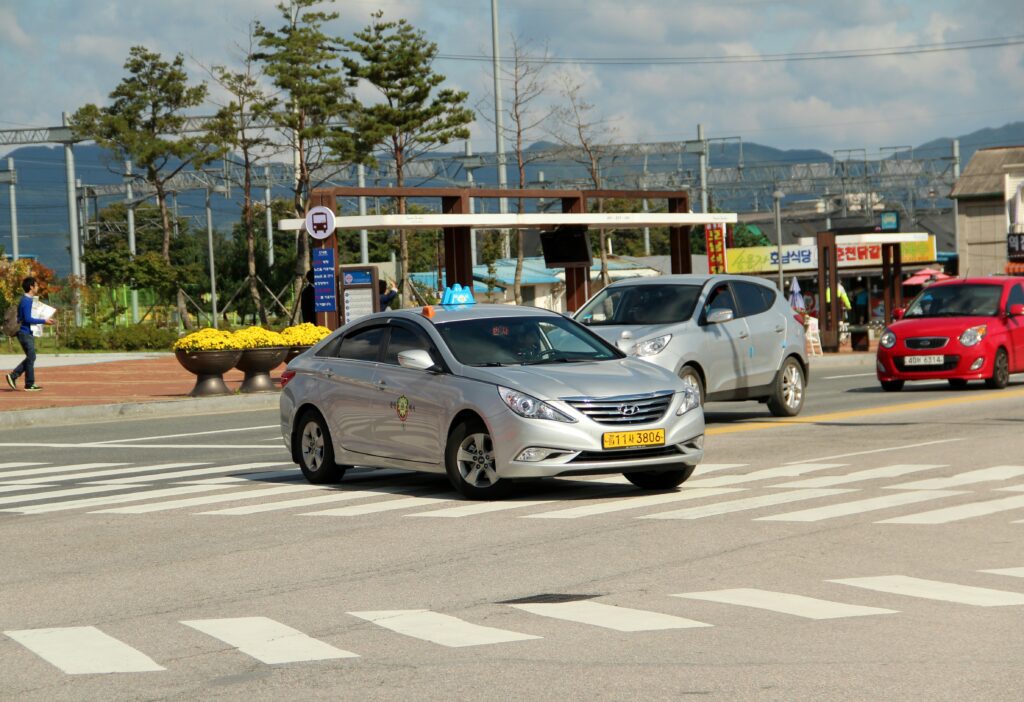
Do I Tip Taxi Drivers?
No.
Just pay the meter fare.
Koreans never tip taxi drivers.
If the fare is 9,800 won, you can say “만원 주세요”
(man-won juseyo = keep it as 10,000 won).
But this is rounding up for convenience, not tipping.
Most people just pay the exact amount or use T-money card.
I am 75 and will be spending a week solo in Korea. I have done so much research to learn how to be a respectful American. I am happy to spend 3 weeks in Hanoi then on to SK, embarrassed by country’s inept leader.
I have printed out your phrases and pronunciation to practice on the plane.
How odd it will be to not tip.
Linda, what a wonderful trip you have planned! Vietnam and Korea back to back — two of my favorite countries in Asia.
First, the fact that you’re taking time to learn Korean phrases means more than you know. Koreans genuinely light up when a visitor tries even a simple 감사합니다 (thank you) or 안녕하세요 (hello). You’ll get smiles everywhere. Practice on the plane and don’t worry about perfect pronunciation — the effort is what matters.
As for solo travel at any age — Korea is one of the safest countries I’ve ever lived in, and I’ve been here 35 years. The subway system is incredibly easy to navigate (with full English signage), convenience stores are on every corner, and people will go out of their way to help if you look lost. I’ve met solo travelers in their 70s and 80s here who all say the same thing: “I wish I’d come sooner.”
The no-tipping thing feels strange at first, I know! But you’ll get used to it fast. Just pay the listed price, say thank you, and walk out. It’s actually quite freeing once you stop doing the mental math.
A few quick tips for your week: download Naver Map (it works much better than Google Maps here), grab a T-money card at the airport for transit, and don’t skip a visit to a traditional market — Gwangjang Market is my favorite.
Have an incredible trip, Linda. Korea is going to surprise you in the best ways.
— Ted