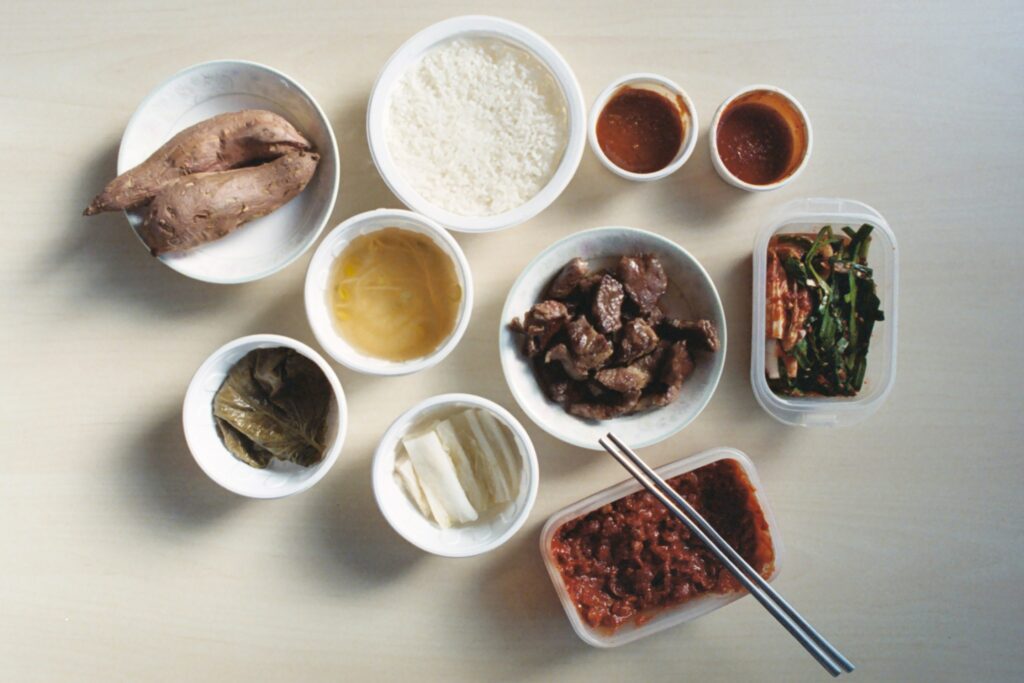
My first Korean restaurant order was a pointing disaster.
Small restaurant near my apartment. No English menu. No pictures. Just a wall of Korean characters I couldn’t read.
I pointed at something random. The ajumma looked skeptical but brought it out.
It was 순대 (sundae) — Korean blood sausage with intestines.
I wasn’t ready.
I ate it anyway (couldn’t afford to waste money), and honestly? I love sundae now. But that’s not the point. The point is: ordering food in Korea doesn’t have to be a mystery.
35 years of eating out in Korea taught me the system. Here’s everything I know.
Worried about ordering food in Korea without speaking Korean?
Don’t be.
Most restaurants are tourist-friendly, and you can get by with just a few phrases.
✅ Many menus have pictures ✅ Tourist areas have English menus ✅ Pointing works perfectly ✅ Staff are helpful and patient ✅ You only need 5-10 phrases
Even after 35 years, I often just point at the menu.
Types of Korean Restaurants
Before we get to phrases, understand how Korean restaurants work:
Type 1: Counter Ordering
Order at the counter, pay first, sit down.
Fast food
Gimbap shops
Cafes
Food courts
Type 2: Table Ordering
Sit down, order from a server.
Most Korean restaurants
BBQ places
Traditional restaurants
Type 3: Tablet/Kiosk Ordering
Order via tablet at your table or kiosk at entrance.
Many modern restaurants
Chain restaurants
Some have English option
Type 4: Self-Service
Take what you want, pay at the end.
Buffets
Some noodle shops
Market food stalls
10 Essential Phrases for Ordering
Before Ordering
English
Korean
Pronunciation
Excuse me (call server)
저기요
jeogiyo
Menu, please
메뉴판 주세요
menyu-pan juseyo
English menu?
영어 메뉴 있어요?
yeongeo menyu isseoyo?
What do you recommend?
뭐가 맛있어요?
mwoga mashisseoyo?
Pro tip: Say “저기요!” (jeogiyo) loudly. It’s not rude — it’s how Koreans call servers.
Ordering
English
Korean
Pronunciation
This one, please
이거 주세요
igeo juseyo
One of this
이거 하나요
igeo hanayo
Two of this
이거 두 개요
igeo du-gaeyo
One more, please
하나 더 주세요
hana deo juseyo
Numbers
Number
Korean
Pronunciation
1
하나
hana
2
둘
dul
3
셋
set
4
넷
net
5
다섯
daseot
Easy method: Hold up fingers and say “주세요” (juseyo). Two fingers + “juseyo” = two of this, please.
Special Requests
English
Korean
Pronunciation
Not spicy, please
안 맵게 해주세요
an maepge haejuseyo
Less spicy, please
덜 맵게 해주세요
deol maepge haejuseyo
No onion, please
양파 빼주세요
yangpa ppaejuseyo
Vegetarian
채식주의자예요
chaesik-juuija-yeyo
During the Meal
Free Side Dishes (Banchan)
Korean restaurants serve free side dishes called banchan.
They’re free
Refills are free
Just ask for more
English
Korean
Pronunciation
More side dishes
반찬 더 주세요
banchan deo juseyo
More rice
밥 더 주세요
bap deo juseyo
More water
물 더 주세요
mul deo juseyo
Other Useful Phrases
English
Korean
Pronunciation
Where is bathroom?
화장실 어디예요?
hwajangsil eodiyeyo?
It’s delicious!
맛있어요!
mashisseoyo!
It’s too spicy
너무 매워요
neomu maewoyo
Korean restaurant ordering is different:
In Western restaurants, a server comes to you. You order when ready. They check on you periodically.
Korean restaurants? You call them.
“저기요!” (jeogiyo!) — literally “over there!” but means “excuse me!”
Or press the button on your table. Most Korean restaurants have call buttons. Press it, a server comes.
My embarrassing first year:
I sat waiting for service like an American. 20 minutes passed. The staff ignored me.
Finally, a Korean businessman at the next table leaned over: “You have to call them. They’re not being rude. That’s just how it works.”
Life changed after that.
Why this system is actually better:
No one interrupts your meal to ask “how is everything?” You call when YOU need something. The servers aren’t hovering, expecting tips. Everyone’s more relaxed.
Paying the Bill
How to Pay
In Korea, you usually pay at the counter, not at the table.
English
Korean
Pronunciation
Check, please
계산이요
gyesaniyo
How much?
얼마예요?
eolmayeyo?
Card
카드요
kadeuyo
Cash
현금
hyeongeum
Receipt, please
영수증 주세요
yeongsujeung juseyo
Payment Tips
Most places accept credit cards
Some small restaurants are cash only
T-money works at some places
No need to tip!
Payment is different too:
In America, you wait for the check. The server brings it. You pay at the table.
In Korea, you get up and pay at the counter. No waiting for anyone.
My first time:
Finished my meal. Sat waiting for 20 minutes. Server walked past multiple times. I thought I was being ignored.
Finally asked for the bill. The server pointed at the counter by the door. “Pay there.”
Oh.
How it works now:
Finish eating
Walk to the counter
Say “계산이요” (gyesaniyo) or just hand over your T-money/card
Pay and leave
No splitting bills. No calculating tips. Just pay and go.
Exception:
Some nicer restaurants bring the bill to your table. But 90% of the time, you walk to the counter.
Restaurant-Specific Guides
Korean BBQ (고기집)
English
Korean
Pronunciation
1 serving
1인분
il-inbun
2 servings
2인분
i-inbun
Pork belly
삼겹살
samgyeopsal
Beef
소고기
sogogi
Cook it for me
구워 주세요
guwo juseyo
Lettuce, please
쌈 주세요
ssam juseyo
Important: Most BBQ places require minimum 2 servings.
Korean BBQ has its own set of rules. Read our complete Korean BBQ Etiquette Guide before your first visit.
Fried Chicken (치킨집)
English
Korean
Pronunciation
Fried chicken
후라이드 치킨
huraideu chikin
Spicy chicken
양념 치킨
yangnyeom chikin
Half-half
반반
banban
With beer
맥주랑 같이
maekjurang gachi
Noodle Shops (면집)
English
Korean
Pronunciation
Cold noodles
냉면
naengmyeon
Black bean noodles
짜장면
jjajangmyeon
Spicy seafood noodles
짬뽕
jjamppong
Extra noodles
사리 추가
sari chuga
Coffee Shops (카페)
English
Korean
Pronunciation
Americano
아메리카노
amerikano
Latte
라떼
latte
Hot
뜨거운 거
tteugeoun geo
Iced
아이스
aiseu
Small/Medium/Large
스몰/미디움/라지
seumol/midium/laji
Fun fact: “아아” (ah-ah) is slang for iced Americano. You’ll hear it everywhere.
Using Technology
Restaurant Tablets
Many Korean restaurants have ordering tablets:
Select language (look for 🇬🇧 or “English”)
Browse menu with pictures
Tap to add items
Press order button
Food arrives at your table
Food Delivery Apps
Want food delivered? Use these apps:
App
English Support
Coupang Eats
✅ Yes
Yogiyo
⚠️ Partial
Baemin
❌ Korean only
Set location to your hotel, browse, order, pay by card.
The only phrases you actually need:
I’ve survived 35 years with these:
Situation
Phrase
How I Use It
Get attention
저기요 (jeogiyo)
Daily. Multiple times.
Order
이거 주세요 (igeo juseyo)
Point + say this. Works everywhere.
One of this
이거 하나요 (igeo hanayo)
When ordering single items
Two of this
이거 두 개요 (igeo du gaeyo)
Most common for me
Water please
물 주세요 (mul juseyo)
Water is usually free
Bill please
계산이요 (gyesaniyo)
Or just walk to the counter
Thank you
감사합니다 (gamsahamnida)
Always. Every time.
The phrase that saved me most:
“이거 뭐예요?” (igeo mwoyeyo?) — “What is this?”
Point at a menu item. Ask this. Even if you don’t understand the answer, they’ll usually describe it with hand gestures or show you a picture.
When You Don’t Understand
These phrases save you:
Situation
Korean
Pronunciation
I don’t understand
모르겠어요
moreugesseoyo
Speak slowly
천천히 말해주세요
cheoncheonhi malhaejuseyo
One more time
다시 한번요
dasi hanbeonyo
Just this (pointing)
그냥 이거요
geunyang igeoyo
Remember: Pointing always works.
Common Restaurant Situations
Situation 1: No English Menu
Look for pictures on the wall
Ask what’s popular: “뭐가 맛있어요?”
Point at what others are eating
Use Google Translate camera
Situation 2: Not Ready to Order
Say: “잠시만요” (jamsimanyo) = “Just a moment”
Situation 3: Wrong Food Arrives
Eat it anyway (might be great!)
Or say “이거 아니에요” (igeo anieyo) = “This isn’t it”
Situation 4: Restaurant is Full
Staff says: “자리 없어요” (jari eopseoyo) = “No seats”
Ask: “얼마나 기다려요?” (eolmana gidaryeoyo) = “How long to wait?”
Dietary Restrictions
Restriction
Korean
Pronunciation
Vegetarian
채식주의자
chaesik-juuija
No meat
고기 안 먹어요
gogi an meogeoyo
No pork
돼지고기 안 먹어요
dwaejigogi an meogeoyo
No beef
소고기 안 먹어요
sogogi an meogeoyo
Allergic to…
…알레르기 있어요
…allereugi isseoyo
Peanut
땅콩
ttangkong
Shellfish
조개
jogae
Gluten
글루텐
geulluten
Reality check: Many Korean dishes have hidden meat/seafood. Vegetarian/vegan is challenging but possible.
Quick Reference Card
Save this for your trip:
========= KOREAN FOOD PHRASES =========
CALL SERVER: 저기요!(jeogiyo!)
THIS PLEASE: 이거 주세요 (igeo juseyo)
HOW MUCH?: 얼마예요? (eolmayeyo?)
DELICIOUS!: 맛있어요! (mashisseoyo!)
CHECK PLEASE: 계산이요 (gyesaniyo)
NOT SPICY: 안 맵게 (an maepge)
MORE PLEASE: 더 주세요 (deo juseyo)
NUMBERS: 1=하나 2=둘 3=셋 4=넷 5=다섯
=========================================
Frequently Asked Questions
What if I can’t read the menu?
Point at pictures, use Google Translate camera, or ask “추천해주세요” (chucheonhaejuseyo) = “Please recommend.”
Do I need Korean to eat in Korea?
No. Pictures, pointing, and basic phrases get you through 95% of situations.
Are staff friendly to tourists?
Yes! Koreans are very helpful. Don’t be shy about not speaking Korean.
What if I order wrong?
It’s fine. Smile, eat what comes, enjoy the adventure. Koreans understand tourists make mistakes.
Should I tip?
No! Tipping is not part of Korean culture. Just pay the bill amount.
Final Thoughts
35 years ago, I couldn’t order anything without panic.
Now I walk into any Korean restaurant — no English menu, no pictures, no problem. Point, ask, eat.
The system is different but logical:
Call for service when YOU need it
Point and say “이거 주세요”
Pay at the counter when done
You don’t need fluent Korean. You need confidence and three phrases.
The worst that happens? You get something unexpected. Like sundae.
And hey, you might discover you love it.
— Ted K
Want to try street food instead? Check out our Korean Street Food Guide for the 15 must-try dishes.