Back then, the Cold War had just ended. Tensions were still high. The tour felt genuinely dangerous — soldiers with fingers near triggers, strict rules about where to look, where to stand.
I remember standing at the JSA, looking across at North Korean soldiers staring back. The silence. The tension. Knowing that technically, the two Koreas were still at war.
35 years and probably 15 DMZ visits later, the experience still gives me chills.
The DMZ is unlike anything else in the world. The last Cold War border. Two countries technically still at war. A place where you can literally step into North Korea — for a few meters.
It’s not a relaxing day trip. But it’s unforgettable.
Here’s everything you need to know about visiting the DMZ.
What is the DMZ?
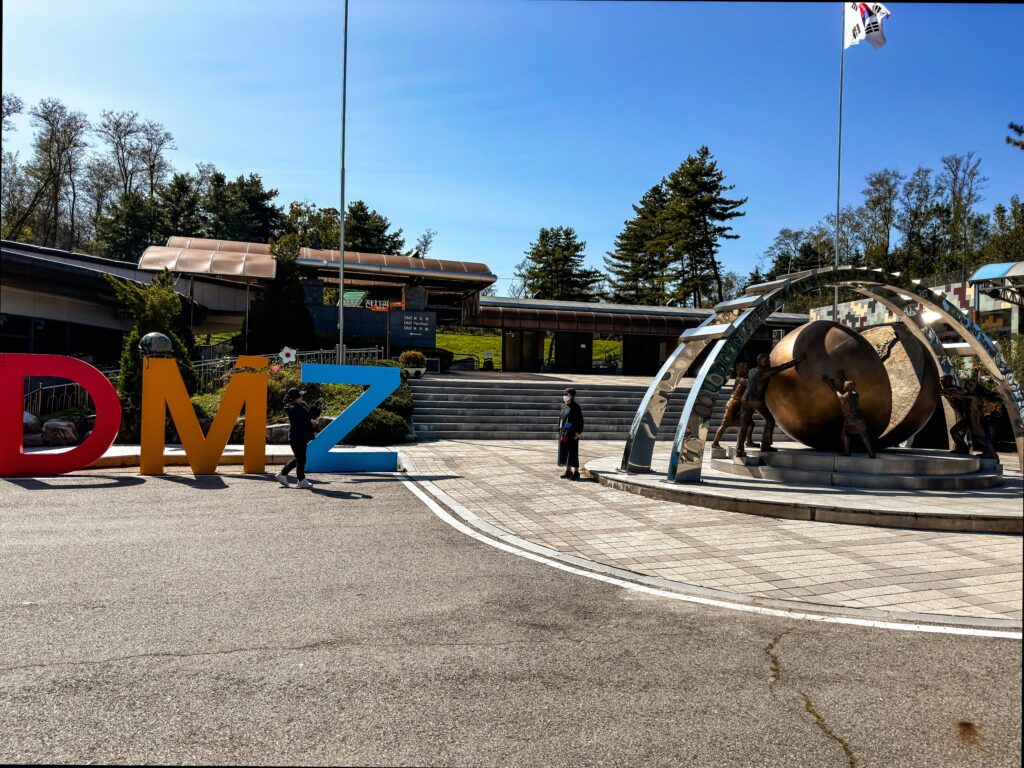
DMZ stands for Demilitarized Zone.
Fact
Detail
Length
250 km across Korean peninsula
Width
4 km (2 km each side of border)
Created
1953 (Korean War armistice)
Status
Technically still at war (no peace treaty)
Distance from Seoul
~50 km north
The irony:
It’s called “demilitarized,” but it’s one of the most heavily militarized borders on Earth. Millions of landmines. Thousands of soldiers. Constant surveillance.
What you can visit:
Area
Access
JSA (Panmunjom)
Tour only, limited
Imjingak Park
Free access
Third Tunnel
Tour only
Dora Observatory
Tour only
Dorasan Station
Tour only
Why Visit the DMZ?
1. It’s Historically Significant
The Korean War (1950-1953) killed millions. The armistice created this border. 70+ years later, it’s still active.
This isn’t ancient history. Families are still separated. The conflict isn’t resolved.
2. It’s Unique in the World
Where else can you:
Step into another country that you technically can’t visit?
See soldiers from two opposing armies facing each other?
Walk through a tunnel dug for invasion?
Look into a country frozen in time?
Nowhere.
3. It’s Surprisingly Moving
I’ve brought dozens of visitors. Many expect it to be “touristy.” They leave emotional.
The weight of history. The separation of families. The contrast between prosperous South and mysterious North.
It hits different in person.
4. It’s Close to Seoul
Only 50 km from Seoul. Half-day or full-day trip. Easy to fit into any Korea itinerary.
Types of DMZ Tours
1. JSA Tour (Panmunjom) — Most Popular
Detail
Info
What
Visit the actual border, blue UN buildings
Highlight
Step into North Korean territory
Duration
Full day (~8 hours)
Price
80,000-130,000원
Availability
Limited, book ahead
The JSA (Joint Security Area) is where negotiations happen. The blue buildings straddle the border. Inside one building, you can technically cross into North Korea.
This is the iconic DMZ experience.
My first JSA visit (1991):
We had to sign waivers acknowledging we could be killed. Soldiers briefed us on what to do if shooting started. No waving, pointing, or gesturing toward North Korean soldiers.
The tension was real. A few years earlier, a Soviet tourist had run across the border, triggering a firefight.
Current situation:
JSA tours were suspended for years due to COVID and occasional tensions. They’ve reopened, but availability changes based on political situation.
Always check current status before booking.
2. DMZ Tour (Without JSA)
Detail
Info
What
Imjingak, Third Tunnel, Dora Observatory, Dorasan Station
Highlight
Third Infiltration Tunnel
Duration
Half day (~5-6 hours)
Price
50,000-80,000원
Availability
Usually available
If JSA is closed or fully booked, this tour covers the other major sites.
Still impressive. Just not the actual border.
3. Combined JSA + DMZ Tour
Detail
Info
What
Everything — JSA + all DMZ sites
Duration
Full day (~9-10 hours)
Price
100,000-150,000원
Best value
Yes, if available
This is what I recommend if you have one day and JSA is open.
4. USO Tour
Detail
Info
What
American military-operated tour
Highlight
Run by actual US military
Duration
Full day
Price
~100,000원+
Booking
Through USO Korea
Originally for US military personnel, now open to tourists. Conducted by American soldiers — different perspective.
5. Sunset/Rail Bike Tours
Detail
Info
What
DMZ + rail bike along border
Vibe
More relaxed, scenic
Duration
Half day
Price
60,000-80,000원
Less intense, more scenic. Good for families or repeat visitors.
What You’ll See
JSA (Panmunjom)
The heart of the DMZ experience.
Site
What It Is
Blue UN Buildings
Conference rooms straddling the border
Military Demarcation Line
The actual border (concrete line)
North Korean buildings
Visible across the line
Freedom House
South Korean building at JSA
Flags
Massive North Korean flag visible
The blue buildings:
Inside the Conference Room, the border runs through the middle of the table. You can walk around to the “North Korean side.”
Technically, you’re in North Korea.
For about 30 seconds.
With soldiers watching.
North Korean soldiers:
Sometimes visible, sometimes not. When I visited in 2018, they were absent (improving relations). In 2023, they were back.
Their binoculars pointed at us. We pointed cameras at them.
Surreal.
Imjingak Park
Site
What It Is
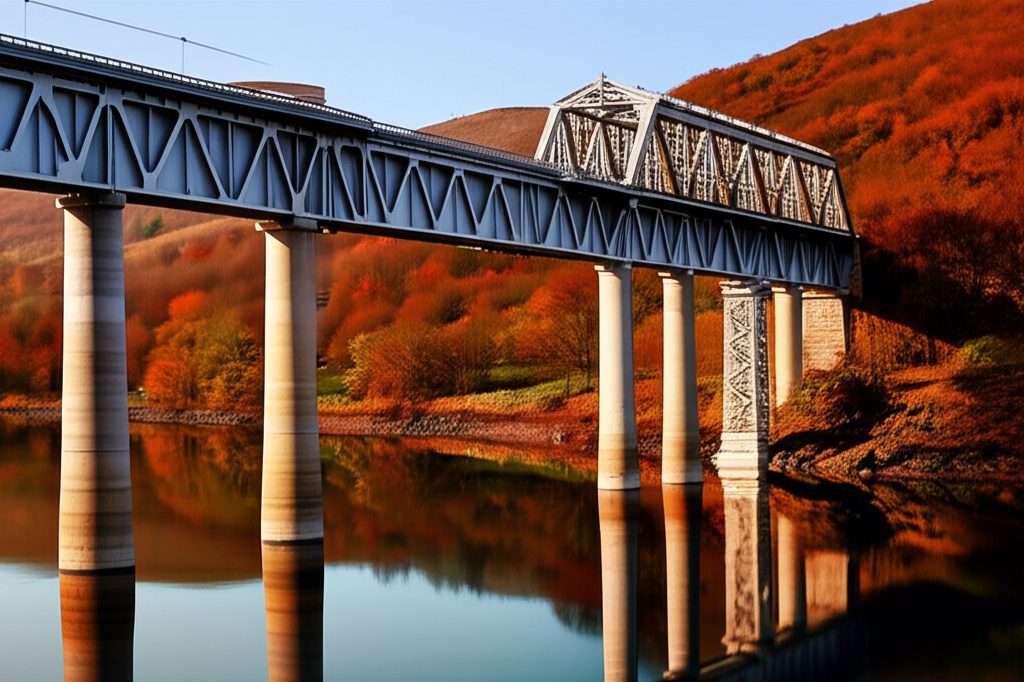
Freedom Bridge
Where POWs crossed after Korean War
Peace Bell
Ring for reunification hope
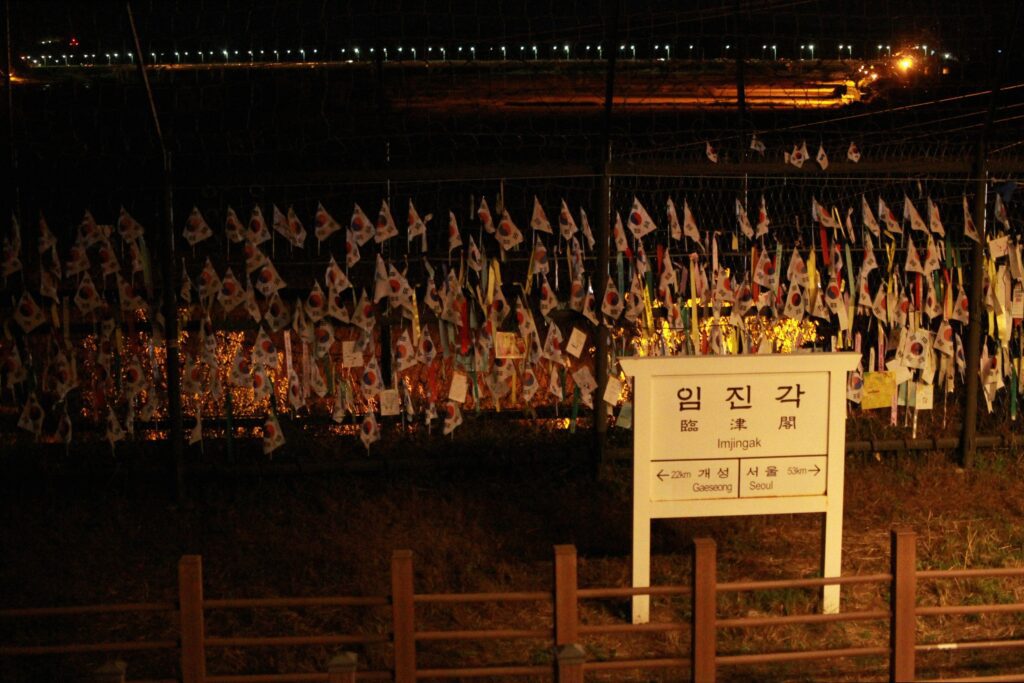
Ribbon fence
Messages from separated families
Amusement park
Oddly placed, surreal contrast
The ribbon fence:
Thousands of ribbons and messages tied by South Koreans with family in the North. Wishes for reunification. Names of lost relatives.
This is where the DMZ gets emotional.
My Korean friend found his grandmother’s message once. She’d written her parents’ names — separated since 1950, never saw them again.
Free to visit — you can come here without a tour.
Third Infiltration Tunnel
Detail
Info
Discovered
1978
Depth
73 meters underground
Length
1.6 km (435m accessible)
Purpose
North Korean invasion route
North Korea dug four known tunnels under the DMZ for potential invasion. This one could move 30,000 soldiers per hour.
The experience:
You walk down a steep slope into the tunnel. It gets narrow — bring a helmet (provided). The walls are raw rock.
At the end, you face a concrete wall. Beyond it: more tunnel, then North Korea.
Standing there, knowing soldiers planned to pour through this exact spot, is eerie.
Physical note:
The slope down is steep. The tunnel is cramped (~2m high). Not for claustrophobic visitors or those with mobility issues.
Dora Observatory
Detail
Info
What
Observation point looking into North Korea
What you see
Kaesong city, propaganda village, flag
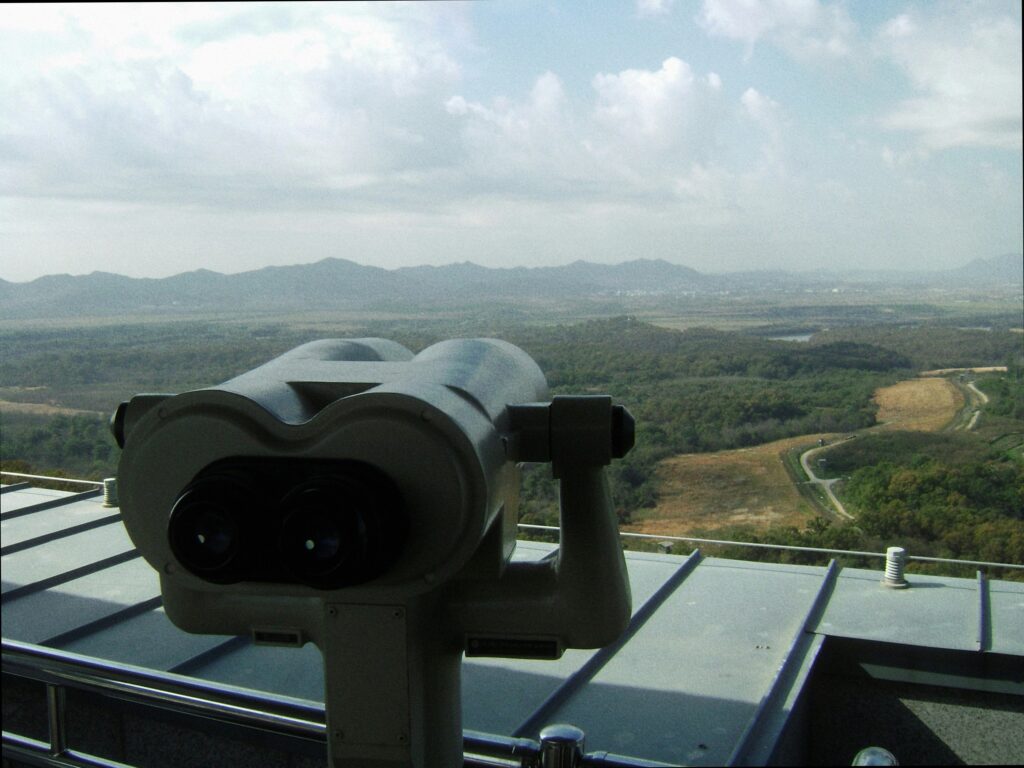
Through binoculars, you can see:
Kaesong: Actual North Korean city
Kijŏng-dong: “Peace Village” (propaganda village, possibly empty)
Giant North Korean flag: 160 meters tall
Photography is restricted past a certain line.
My observation:
Kaesong looks… normal from distance. Buildings, roads, movement. Then you remember those people can’t leave. Different universe, 2 km away.
Dorasan Station
Detail
Info
What
Train station built for future reunification
Status
Not operational (tracks end at DMZ)
Sign
“Not the last station from the South, but the first station toward the North”
Built with hope. Currently symbolic.
Trains sit waiting for the day they might cross into Pyongyang. That day hasn’t come.
The optimism of the early 2000s — frozen in architecture.
How to Book a DMZ Tour
You MUST Book a Tour
You cannot visit the DMZ independently.
Reason
Military controlled area
Passport required
Background check required
Restricted access points
No exceptions. Don’t try to go alone.
Where to Book
Platform
Notes
Klook
Popular, easy booking
Viator
International platform
Trazy
Korea-based
KTO Tours
Official tourism org
USO Korea
Military-run tours
Hotel concierge
Can arrange
My recommendation:
Klook or Viator for convenience. Compare JSA availability across platforms.
How Far in Advance?
Tour Type
Book Ahead
JSA Tour
2-4 weeks minimum
DMZ (no JSA)
3-7 days
Weekends
Book earlier
JSA tours sell out fast and require passport info for background checks.
Booking Requirements
Required
Details
Passport
Must bring on tour day
Passport info
Submit when booking
Nationality
Some restrictions apply
Nationality restrictions for JSA:
Some nationalities cannot visit JSA for security reasons. This has changed over time. Check current restrictions when booking.
Tour Day: What to Expect
Schedule (Typical Full-Day JSA Tour)
Time
Activity
7:00-8:00 AM
Pickup in Seoul
9:30 AM
Arrive Camp Bonifas (briefing)
10:30 AM
JSA visit
12:00 PM
Lunch
1:30 PM
Third Tunnel
2:30 PM
Dora Observatory
3:30 PM
Dorasan Station
4:30 PM
Imjingak
6:00 PM
Return to Seoul
Dress Code (Strict for JSA)
✅ Allowed
❌ Not Allowed
Neat casual
Ripped jeans
Covered shoulders
Sleeveless shirts
Long pants/modest shorts
Very short shorts
Closed shoes (recommended)
Flip-flops
Solid colors
Military-style clothing
Why?
You’re representing South Korea at an active military border. North Korea photographs tourists for propaganda. Don’t give them material.
I’ve seen people turned away for dress code violations. Don’t risk it.
I’ve paid for DMZ tours when hosting visitors. Never regretted it.
You can’t go alone, and the experience is genuinely unique. The cost covers logistics, permits, military coordination.
Compared to other “unique” world experiences, 100,000원 is reasonable.
Best Time to Visit the DMZ
By Season
Season
Conditions
Recommendation
Spring
Mild, clear
⭐⭐⭐ Good
Summer
Hot, humid
⚠️ Tiring
Fall
Perfect weather
⭐⭐⭐ Best
Winter
Cold, clear views
⭐⭐ Good (dress warm)
Best months: April-May, September-November
The tunnel and observatory visits are fine year-round, but extreme heat or cold makes the day harder.
By Day
Day
Crowds
Weekdays
Less crowded
Weekends
More crowded
Tuesday: JSA is closed on Mondays, so Tuesday often has more availability than other weekdays.
Political Considerations
Important: DMZ access changes based on North-South relations.
Situation
Impact
Tensions high
JSA may close
Improving relations
More access
Military exercises
Possible closures
2017-2018: Improving relations, JSA very accessible. 2022-2023: Tensions, JSA restricted. 2024-2026: Check current status.
Always verify tour availability before booking flights.
JSA Closure: What to Do Instead
If JSA is closed or unavailable:
Option 1: DMZ Tour Without JSA
Still worthwhile. Third Tunnel and Dora Observatory are impressive.
Option 2: Civilian Control Line Tour
Some tours visit areas between Seoul and the DMZ:
Cheorwon (divided city)
Peace Dam
Different infiltration tunnels
Less famous but interesting.
Option 3: North Korea Viewpoints
Location
What You See
Odusan Unification Observatory
North Korean villages across river
Ganghwa Peace Observatory
Northwestern DMZ views
These are accessible without military tours.
My Personal DMZ Experiences
1991: First Visit
Cold War had just ended. Tension was palpable. Soviet tourist defection was recent memory.
We signed actual death waivers. Soldiers briefed us on “incident” procedures.
Standing at the JSA, North Korean soldiers glared at us. One raised binoculars. Our soldiers stood motionless.
I genuinely felt we might not return safely.
2002: World Cup Era
Optimism everywhere. North-South relations improving. Talk of reunification.
The DMZ felt different — hopeful. Tour guides talked about trains to Pyongyang “soon.”
That optimism faded.
2018: Peace Summit Period
Just months after Moon-Kim summits. Historic hope.
JSA felt almost relaxed. North Korean soldiers absent. Talk of demining.
I thought: maybe in my lifetime?
Still waiting.
2023: Back to Tension
Soldiers back at JSA. Stricter rules. Warnings about provocations.
The cycle continues.
Frequently Asked Questions
Is visiting the DMZ safe?
Yes, for tourists. Millions have visited without incident. You’re with military guides, following strict protocols. The “danger” is more theoretical than practical. That said, it is an active military zone — follow all rules.
Can I visit the DMZ without a tour?
No. The DMZ is a restricted military area. All visitors must join authorized tours that coordinate with military authorities. Independent visits are not possible.
Can I visit North Korea from the DMZ?
Technically, yes — for a few seconds. Inside the JSA Conference Room, you can walk around the table to the North Korean side. You’re “in” North Korea, but cannot exit the building or go further.
How long is a DMZ tour?
Half-day tours (DMZ only) take 5-6 hours. Full-day tours including JSA take 8-10 hours. Most of this is travel time from Seoul.
What nationalities cannot visit the JSA?
Restrictions change based on political situations. Citizens of countries North Korea considers hostile may be restricted. Check with tour operators for current nationality restrictions.
Is the Third Tunnel scary?
It’s underground and narrow, which bothers some people. If you’re claustrophobic, it might be uncomfortable. It’s not “scary” in a horror sense — just historically eerie knowing its invasion purpose.
What happens if tensions rise during my visit?
Tours would be cancelled, and you’d be refunded or rescheduled. Tour operators monitor the situation constantly. If you’re already at the DMZ and something happens, military protocols exist for visitor evacuation.
Should I book JSA or regular DMZ tour?
JSA if available. It’s the iconic experience — the actual border, blue buildings, technically stepping into North Korea. The regular DMZ tour is still worthwhile if JSA is unavailable.
The first time terrified me. The latest time still moved me.
The DMZ isn’t fun in the way most travel is fun. There’s no rollercoaster, no beach, no Instagram moment (well, maybe one at the blue buildings).
But it’s important.
This border represents millions of lives — lost in war, separated from family, living under different systems. It’s a reminder that history isn’t just textbooks. It’s happening now, 50 km from one of Asia’s most vibrant cities.
Some visitors find it boring. “Just looking at buildings and tunnels.”
Others cry. A Korean-American on my 2018 tour had family in the North. She touched the fence at Imjingak and sobbed.
I can’t promise which experience you’ll have.
But I can promise it’ll be unlike anywhere else you’ve been.