The first time was 1989, a week after I arrived in Korea. I wandered in knowing nothing — no guidebook, no Korean language skills, no context. Just a guy staring at old buildings.
I thought it was nice. Pretty. Historic.
I didn’t understand anything.
Now, 35 years later, I see it completely differently. I’ve watched the restoration projects progress. I’ve attended royal reenactments. I’ve walked through the gates in every season — cherry blossoms, summer heat, autumn colors, winter snow.
Gyeongbokgung isn’t just a tourist attraction. It’s the heart of Korean history. The place where dynasties rose and fell. Where kings ruled and queens were assassinated. Where Japan tried to erase Korean identity, and where Korea rebuilt it.
Here’s everything I’ve learned in 35 years of visiting.
Gyeongbokgung is Korea’s most iconic palace.
600 years of history. The symbol of Joseon Dynasty. The most visited attraction in Seoul.
Here’s how to experience it properly.
Why the history matters:
Most tourists rush through Gyeongbokgung taking selfies. They don’t know what they’re looking at.
I was that tourist in 1989.
Then a Korean friend told me about Queen Min. She was assassinated by Japanese agents right here, in this palace, in 1895. They burned her body to hide the evidence.
When Japan colonized Korea, they deliberately demolished most of Gyeongbokgung. They built their colonial headquarters directly in front of Gwanghwamun gate — a symbolic humiliation.
After independence, Korea has spent decades painstakingly restoring the palace. Every building you see represents a choice to reclaim history.
Once I learned this, Gyeongbokgung stopped being “pretty old buildings.” It became a symbol of survival and resilience.
My recommendation: Read a little history before you visit. It transforms the experience.
Quick Facts
Info
Details
Name
Gyeongbokgung (경복궁)
Built
1395
Size
410,000 m²
Hours
9 AM – 6 PM (varies by season)
Closed
Tuesdays
Admission
3,000원 adults
Free Entry
Wearing hanbok
How to Get There
Subway:
Gyeongbokgung Station (Line 3)
Exit 5 → Walk 5 minutes
Alternative:
Gwanghwamun Station (Line 5)
Exit 2 → Walk 10 minutes
I recommend Gyeongbokgung Station. Exit 5 leads directly to entrance.
Admission
Regular Price
Category
Price
Adults (19-64)
3,000원
Youth (7-18)
1,500원
Children (under 7)
Free
Seniors (65+)
Free
Free Entry
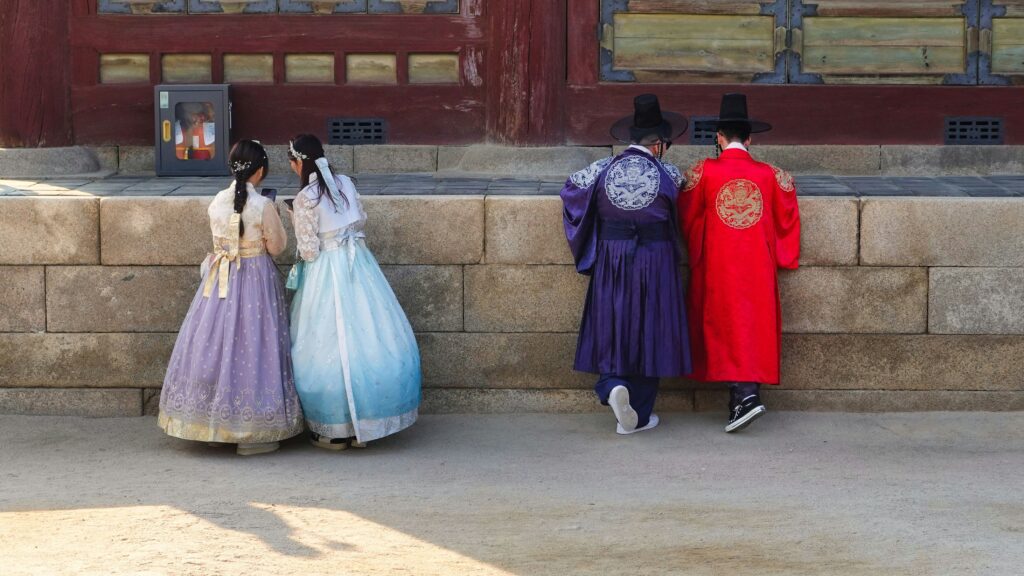
Wear hanbok = free admission. This is real. Rent hanbok, enter free.
It’s why you see so many people in traditional dress at the palace.
Integrated Ticket
Option
Price
Includes
4 Palace Pass
10,000원
Gyeongbokgung + 3 more
Valid for 3 months. Good if visiting multiple palaces.
Included palaces:
Gyeongbokgung
Changdeokgung
Changgyeonggung
Deoksugung
Jongmyo Shrine
Hours by Season
Season
Hours
Mar – May
9 AM – 6 PM
Jun – Aug
9 AM – 6:30 PM
Sep – Oct
9 AM – 6 PM
Nov – Feb
9 AM – 5 PM
Last entry: 1 hour before closing Closed: Every Tuesday
My confession:
I’ve seen the changing of the guard ceremony probably 30 times.
It still gives me chills.
The drums. The traditional costumes. The choreographed movements. It’s not just performance — it’s a recreation of exactly how royal guards operated during the Joseon Dynasty.
Best viewing strategy:
Arrive 20 minutes early. Everyone crowds at the front center. Don’t go there.
Instead, stand to the side, near the left wall as you face the gate. Better angle for photos, fewer heads in your shot. I learned this after years of blocked photos.
Lesser-known ceremony:
Most tourists only know about the 10 AM and 2 PM ceremonies at the main gate.
But there’s also a smaller “sumunjang” ceremony inside, near Heungnyemun gate. Fewer tourists. More intimate. Check the schedule when you arrive.
Rain or shine:
The ceremony happens in rain, heat, snow — everything except extreme weather. I once watched it during a light snowfall. The guards in colorful hanbok against white snow. Absolutely magical.
What to See
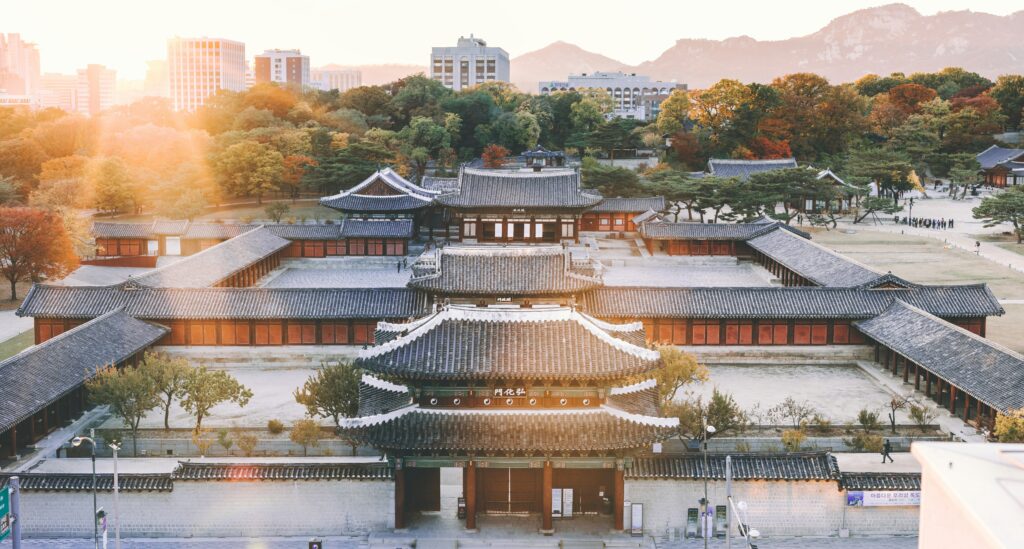
1. Gwanghwamun Gate (광화문)
The main gate. Most photographed spot. Symbol of Seoul.
Changing of the Guard:
Times: 10 AM, 2 PM (20 min each)
Skip if: Raining or below -5°C
Where: In front of Gwanghwamun
Don’t miss this if timing works.
The gate that moved:
Here’s something most tourists don’t know: Gwanghwamun has been moved multiple times.
During Japanese occupation, they relocated the gate to the side — breaking feng shui principles and disrespecting Korean tradition on purpose.
After independence, it was moved again. And again. The current location, restored in 2010, is finally the original spot.
I watched the 2010 restoration ceremony. Thousands of Koreans gathered at dawn. Some were crying. An elderly woman next to me said: “Finally, our gate is home.”
That moment made me understand how deeply Koreans feel about this place.
Photo tip: The best Gwanghwamun photo spot is from Gwanghwamun Square, looking back at the gate with the mountains behind it. Early morning light is perfect — I’ve taken this shot dozens of times.
2. Heungnyemun Gate (흥례문)
Second gate after entering. Beautiful courtyard. Good photo spot.
3. Geunjeongjeon Hall (근정전)
The throne hall. Most important building. Where kings held ceremonies.
Look for:
Dragon carvings
Stone markers (show rank positions)
Mountain backdrop (Bukhansan)
4. Gyeonghoeru Pavilion (경회루)
Stunning pavilion on a lake. Most beautiful spot in palace. Especially gorgeous in autumn.
Was used for royal banquets. Now used for events.
5. National Folk Museum
Inside palace grounds. Shows traditional Korean life. Good for cultural context.
Hours: Same as palace Extra cost: Free with palace ticket
6. National Palace Museum
Near the entrance. Korean royal heritage. Air-conditioned!
Good for:
Hot summer days
Rainy days
History lovers
Geunjeongjeon (근정전) — The Throne Hall:
This is where kings were crowned and received foreign envoys.
Stand in front and look at the ground. See the stone markers? Each one marked where officials stood during ceremonies, ranked by position. The closer to the throne, the higher the rank.
I always tell visitors: “You’re standing where ministers stood 500 years ago, waiting for the king’s commands.”
Suddenly it’s not just an old building. It’s a time machine.
Gyeonghoeru (경회루) — The Pavilion:
This floating pavilion is my favorite spot in all of Seoul.
In spring, cherry blossoms frame it. In summer, lotus flowers bloom in the pond. In autumn, the reflection of red leaves on the water is breathtaking. In winter, the frozen pond creates a mirror effect.
I’ve photographed Gyeonghoeru in every season. The autumn reflection shot took me three years to get right — perfect leaves, perfect stillness, perfect light.
Pro tip: Most tourists stand at the front fence and take photos. Walk around to the back side. Almost no one goes there. The view is equally beautiful, and you’ll have it to yourself.
Hyangwonjeong (향원정) — The Hidden Gem:
Walk past the main buildings, all the way to the back of the palace grounds.
There’s another pavilion called Hyangwonjeong, on a small island connected by a wooden bridge. Most tour groups skip this area.
It’s quieter, more intimate, and almost as beautiful as Gyeonghoeru. I often end my visits sitting on a bench near here, just watching the water.
Best Photo Spots
Top 5 Instagram Spots
Gwanghwamun Gate – Front entrance
Gyeonghoeru Pavilion – Lake reflection
Geunjeongjeon – Throne hall
Rear garden – Amisan chimney area
Any colorful corridor – Hanbok photos
Photo Tips
Morning = fewer crowds
Hanbok = better photos
Autumn = beautiful colors
Winter snow = magical (rare)
Hanbok Rental
Should You Rent Hanbok?
Pros:
Free palace entry (saves 3,000원)
Beautiful photos
Cultural experience
Fun!
Cons:
Takes time to dress
Can be uncomfortable
Crowded rental shops
Walking in hanbok is tricky
My opinion: Do it once. It’s a unique experience.
Where to Rent
Many shops near Gyeongbokgung Station.
Price range: 15,000-30,000원 for 2 hours Premium hanbok: 30,000-50,000원+
Popular shops:
Oneday Hanbok
Gyeongbok Palace Hanbok
Hanboknam
Rental Tips
Book ahead on weekends
Go early (before 10 AM)
2 hours is enough for photos
Wear comfortable shoes underneath
Hair styling often included
Wearing hanbok? Make sure you know the etiquette. Our Korean Etiquette Guide covers cultural do’s and don’ts.
Yes, I’ve worn hanbok:
My Korean mother-in-law insisted. “You’ve lived here 30 years and never wore hanbok properly? Unacceptable.”
So for Chuseok one year, I wore full traditional hanbok to Gyeongbokgung. My wife. My kids. Me — a tall foreigner in Korean royal-style clothing.
I expected to feel ridiculous. Instead, I felt… connected. Like I was participating in something bigger than tourism.
Koreans kept stopping us for photos. Not mocking — genuinely happy to see a foreigner embracing their culture.
My honest advice:
If you’re hesitating because you’ll “look silly” — don’t.
Koreans love seeing foreigners in hanbok. It’s respect, not appropriation. You’ll get smiles, compliments, and probably the best photos of your trip.
Practical tips from my experience:
Walking is hard. Traditional hanbok wasn’t designed for hiking. Go slow.
Sitting is harder. The skirts are complicated. Practice before you need to rest.
Bathroom breaks require planning. Trust me on this.
Book morning rentals. Afternoon gets hot, and you’ll be sweating in heavy fabric.
Best rental shops:
I’ve used shops on both the east side (Anguk Station) and west side (Gyeongbokgung Station). East side has more options and competition, so prices are slightly better.
Budget 15,000-25,000원 for a basic 2-hour rental. Fancier “premium” hanbok costs more but photographs much better.
Guided Tours
Free English Tours
Time
Duration
11:00 AM
60-90 min
1:30 PM
60-90 min
3:00 PM
60-90 min
Meeting point: Inside Heungnyemun Gate
No reservation needed. Just show up on time.
Highly recommended. You’ll learn so much more.
Take the free tour. Seriously.
My first 10 visits to Gyeongbokgung, I wandered alone. I saw buildings. I took photos. I understood nothing.
Then I joined a free English tour. 90 minutes with a knowledgeable guide.
Suddenly the buildings had stories. That pavilion? Where the king relaxed after meetings. That small building? Where the queen was assassinated. That stone? Feng shui positioning to protect the kingdom.
Same palace. Completely different experience.
Tour schedule:
English tours: 10 AM, 12:30 PM, 2:30 PM
Meet at the information booth inside Heungnyemun gate
Free. No reservation needed.
My recommendation: Do the tour your first visit. Then come back alone to absorb it at your own pace.
The docents are volunteers who genuinely care about sharing their history. I’ve never had a bad tour in dozens of visits.
Audio Guide
Cost: 3,000원
Languages: English, Chinese, Japanese
Rent at: Information center near entrance
35 years of seasonal visits — here’s what I’ve learned:
Spring (April)
Cherry blossom season. Absolutely packed. Beautiful but chaotic.
My strategy: arrive at 9 AM sharp on a weekday. You’ll have about 45 minutes of relative peace before the crowds hit.
The cherry blossoms near Hyangwonjeong are less crowded than the main areas. Worth the walk.
Summer (July-August)
Honestly? I avoid it.
Hot, humid, miserable. The palace has no shade in the main courtyards. I’ve seen tourists collapse from heat exhaustion.
If you must go in summer, go at 9 AM or after 5 PM. Bring water. Bring a fan. Prepare to suffer.
Autumn (October-November)
My favorite. No contest.
The ginkgo trees turn golden yellow. The maples go red. The sky is clear blue. Temperature is perfect.
The catch? Everyone knows this. October weekends are extremely crowded.
Secret timing: The Tuesday after a long weekend. Koreans take the holiday weekend OFF, then go back to work. The palace is surprisingly empty that Tuesday.
Winter (December-February)
Cold but magical.
I’ve visited during snowfall twice in 35 years. The palace covered in white, with red and blue buildings emerging from the snow — it’s otherworldly.
Even without snow, winter has advantages: smaller crowds, clear air, and the winter light gives photos a different quality.
Winter tip: The heated ondol floors in Jibokjae (a small building near the back) offer a warm rest stop. Most tourists don’t know about it.
Night Visits (Special Events)
A few times per year, Gyeongbokgung opens at night.
I went in 2019. The palace lit up with traditional lanterns. Musicians playing in the courtyards. It felt like stepping back 500 years.
These events sell out instantly — tickets go on sale months ahead. Set a reminder. It’s worth the effort.
Practical Tips
Time Needed
Quick visit: 1-1.5 hours
Regular visit: 2-3 hours
With hanbok + photos: 3-4 hours
Best Time to Visit
Best: Weekday mornings, 9-10 AM Good: Late afternoon, 4-5 PM Avoid: Weekends, holidays, 11 AM-2 PM
Samgyetang (ginseng chicken soup) at 토속촌 near Gyeongbokgung Station
Or Korean BBQ in Insadong area
Total walking: about 5-6 km. Comfortable shoes essential.
This route hits all the traditional Seoul highlights without backtracking or wasting time.
Food Near Gyeongbokgung
Samcheong-dong (삼청동)
Trendy cafes and restaurants. 5-minute walk from palace.
Traditional Korean restaurants
Cute cafes
Street food
Seochon (서촌)
Local neighborhood feel. Behind the palace.
Less touristy
Local restaurants
Hidden gems
Budget Option
Convenience stores near station. Eat before/after palace visit.
History in Brief
Timeline
1395: Built by King Taejo
1592: Destroyed by Japanese invasion
1867: Rebuilt by Regent Heungseon
1910-1945: Damaged during Japanese occupation
1990s-now: Restoration ongoing
Why It Matters
Gyeongbokgung means “Palace Greatly Blessed by Heaven.”
It was the main royal palace. Where kings lived and ruled. Center of Korean political power.
Understanding this helps appreciate why Koreans take such pride in it.
Common Questions
Can I re-enter after leaving?
No. One entry per ticket.
Is it wheelchair accessible?
Partially. Main areas yes. Some buildings have steps.
Can I take photos inside buildings?
No. Only exterior photos. Interiors are protected.
Are there bathrooms?
Yes. Several locations. Clean and free.
Can I bring food?
Yes, but eat at designated areas. No eating inside palace buildings.
Is it worth it?
Absolutely. 3,000원 for 600 years of history. One of Seoul’s must-dos.
Photography Tips from 35 Years of Shooting
I’m not a professional photographer. But I’ve taken thousands of photos here.
Best Photo Spots
Spot #1: Gwanghwamun from Gwanghwamun Square
Look back at the gate with mountains behind
Best light: morning (8-10 AM)
Stand on the right side of the street for best angle
Spot #2: Geunjeongjeon reflection
After rain, puddles form in the courtyard
Get low, capture the reflection
Requires luck with weather
Spot #3: Gyeonghoeru Pavilion
Front side for classic shot
Back side for secret angle (almost no tourists)
Spring with cherry blossoms, autumn with foliage
Spot #4: Between Buildings
Stand between two buildings, shoot a third building framed between them
Creates depth and symmetry
Morning or evening light only
Light Conditions
Time
Best For
9-10 AM
Soft morning light, Gwanghwamun shots
12-2 PM
Avoid — harsh shadows
4-5 PM
Golden hour, warm colors
5-6 PM
Dramatic sunset backdrop
My Mistakes to Avoid
Mistake #1: Shooting at noon. Shadows are terrible. Buildings look flat.
Mistake #2: Only shooting buildings. The details matter — roof tiles, door paintings, stone carvings.
Mistake #3: Ignoring the back areas. Hyangwonjeong and the rear gardens are less photogenic but more peaceful.
Mistake #4: Not waiting for crowds to clear. Patience gets you empty-courtyard shots that look professional.
I once waited 20 minutes for a single shot of Geunjeongjeon without people. Worth it.
My Recommendations
First-Time Visitor
Arrive at 9 AM (beat crowds)
Rent hanbok nearby
Enter free with hanbok
Take photos at main spots
Join 11 AM English tour
Return hanbok
Lunch in Samcheong-dong
Walk to Bukchon
History Lover
Get palace integrated ticket
Join guided tour
Visit both museums
Spend 3+ hours
Visit other palaces another day
Photographer
Come at opening or closing
Wear hanbok for photos
Find quiet corners
Autumn or snow = best
Weekday = fewer crowds
Is Gyeongbokgung worth visiting?
Without question — it’s my #1 recommendation for first-time Seoul visitors.
In 35 years, I’ve taken maybe 100 people to Gyeongbokgung. Business visitors, friends, family. Every single one was impressed.
It’s not just about the buildings. It’s about understanding Korea. This palace is where Korean history happened. You can’t understand this country without seeing it.
Go early. Take the tour. Give it at least 2 hours.
How much time do I need at Gyeongbokgung?
Minimum: 1.5 hours (rushed, main buildings only) Recommended: 2.5-3 hours (comfortable pace, most areas) Ideal: Half day (with nearby Bukchon, Samcheong-dong)
I’ve spent entire days here and still found new things. But for most visitors, 2-3 hours hits the sweet spot.
If you’re doing the English tour (90 minutes), add 30 minutes before and after for exploration.
What’s the best time to visit Gyeongbokgung?
Early morning, weekday, autumn.
That’s the perfect combination — but not always possible.
Second choice: early morning, weekend, any season. The key is beating the crowds by arriving at 9 AM opening.
Avoid: Weekend afternoons in spring and autumn. Korean families, tour buses, influencers in hanbok — absolute chaos.
Can I wear hanbok to Gyeongbokgung?
Yes — and you should.
Free admission if you’re wearing hanbok. Better photos. Unique experience.
I resisted for years, thinking it was “tourist-y.” Then I tried it. Now I recommend it to everyone.
The rental shops have changing rooms, lockers for your stuff, and basic instructions. The whole process takes 20-30 minutes.
Is Gyeongbokgung free?
3,000원 for adults. Free with hanbok.
But even without hanbok discount, 3,000원 for a 600-year-old royal palace is incredible value. That’s less than a cup of coffee.
The national museum inside (National Palace Museum of Korea) is completely free. Most tourists skip it — but it has incredible artifacts and explains everything you just saw.
Final Thoughts
I remember my first visit in 1989. I saw pretty buildings. I understood nothing.
I remember my visit in 2010, when Gwanghwamun gate was restored to its original location. Koreans were crying. I finally understood why.
I remember visiting with my Korean children, explaining how their ancestors lived here. Watching history come alive in their eyes.
Gyeongbokgung isn’t just a palace. It’s a symbol of Korean resilience. Destroyed by invasion, neglected for decades, then painstakingly restored piece by piece.
Every tile on those roofs represents a choice to remember. To reclaim. To rebuild.
When you visit, you’re not just seeing old buildings. You’re witnessing a nation’s pride.
Take your time. Read the history. Join a tour. Come back more than once.
After 50+ visits, I’m still discovering new things.
Thank you so much, Anna! I’m really glad the guide was helpful. If you have any questions while planning your trip to Korea, feel free to leave a comment anytime. Enjoy your visit!
Thank you for this very detailed guide. The information is so helpful. Glad I found your guide.
Thank you so much, Anna! I’m really glad the guide was helpful. If you have any questions while planning your trip to Korea, feel free to leave a comment anytime. Enjoy your visit!
— Ted