Not on purpose. Never on purpose. But cultural mistakes pile up when you don’t know the rules.
I’ve handed business cards with one hand (rude). Poured my own soju (selfish). Written names in red ink (death wish, apparently). Sat in priority subway seats (social suicide).
35 years of mistakes taught me what guidebooks don’t cover.
Korean etiquette isn’t about rigid rules. It’s about respect — for elders, for hierarchy, for community. Once I understood the WHY, the rules made sense.
Here’s what I wish someone told me in 1989.
Korea has unwritten rules that confuse tourists.
What’s polite in your country might be rude here. What seems rude might actually be normal.
After 35 years living in Korea, here are the etiquette rules that actually matter.
The Most Important Rule
Koreans don’t expect foreigners to know every rule.
They appreciate effort, not perfection.
If you make a mistake, smile and apologize. Nobody will be offended.
This shows respect. Younger Koreans may skip this, but it’s traditional.
Can You Refuse Alcohol?
Yes, absolutely.
Say: “술 못 마셔요” (sul mot mashyeoyo) = “I can’t drink alcohol”
Koreans understand. They might offer you soda instead.
Shoes Off Indoors
When to Remove Shoes
Traditional restaurants (floor seating)
Korean homes
Some guesthouses
Temples
Jjimjilbangs (Korean spas)
Fitting rooms (sometimes)
How to Know
Look for:
Shoes lined up at the entrance
Raised floor or platform
Slippers provided
Other people barefoot/in socks
Tips
Wear clean socks without holes
Slip-on shoes are convenient
Some places provide slippers
Wondering about tipping? Short answer: don’t. Read our Tipping in Korea Guide for the full explanation.
The shoes mistake everyone makes:
Korean homes, many restaurants, and temples require shoes off.
There’s usually a raised floor. Shoes stay below. You step up shoeless.
My embarrassing moment:
Invited to a Korean colleague’s home for dinner. First time. I was nervous.
Walked right in with my shoes on. Onto their nice clean floor. Three steps before I noticed everyone’s faces.
The horror. THE HORROR.
I apologized for 20 minutes. They were gracious, but I still cringe thinking about it.
What I do now:
I wear slip-on shoes everywhere. Easy on, easy off. No fumbling with laces while everyone waits.
And I watch the entrance. If there’s a step up or shoes lined up — mine come off immediately.
Public Transportation Etiquette
Priority Seats
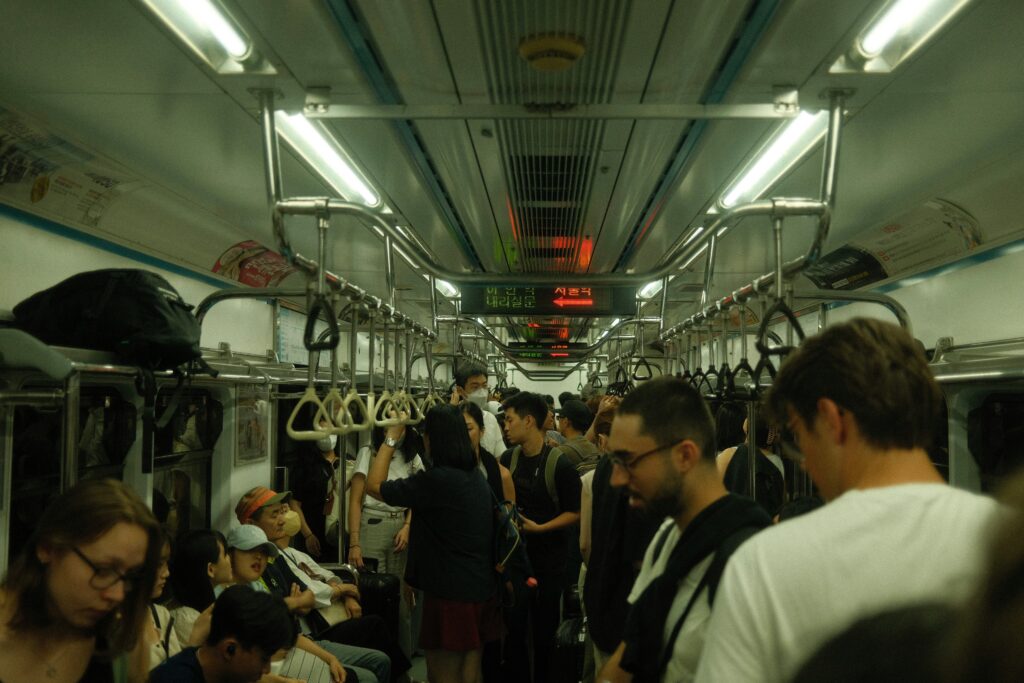
Subway has pink/marked priority seats.
These are for:
Elderly
Pregnant women
Disabled persons
People with infants
Never sit here unless the train is empty. Even if they’re available. Even if an elderly person says it’s okay.
Koreans will judge you silently.
General Subway Rules
Do
Don’t
Keep voice down
Talk loudly on phone
Move to the center
Block the doors
Give seat to elderly
Eat smelly food
Use headphones
Play music out loud
Let people exit first
Rush into the train
Bus Etiquette
Board through front door
Exit through back door (usually)
Tap T-money when boarding AND exiting
Say “내릴게요” (naerilgeyo) = “I’m getting off” if crowded
Business Card Etiquette
If you’re doing business in Korea:
Giving Cards
Present with both hands
Card facing the recipient
Slight bow
Receiving Cards
Accept with both hands
Look at it carefully (shows respect)
Don’t write on it in front of them
Don’t put in back pocket (sits on their name)
Place on table or in card holder
Taking Photos
Ask Permission
Before photographing people
At temples (some areas prohibited)
At museums (varies)
Inside restaurants (usually okay)
Selfie Culture
Korea is selfie-friendly.
Selfie sticks are common
Photo zones are everywhere
People are used to tourists taking pictures
Just be mindful of private moments.
Temple Etiquette
When visiting Buddhist temples:
Do
Dress modestly (cover shoulders and knees)
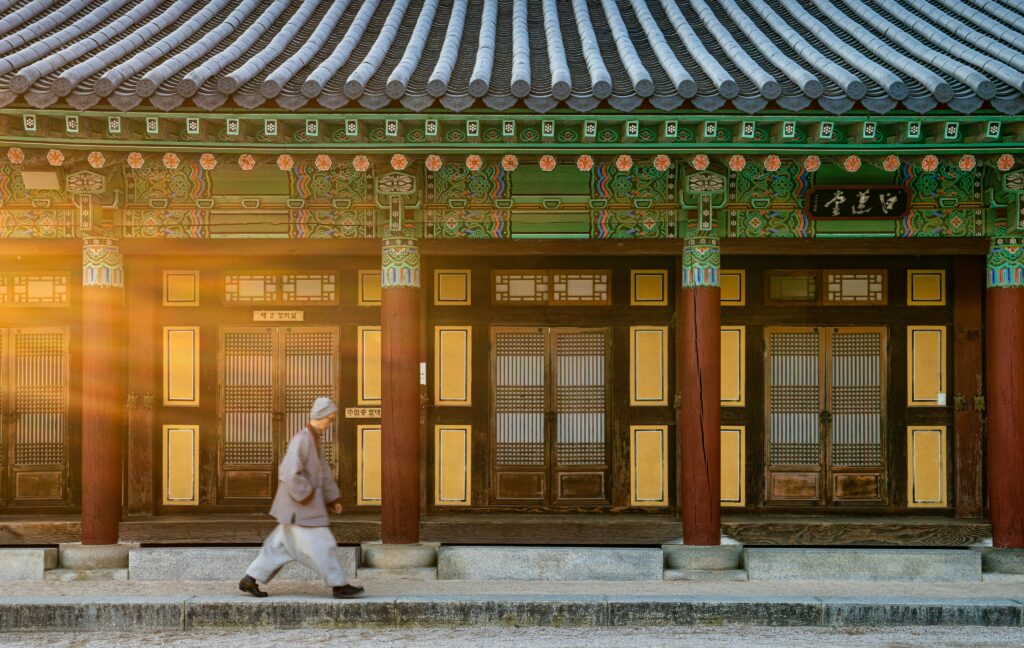
Remove shoes before entering buildings
Bow to Buddha statues (optional but respectful)
Speak quietly
Walk around, not through, people praying
Don’t
Point at Buddha statues
Touch artifacts
Take flash photos inside
Smoke on temple grounds
Be loud or disruptive
Gift Giving
If You Bring Gifts
Good gifts from abroad:
Chocolate
Local snacks/sweets
Alcohol (nice whiskey)
Coffee
Souvenirs from your country
How to Give
Use both hands
Gifts may not be opened immediately (normal)
Bring something for hosts if invited to dinner
Numbers to Avoid
4 = sounds like “death” in Korean
Avoid sets of 4 items
The Red Ink Rule
This one catches every foreigner.
The rule: Never write someone’s name in red ink.
Why: In traditional Korean culture, red ink was used to write the names of deceased people. Writing a living person’s name in red symbolizes death — or wishing death upon them.
My mistake:
Early on, I was grading papers for an English class I taught. Red pen, like any teacher.
A Korean student saw her name written in red on her paper. Her face went pale. Later, she quietly explained the superstition.
I felt terrible. Switched to blue pen immediately.
Is it still a big deal?
Young Koreans are less superstitious. Many don’t care. But older Koreans? Still very sensitive about this.
My rule: Never use red ink for names. Ever. Just use blue or black. Why risk it?
Physical Contact
What’s Normal
Same-gender friends hold hands/link arms
Personal space is smaller than Western countries
Crowded places = lots of bumping (no apology needed)
What’s Not Normal
Hugging strangers
Excessive touching
Public displays of affection (kissing, etc.)
Korean couples are affectionate but usually keep it subtle in public.
Money Etiquette
Giving and Receiving
Use two hands for formal situations
Or use right hand, left supports elbow
Don’t throw money on the counter
Paying for Meals
Often one person pays for entire group
Fighting over the bill is common (and expected)
Splitting (더치페이/Dutch pay) is becoming common among younger Koreans
Common Mistakes Tourists Make
Mistake 1: Being Too Loud
Koreans speak quietly in public. Loud foreigners stand out.
Mistake 2: Tipping
Don’t tip. It’s awkward for everyone.
Mistake 3: Writing Names in Red
Red ink = death in Korean culture Never write someone’s name in red pen.
Mistake 4: Blowing Nose at Table
Step away from the table. Or at least turn away and be discreet.
Mistake 5: Refusing Food/Drinks Repeatedly
One polite refusal is okay. But accept on the second offer. Repeated refusal seems rude.
Quick Reference: Do’s and Don’ts
Do ✅
Bow when greeting
Use two hands with elders
Remove shoes when required
Wait for elders to eat first
Pour drinks for others
Accept offered food/drinks
Keep voice down in public
Don’t ❌
Stick chopsticks in rice
Sit in priority seats
Tip at restaurants
Write names in red ink
Point with one finger (use whole hand)
Be loud on public transport
Refuse food/drinks repeatedly
Useful Phrases
English
Korean
Pronunciation
Thank you
감사합니다
gamsahamnida
Sorry/Excuse me
죄송합니다
joesonghamnida
I’ll eat well
잘 먹겠습니다
jal meokgesseumnida
I ate well
잘 먹었습니다
jal meogeosseumnida
Please take care of me
잘 부탁합니다
jal butakhamnida
Final Thoughts
35 years of mistakes. Countless awkward moments. Plenty of apologetic bowing.
But here’s what I’ve learned: Koreans are forgiving.
They don’t expect foreigners to know everything. They notice when you TRY. When you bow (even awkwardly). When you use two hands. When you take your shoes off without being told.
The effort matters more than perfection.
I still make mistakes. Just last month, I accidentally sat in a priority seat (wasn’t paying attention). An elderly woman gave me THE LOOK. I jumped up immediately, apologizing.
It happens. You learn. You adapt.
Respect the elders. Watch what others do. When in doubt, bow.