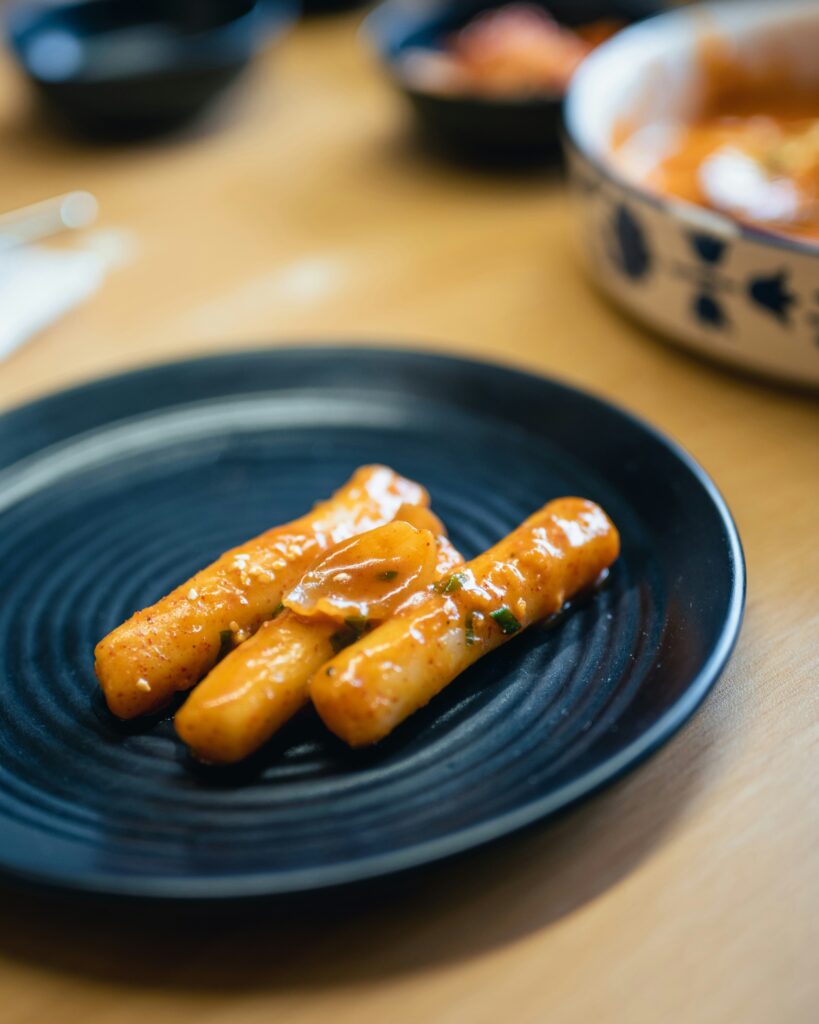
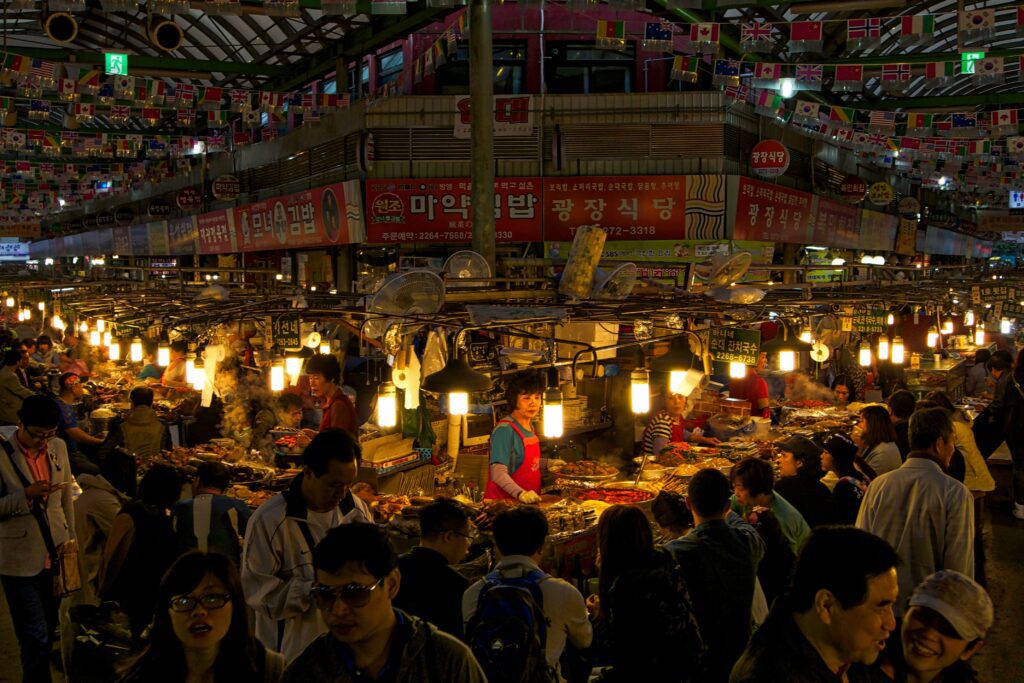
Seoul, 1989. I pointed at something red and spicy-looking at a pojangmacha near Dongdaemun. The ajumma handed me a paper cup filled with what I now know was tteokbokki.
I took a huge bite.
My mouth exploded. Tears streamed down my face. I couldn’t speak for five minutes. The ajumma laughed so hard she had to sit down.
That was 35 years ago. Now tteokbokki is my comfort food. I eat it at least twice a month. My spice tolerance went from zero to “Korean level” — though my wife still says I’m a lightweight.
Korean street food isn’t just snacks. It’s culture. It’s memories. It’s the taste of Seoul itself.
Here are the dishes that made me fall in love with this country.
Korean street food is legendary.
From sizzling hotteok to spicy tteokbokki, the streets of Seoul are a food lover’s paradise.
As a local who’s been eating street food for 35 years, here are the 15 dishes you absolutely cannot miss.
Don’t know how to order? Don’t worry. Our guide on How to Order Food in Korea covers all the essential phrases.
1. Tteokbokki (떡볶이) — Spicy Rice Cakes
The king of Korean street food.
Chewy rice cakes swimming in sweet-spicy red sauce. Every Korean grew up eating this after school.
Taste: Sweet, spicy, chewy
Price: 4,000-5,000 won
Spice level: Medium to hot 🌶️🌶️
Where to find: Everywhere — markets, food stalls, convenience stores
Pro tip: Order with odeng (fish cake) on the side. Dip the fish cake in the tteokbokki sauce. Trust me.
Why I’m obsessed with tteokbokki:
That first burning experience? It traumatized me for months. I avoided anything red.
Then a Korean colleague said: “You can’t understand Korea if you can’t eat tteokbokki.”
So I trained myself. Started with 로제 떡볶이 (rose tteokbokki — creamy, less spicy). Gradually moved to regular. Now I eat 엽기떡볶이 (Yupdduk) level 2 spicy without crying.
My favorite spot:
There’s a grandmother in Mangwon Market who’s been selling tteokbokki for over 40 years. Her recipe hasn’t changed. 3,000원 for a cup that tastes like 1989.
I take every foreign visitor there. Most of them cry too. It’s a rite of passage.
Pro tip: Ask for 덜 맵게 (deol maepge — less spicy) if you’re worried. No shame in it. I did it for years.
2. Hotteok (호떡) — Sweet Filled Pancakes
The ultimate winter street snack.
Crispy outside, gooey inside. Filled with brown sugar, honey, cinnamon, and nuts.
Taste: Sweet, crispy, warm
Price: 1,500-2,000 won
Best season: Winter (but available year-round)
Where to find: Street vendors, traditional markets
Warning: The filling is extremely hot. Wait 30 seconds before biting or you’ll burn your mouth. Every Korean has learned this the hard way.
The winter snack that saved me:
My first Korean winter was brutal. Coming from a milder climate, I wasn’t prepared for Seoul’s -15°C winds.
A colleague handed me a hotteok near Namdaemun Market. Hot, crispy outside. Melted brown sugar inside. I burned my tongue because I couldn’t wait.
It was the first moment I thought: “Maybe I can survive here.”
My hotteok rules:
Only eat it in winter (November-February). Summer hotteok just isn’t the same.
Wait 30 seconds before biting. That sugar is MOLTEN.
The best hotteok has 씨앗 (seeds) — sunflower, pumpkin. Extra nutty crunch.
Best spot I’ve found:
The famous Namdaemun hotteok stand with the eternal line? Overrated, honestly.
My secret: the pojangmacha next to Exit 3 at Euljiro 3-ga Station. Shorter line, same quality, 1,500원. Been going for 20 years.
3. Odeng/Eomuk (오뎅/어묵) — Fish Cake Skewers
Perfect for cold days.
Fish cake skewers served in warm broth. Simple, comforting, and cheap.
Taste: Savory, mild, warming
Price: 1,000-1,500 won per skewer
How to eat: Eat the fish cake, then drink the broth (free!)
Where to find: Pojangmacha (tent bars), street stalls
Local secret: The broth is often free. Just grab a paper cup and pour yourself some.
The free broth that changed everything:
When I first saw Koreans drinking the fish cake broth, I thought it was weird. You’re drinking the cooking water?
Then I tried it on a freezing December night in Myeongdong. One sip of that hot, savory broth — I understood immediately.
Now I judge street food stalls by their broth. Good broth = good eomuk. Watery broth = keep walking.
My winter routine:
Every winter, I have a spot in Euljiro where I stop for odeng and broth. 2,000원 for two skewers. Unlimited broth. I stand there for 20 minutes, warming my hands on the cup, watching Seoul rush by.
It’s meditation. Cheaper than therapy.
Tip for tourists: The broth is self-serve and FREE. Grab a paper cup, ladle it yourself. Some tourists don’t realize this and miss out.
4. Gimbap (김밥) — Korean Rice Rolls
Korea’s answer to sushi.
Rice and various fillings rolled in seaweed. Not raw fish — usually vegetables, egg, and ham.
Taste: Savory, mild, fresh
Price: 3,000-5,000 won per roll
Varieties: Tuna, cheese, beef bulgogi, kimchi
Where to find: Gimbap restaurants, convenience stores, markets
My favorite: Chamchi (tuna) gimbap from any small gimbap shop. Simple but perfect.
My survival food:
When I first moved to Korea, I didn’t speak Korean and couldn’t afford restaurants.
Gimbap saved me. 1,500원 for a full roll. Filling, nutritious enough, available everywhere.
I ate gimbap probably 200 times my first year. Different fillings, different shops, but always gimbap.
Why it’s not sushi:
Foreigners always say: “Oh, it’s like sushi!”
No. It’s completely different. Sushi is about the fish. Gimbap is about the combination — rice, vegetables, pickled radish, maybe some meat, all wrapped together.
I’ve had this argument with Japanese friends many times. We agree to disagree.
My favorite:
참치김밥 (chamchi gimbap — tuna gimbap) from 김밥천국. Nothing fancy. About 3,500원. I’ve eaten it hundreds of times and never gotten tired of it.
Late-night tip: 김밥천국 and 김밥나라 are open 24 hours in most locations. When it’s 2 AM and you’re hungry, gimbap is there for you. It was there for me through many late nights.
5. Twigim (튀김) — Korean Fried Snacks
Korean-style tempura.
Deep-fried vegetables, sweet potatoes, shrimp, and more. Often served with tteokbokki.
Taste: Crispy, savory, satisfying
Price: 500-1,000 won per piece
Popular types: Sweet potato, squid, vegetables, boiled egg
Where to find: Tteokbokki stalls, traditional markets
Best combo: Tteokbokki + twigim + odeng. The holy trinity of Korean street food.
My guilty pleasure:
I shouldn’t eat fried food at my age. My doctor would not approve.
But when I pass a twigim stand and smell that fresh-fried sweetness? I can’t resist. 김말이 (gimmari — glass noodles wrapped in seaweed, fried) is my weakness. Crispy, savory, perfect.
The combo that Koreans know:
Tteokbokki + twigim + odeng = the holy trinity of Korean street food.
Order all three at the same stall. Dip the twigim in the tteokbokki sauce. Drink the fish cake broth between bites. This is how Koreans do it.
I learned this combo from watching high school students. They know the best food hacks.
Price check: All three for under 8,000원. Best cheap meal in Seoul.
6. Mandu (만두) — Korean Dumplings
Dumplings done the Korean way.
Steamed, fried, or boiled. Filled with pork, vegetables, kimchi, or glass noodles.
Savory pancake made from ground mung beans. Crispy edges, soft center, packed with flavor.
Taste: Savory, nutty, crispy
Price: 5,000-8,000 won
Best pairing: Makgeolli (Korean rice wine)
Famous spot: Gwangjang Market
Local experience: Sit at Gwangjang Market, order bindaetteok and makgeolli. This is how Koreans have eaten for generations.
15. Sotteok-sotteok (소떡소떡)
Sausage + rice cake skewers.
Alternating pieces of sausage and rice cake, grilled and glazed with sweet-spicy sauce.
Taste: Sweet, savory, chewy
Price: 2,500-3,500 won
Where to find: Street vendors, convenience stores
Fun fact: Name comes from “so” (sausage) + “tteok” (rice cake)
Perfect snack: Cheap, filling, and easy to eat while walking.
Seasonal Street Food Guide
After 35 years, I’ve learned: Korean street food follows the seasons.
Winter (December – February)
This is peak street food season.
Food
Why Now
Hotteok
Only available in winter. The lines are worth it.
Bungeoppang
Fish bread appears November, disappears March.
Odeng
Hot broth + cold weather = perfect match.
Hoppang
Steamed buns. Convenience stores have them everywhere.
Gukhwappang
Chrysanthemum-shaped bread with red bean.
My winter routine:
Saturday afternoons in December. Walk through Namdaemun. Hotteok in one hand, broth in the other. It never gets old.
Summer (June – August)
Different vibe. Cold and refreshing.
Food
Why Now
Bingsu
Shaved ice. Essential for survival.
Patbingsu
Classic red bean shaved ice.
Ice cream
Korean convenience store ice cream is elite.
Slush drinks
Every street vendor sells these.
Summer tip: Street food stalls are less common in summer. Head to markets or convenience stores instead.
Spring/Fall
Best weather for food hunting.
Food
Where
Tteokbokki
Always available
Gimbap
Picnic food — perfect for Han River
Corn dogs
Year-round but best when walking in nice weather
Fall special: Roasted chestnuts (군밤) appear in October. The smell alone is worth seeking out.
Best Street Food Markets in Seoul
Market
Location
Best For
Gwangjang Market
Jongno
Bindaetteok, mayak gimbap, raw beef
Myeongdong
Myeongdong
Corn dogs, tornado potato
Hongdae
Hongdae
Trendy snacks, corn dogs
Namdaemun Market
Myeongdong area
Traditional snacks, hotteok
Tongin Market
Gyeongbokgung area
Dosirak (lunch box) experience
Myeongdong is famous for street food. Combine your food crawl with shopping using our Myeongdong Shopping Guide.
My Favorite Street Food Spots
Gwangjang Market (광장시장)
I’ve been going to Gwangjang Market since 1990.
Back then, it was mostly for locals. No English menus. No tourists. Just pure, authentic Korean food.
Now it’s famous worldwide — thanks to Netflix. The crowds are bigger. But the food? Still incredible.
What I order every time:
Food
Price
My Notes
빈대떡 (bindaetteok)
5,000원
Mung bean pancake. Crispy outside, soft inside. Order with makgeolli.
마약김밥 (mayak gimbap)
3,000원
“Drug gimbap” — so addictive it’s like drugs. Tiny, sweet, perfect.
육회 (yukhoe)
15,000원
Raw beef. Trust me. Get it with egg yolk.
떡볶이
4,000원
The ajumma in the back corner. 40+ years same spot.
Pro tip: Go at 10 AM on a weekday. By noon, it’s packed with tourists.
Myeongdong Street Food
Tourist central, but some gems exist.
Skip the overpriced stuff near the main road. Walk to the back alleys. Prices drop 30%, quality stays the same.
Worth trying:
Egg bread (계란빵) — 3,000원
Tornado potato — 4,000원
Korean corn dog — 4,000원
Skip:
Lobster tails (overpriced tourist trap)
Giant rainbow cotton candy (Instagram bait)
Pojangmacha (포장마차)
The orange tent stalls. The real Korean street food experience.
Most tourists are scared to try pojangmacha. No English. Looks intimidating. Ajummas who don’t smile.
But this is where magic happens.
My regular pojangmacha:
There’s one near Euljiro 3-ga Station I’ve visited for 25 years. The ajumma now recognizes me. She doesn’t even ask my order anymore — just brings my usual.
No tipping. No complicated ordering. Just point, eat, pay.
Street Food Survival Tips
1. Carry Cash
Many street vendors don’t accept cards. Keep 20,000-30,000 won in small bills.
2. Eat Standing
Most street food is eaten standing at the stall. No tables, no chairs — that’s normal.
3. Watch the Locals
Not sure how to eat something? Watch what Koreans do.
4. Point and Order
Don’t know Korean? Just point. Street vendors are used to tourists.
5. Go Hungry
Street food is meant for snacking. Don’t eat a big meal before exploring.
Street Food Etiquette I Learned the Hard Way
Eat Where You Buy
Don’t buy tteokbokki from one stall and eat it in front of another stall.
I did this once. The ajumma gave me a look that could kill. In Korea, you eat at or near the stall where you bought the food. It’s respect.
Don’t Haggle
Street food prices are fixed. Don’t try to negotiate.
I watched a tourist argue over 500원 once. The ajumma was insulted. Other Koreans were embarrassed. Not worth it.
Return Your Dishes
At pojangmacha and some stalls, dishes are reusable.
When you’re done, stack them neatly or return them to the counter. Don’t just leave a mess.
Cash is King
Many street food vendors don’t take cards.
I always carry 20,000-30,000원 in small bills when I go street food hunting. Nothing worse than finding the perfect tteokbokki and realizing you only have a 50,000원 bill.
The Ajumma is Always Right
If the ajumma says it’s spicy, it’s spicy. If she says wait 2 minutes, wait 2 minutes. If she gives you extra, say thank you and accept it.
Don’t argue with ajummas. You will lose. I’ve learned this lesson many times.
Useful Phrases
English
Korean
Pronunciation
One, please
하나 주세요
hana juseyo
Two, please
두 개 주세요
du-gae juseyo
How much?
얼마예요?
eolmayeyo?
Delicious!
맛있어요!
mashisseoyo!
Not spicy, please
안 맵게 해주세요
an maepge haejuseyo
Is Korean street food safe?
In 35 years, I’ve had food poisoning exactly once. And it was from a fancy restaurant, not street food.
Korean street food vendors take hygiene seriously. Many of them have been cooking the same dishes for decades. The turnover is fast, so food is always fresh.
My only advice: avoid stalls that look abandoned or have food sitting out for too long. Trust your instincts. If something looks off, skip it.
How much should I budget for street food?
I usually spend 10,000-15,000원 on a street food crawl and leave completely stuffed.
Here’s a typical day for me:
Tteokbokki + twigim: 6,000원
Odeng (2 skewers): 2,000원
Hotteok: 1,500원
Gimbap roll: 3,500원
Total: 13,000원
That’s four different foods, plus free broth. Better value than any restaurant.
What’s the spiciest street food?
Tteokbokki can range from mild to deadly.
엽기떡볶이 (Yupdduk) has levels. Level 1 is already spicy. Level 3 made me question my life choices.
For beginners, I recommend 로제떡볶이 (rose tteokbokki). Creamy sauce tones down the heat. Still flavorful, less pain.
When I first arrived, I couldn’t handle any spice. Now I’m at “Korean ajumma” level — though my Korean friends still say I’m weak. It’s all relative.
Can I eat street food with dietary restrictions?
Vegetarian is tricky. Most broths contain fish or meat.
I have a vegetarian friend who survives on:
Hotteok (no meat)
Bungeoppang (no meat)
Vegetable twigim (ask for 야채튀김)
Gimbap (ask for 야채김밥)
Vegan is harder. Gluten-free is very hard. Muslim travelers should look for halal-certified areas near Itaewon.
Be honest about your restrictions. Say “고기 없어요?” (gogi eopseoyo? — no meat?) and most vendors will help.
Final Thoughts
35 years of Korean street food. Thousands of cups of tteokbokki. Hundreds of hotteok. Countless paper cups of odeng broth.
And I’m still not tired of it.
Street food is where I learned to love Korea. Not in fancy restaurants or tourist spots — but standing at a pojangmacha at midnight, sharing a table with strangers, pointing at food I couldn’t name.
The ajummas who fed me when I was young and broke. The late-night tteokbokki runs with friends. The bungeoppang that warmed my first lonely winter.
This isn’t just food. It’s my story with Korea.
When you visit, skip one fancy dinner. Take that money to Gwangjang Market instead. Stand at a pojangmacha. Burn your tongue on hotteok. Cry from spicy tteokbokki.
That’s how you really taste Seoul.
— Ted K
For more street food and nightlife, head to Hongdae. See our complete Hongdae Guide for what to do and eat.