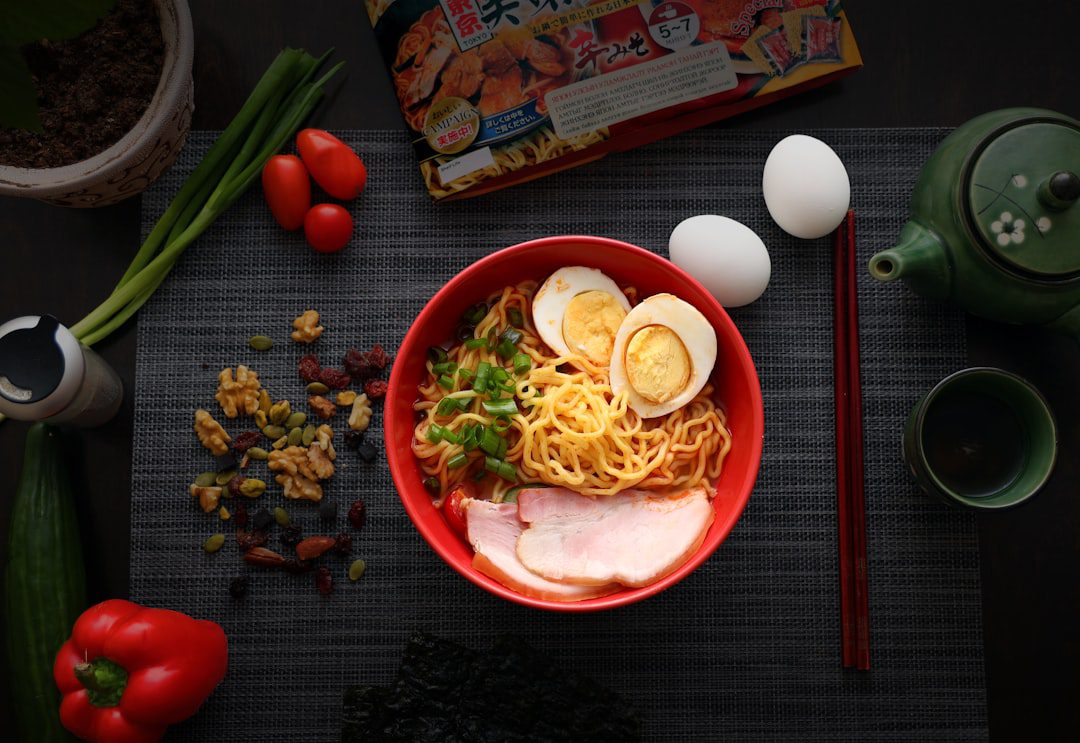
I still remember my first bowl of ramyeon in Korea—it was 1989, and I’d just arrived in Seoul with barely enough Korean to order a coffee. I stumbled into a tiny pojangmacha (street tent restaurant) near Myeongdong, pointed at what the ajumma next to me was eating, and got handed a steaming, boiling bowl of the most gloriously simple yet satisfying noodles I’d ever tasted. Twenty minutes and countless sweaty forehead wipes later, I was a convert. That single bowl taught me something crucial about Korea: sometimes the most humble foods carry the most soul.
Fast forward 35 years, and ramyeon hasn’t just remained a staple—it’s evolved into an art form. Today’s Korean ramyeon scene spans from ₩5,000 instant packets you can cook in your Seoul guesthouse to elaborate ₩12,000+ restaurant creations with house-made broths and precision toppings. Whether you’re crashing after a night of clubbing in Hongdae, stress-eating during exam season, or genuinely just craving comfort, ramyeon is the answer Korea reaches for.
Here’s everything you need to know about Korea’s most beloved noodle culture—from the convenience store staples that fuel late-night study sessions, to the underground ramyeon specialty restaurants that have devoted fans willing to wait 90 minutes for a bowl.
What Is Ramyeon? Understanding Korea’s Instant Noodle Culture
Ramyeon (라면) is Korea’s answer to instant ramen—but before you dismiss it as just another packet of noodles, understand this: ramyeon occupies a unique cultural space that goes way beyond convenient food. It’s the default meal for studying all-nighters, the go-to comfort food after heartbreak, the midnight snack after drinking, and increasingly, the focus of gourmet restaurant concepts.
Korean ramyeon differs from Japanese ramen in several key ways. While Japanese ramen emphasizes complex, slow-cooked broths developed over 12+ hours, ramyeon is designed for speed and accessibility. The noodles are crispier and slightly thinner, the flavor packets are bolder and spicier, and the whole point is getting something delicious on your table in under 5 minutes. That said, modern Korean restaurants have completely shattered this simplicity, turning ramyeon into something restaurant-worthy.
The Korean ramyeon industry generated over ₩1.2 trillion in annual sales as of 2024, and Korea consumes more instant noodles per capita than almost any other country. If you’re living or traveling in Korea, ramyeon isn’t optional—it’s essential cultural literacy.
Ted’s tip: The Korean word “ramyeon” (라면) comes from the Japanese “ramen,” but Koreans will definitely understand “instant noodles” or “국수” (guksu) if you’re stuck. Most convenience store staff won’t even blink—they know exactly what you want.
Best Instant Ramyeon Brands to Buy & Try
Walking into a Korean convenience store (GS25, CU, Emart24, Lotteria Mart) can be overwhelming—there are literally dozens of ramyeon options, often taking up an entire shelf. After 35 years and probably thousands of bowls, I’ve tried them all. Here are the brands that actually deserve your money and stomach space.
The Classic Tier: What Koreans Actually Eat Daily
| Brand | Price (₩) | Flavor Profile | Best For |
|---|---|---|---|
| Shin Ramyeon (Nongshim) | 3,500–4,000 | Bold, spicy, umami-rich | Classic choice; iconic taste |
| Neoguri (Nongshim) | 3,500–4,000 | Rich seafood broth | Seafood lovers; subtle flavor |
| Jjamppong Noodles (Nongshim) | 4,500–5,000 | Spicy seafood broth | Adventurous palates |
| Samyang Ramyeon (Samyang) | 3,500–4,000 | Medium spicy, balanced | Picky eaters |
| Paldo Tteokbokki Ramyeon | 3,500–4,500 | Sweet & spicy tteokbokki | Sweet-spicy balance lovers |
The Gourmet Tier: When You Want Something Special
If you’ve graduated from basic ramyeon and want something with more complexity, these premium brands deliver:
| Brand | Price (₩) | Specialty | Where to Find |
|---|---|---|---|
| Samyang Buldak (Hot Chicken) | 5,000–6,500 | Extreme heat; viral TikTok trend | All convenience stores |
| Ottogi Jjapaguri | 3,500–4,500 | Premium noodles; less MSG | CU, GS25 |
| Maeil Dahae | 4,000–5,000 | Kelp & anchovy broth | Premium sections |
| Nongshim Shin Ramyeon Black | 6,000–7,000 | Premium beef broth | CU premium shelf |
Ted’s tip: Shin Ramyeon will forever be the gold standard—it’s what 90% of Korean households keep in their pantry. If you try one brand, make it Shin. But if you want to impress locals with your taste, grab the Nongshim Shin Black (신라면 검정) or Ottogi Jjapaguri (오뚜기 짜파구리)—it shows you know your noodles.
The Viral & Extreme Tier: For Thrill-Seekers
These are the ones making international headlines. Samyang’s Buldak (불닭, “Fire Chicken”) line became a global phenomenon starting around 2015, with the infamous “Buldak Challenge” spawning thousands of TikTok videos of people crying into their noodles. There are now over 15 variations:
- Buldak (Original): ₩5,000–6,000 | Intense heat, surprisingly balanced flavor
- Buldak Carbonara: ₩6,000–7,000 | Creamy, spicy—wildly popular
- Buldak 2x Spicy: ₩6,500–7,500 | For people who hate their mouths
- Buldak Cheese: ₩6,000–7,000 | Creamy, slightly milder
I won’t pretend to enjoy these—my stomach turned 35 years old somewhere around 2005—but locals in their 20s and 30s treat them like a rite of passage. If you’re adventurous, grab one at any convenience store (₩5,000–7,000) and document your face. Comedy gold.
How to Cook Ramyeon Properly: The Five-Minute Method
This sounds absurdly simple, but I’ve watched hundreds of travelers absolutely butcher ramyeon preparation. Here’s how to do it right, the way Koreans have perfected it over decades.
Essential Equipment
You need almost nothing, which is the beauty of ramyeon. At minimum:
- A pot or electric kettle (even a microwave works in guesthouses)
- Bowl (any size)
- Spoon and chopsticks or fork
- Access to boiling water
If you’re in a Korean accommodation without a kitchen, ask your host—most offer a hot water dispenser or will let you use their stove. Hostels always have communal kitchens specifically because of ramyeon.
The Five-Minute Perfect Bowl: Step-by-Step
| Step | Action | Time |
|---|---|---|
| 1. Boil Water | Fill pot with 2–3 cups water; bring to rolling boil | 3 minutes |
| 2. Add Noodles | Drop entire brick into boiling water; stir to separate | 30 seconds |
| 3. Cook Noodles | Let boil, stirring occasionally (3–4 minutes total) | 3–4 minutes |
| 4. Add Flavor Packet | Tear open red/orange packet; pour into pot while boiling | 30 seconds |
| 5. Plate & Serve | Pour everything into bowl; taste and adjust (add water if too salty) | 1 minute |
Ted’s tip: The most common mistake I see is not adding enough water—ramyeon needs room to cook properly. Use 2.5–3 cups of water minimum. Also, don’t discard that flavorful broth at the bottom—it’s the best part, and Koreans always drink it straight from the bowl. No shame in that.
Pro Additions: Elevating Your Bowl at Home
This is where instant ramyeon becomes more interesting. Koreans have perfected the art of adding exactly one or two items to make it feel homemade:
| Addition | Cost (₩) | When to Add | Result |
|---|---|---|---|
| Egg (계란) | 1,500–2,000 | Last 1 minute of cooking | Protein boost; creamy yolk |
| Frozen Dumplings (만두) | 3,000–4,000 | Cook with noodles | Full meal; satisfying |
| Green Onion (파) | 1,000–2,000 | Top after serving | Fresh, aromatic accent |
| Cheese (치즈) | 2,000–3,000 | Top while hot | Creamy, indulgent |
| Spam or Hot Dogs | 2,500–4,000 | Add in last minute | Protein; nostalgic Korean classic |
| Kimchi (김치) | 3,000–5,000 | Top at end | Tangy, complex layers |
| Fish Cake (어묵) | 2,000–3,000 | Cook with noodles | Chewy texture; authentic feel |
My personal favorite? A raw egg cracked in during the last minute of cooking (so the yolk stays slightly runny), plus a handful of green onions and leftover kimchi from the mini tube in my fridge. Takes two minutes to add, makes it feel like you actually cooked something.
Ramyeon Restaurants: From Street Tents to Gourmet Concepts
While convenience store ramyeon is the soul of Korean eating culture, there’s an entire universe of specialized ramyeon restaurants where this humble noodle becomes fine dining. These aren’t places that serve ramyeon as an afterthought—it’s literally all they do, and they do it obsessively.
The Pojangmacha (Street Tent): ₩5,000–8,000
This is where I had my first ramyeon, and honestly, these haven’t changed much in 35 years (which is the point). You’ll find pojangmacha clustered near subway stations, nightlife districts, and universities. They’re tiny, cramped, often shared tables, always packed after midnight. The magic is:
- Fresh additions (egg, fish cake, green onion) cooked fresh to order
- Richer, homemade broths than packet ramyeon
- Atmosphere—you’re eating alongside students, night workers, drunk businessmen, and fellow travelers
- Usually no menu; you point and they make it
Famous pojangmacha clusters in Seoul: Myeongdong Street (near Line 4, Myeongdong Station), Hongdae Playground area (Line 2, Hongik University Station), and pretty much any street near a university at 2 AM.
The Specialized Ramyeon Restaurant (라면 전문점)
These dedicated restaurants have exploded in the last 10 years. They’re not cheap (₩8,000–15,000 per bowl), but they’re where ramyeon becomes craft. Here are the ones worth seeking out:
| Restaurant | Location | Price (₩) | Specialty |
|---|---|---|---|
| Ramyeon Sanmaru | Gangnam-gu (Line 2, Gangnam Stn) | 12,000–15,000 | House-made noodles; beef broth |
| Ra-Mon Chimaek | Hongdae (Line 2, Hongik Univ) | 9,000–12,000 | Ramyeon + fried chicken |
| Eun Gabjil | Myeongdong (Line 4, Myeongdong) | 10,000–13,000 | Spicy ramyeon; crispy noodles |
| Godae Ramyeon | Multiple (Gangnam, Gangbuk) | 8,000–11,000 | Gourmet instant ramyeon |
These places often have wait times of 30–90 minutes on weekends, which tells you everything about ramyeon’s current status in Korean food culture. People genuinely wait that long for noodles. The experience matters more than the price.
The Convenience Store as Restaurant
Here’s something most tourists don’t know: GS25, CU, Emart24, and Lotteria Mart all have free seating areas and boiling water. You can buy a packet of ramyeon (₩3,500–5,000), ask the staff to boil it, and eat it right there at a small table for free. It’s actually perfect for travelers with budget concerns or early mornings before restaurants open.
Ted’s tip: When ordering ramyeon at a restaurant, say “라면 하나” (ramyeon hana—one ramyeon) or “라면 주세요” (ramyeon juseyo—ramyeon please). If you want it extra spicy, add “매운맛으로” (maeun maseuro—spicy version). Most ramyeon restaurants have a standard level of spice they already cook at, so you’re just confirming.
How to Order Ramyeon: Language & Cultural Tips
This section is crucial if you’re actually going to eat ramyeon in Korea beyond your hotel room. The good news: ramyeon is one of the easiest things to order because most places have pictures, English menus exist in tourist areas, and pointing works 100% of the time.
Ordering at a Restaurant (Formal)
Getting seated: Walk in, wait for staff to seat you (they will). Sit down. They’ll usually bring you water and basic banchan (side dishes—often kimchi or bean sprouts).
Ordering: If there’s a menu, look for “라면” (ramyeon). If there’s not, just say: “라면 한 그릇 주세요” (ramyeon han geut juseyo—one bowl of ramyeon, please).
The spice question: Staff might ask: “맵게 하시겠어요?” (maepge hasigesseoyo—do you want it spicy?). You can say:
- “네, 매운맛으로” (ne, maun maseuro—yes, spicy)
- “아니요, 순한맛으로” (aniyo, sunhan maseuro—no, mild)
- “중간 맛으로” (junggan maseuro—medium spice)
That’s it. Your ramyeon will arrive in 3–5 minutes. Eat immediately while it’s hot. See the small 숟가락 (sujgarak—spoon) and 젓가락 (jeotgarak—chopsticks)? Use the spoon to grab the broth and noodles together. Don’t be shy about slurping—it’s considered normal and shows appreciation.
Ordering at a Pojangmacha (Street Tent)
These are looser, chattier places. The owner (usually an older ajumma) will know what she’s doing and will help guide you.
The approach: Just sit down. Someone will come with water. Point at what you want or say: “기본 라면” (gibon ramyeon—basic ramyeon) or just “라면” (ramyeon).
Customizations common at tents (usually included, but you can ask):
- “계란” (gyeran—egg): Usually ₩1,000 more
- “떡” (tteok—rice cake): Usually ₩1,000 more
- “소시지” (sosiji—hot dog): Usually ₩1,000 more
- “치즈” (chijeu—cheese): Usually ₩1,500 more
Pay when you’re done (not when ordering). Most tents are cash-only, but some now have card readers.
Ordering via Delivery Apps (배민, 쿠팡이츠, 요기요)
If you’re staying in an apartment or Airbnb, Korean delivery apps (Baemin, Coupang Eats, Yogiyo) are obsessed with ramyeon. There are literally dedicated ramyeon restaurant categories.
Here’s how:
- Download Baemin (배민) or Coupang Eats (쿠팡이츠)
- Search “라면” (ramyeon)
- Pick any restaurant (they’re all legitimate)
- Usually ₩9,000–12,000 including delivery (₩2,500–4,000 delivery fee)
- Takes 30–45 minutes to arrive
The beautiful thing about delivery ramyeon: they pack it in a way that keeps it hot, and it arrives surprisingly decent quality. I’ve eaten hundreds of delivery ramyeon orders, and honestly? It’s hard to mess up.
Ted’s tip: If you’re ordering delivery in a Korean apartment building, the delivery person will usually call you when arriving because some buildings are confusing. Answer the phone (it’s normal) and give simple directions in English or Korean. Nobody’s offended if you mix languages—we all do it.
Regional Ramyeon Variations & Hidden Local Favorites
Just like how regional Chinese cuisine differs province to province, Korea has different ramyeon traditions and specialties depending on where you are. Travel outside Seoul, and you’ll discover ramyeon styles that exist in pockets of the country.
Jeonju-Style Ramyeon (전주 라면)
Jeonju, in the North Jeolla province, is Korea’s food capital (check out our full Jeonju Hanok Village guide). The local ramyeon tradition here is lighter and more delicate—less of that aggressive spice, more subtle seafood broth. You’ll see it served in smaller portions with additions like raw egg and green onion being standard, not optional.
If you visit Jeonju (2 hours by train from Seoul), hunt for 완주 라면 (Wanju ramyeon) specifically—it’s a protected regional specialty.
Busan-Style Ramyeon (부산 라면)
Busan’s ramyeon leans heavily into seafood—think dried pollack broth, squid, and anchovies. It’s noticeably less spicy than Seoul ramyeon, but more complex in flavor. The Busan ramyeon you’ll find in restaurants there isn’t usually instant ramyeon—it’s house-made with ingredients ordered fresh daily.
If you’re in Busan, skip the convenience store entirely. Hunt down a small pojangmacha near Busan’s famous neighborhoods (Gukje Market, Jagalchi) and ask for the local specialty.
Spicy Ramyeon Wars: Daegu & Gwangju
Daegu and Gwangju both claim to have the spiciest ramyeon culture in Korea. Daegu especially has a reputation for heat-loving food. If you visit either city and go to a local pojangmacha, order the ramyeon and prepare for significantly more punch than Seoul’s average. This isn’t gatekeeping—locals genuinely eat it hotter.
| Region | Style | Spice Level | Unique Feature |
|---|---|---|---|
| Seoul | Standard | Medium | Most popular nationwide |
| Jeonju | Delicate broth | Mild–Medium | Subtle, refined flavor |
| Busan | Seafood-forward | Mild | House-made, premium ingredients |
| Daegu | Extreme spice | Very Hot | Heat-lovers’ paradise |
| Gwangju | Aggressive broth | Hot | Bold, unapologetic flavor |
Ramyeon Culture: Why Koreans Eat It, When They Eat It & The Unwritten Rules
Understanding ramyeon isn’t just about eating it—it’s understanding a piece of Korean social fabric. Ramyeon exists in specific cultural moments and has specific meanings.
The 3 AM Study Session (밤새 공부)
Korean high school students (and increasingly, university students) treat ramyeon as fuel for all-night studying during exam season (suneung). There’s actually a cultural expectation: if you’re studying late, you eat ramyeon. It’s not a luxury—it’s efficient, cheap, quick, and becomes a ritual. Walk past any 24-hour pojangmacha during exam season (roughly November for the national exam, and finals times in January and June), and you’ll see teenagers slurping noodles while reviewing notes at 4 AM.
The Breakup Recovery Meal (헤어짐 라면)
This is actually culturally significant. When a relationship ends, ramyeon serves a specific purpose: it’s comfort food that doesn’t require energy or thought. There’s even a semi-joke in Korean culture about eating ramyeon after a breakup, the way Americans might eat ice cream. It’s cheap enough to not feel like you’re “treating yourself” (which would require self-care energy), but satisfying enough to feel like you’re doing something to recover.
The Drinking Aftermath (술 먹은 후 라면)
This might be the most important ramyeon moment in Korean culture. After a night of drinking soju or beer (especially heavy drinking with coworkers at a hoesik—company dinner), eating ramyeon is almost mandatory. It’s believed to help sober you up and prevent hangovers (there’s some truth to this—the starch and sodium help hydration). You’ll see drunken groups stumbling into pojangmacha at midnight, plopping down, and eating ramyeon together.
This leads to the phenomenon of “chimaek” (치맥—chicken + maekju/beer), but the OG version is “rammaek” (라맥—ramyeon + maekju). Yes, people eat ramyeon while drinking beer. Yes, it’s delicious.
The Casual Midnight Snack
Finally, ramyeon is just… what you eat at midnight when you’re hungry and nothing else is open. It’s the default. There’s no ceremony, no special reason. You’re just hungry, a convenience store is next to you, and boom—five minutes later you’re eating noodles.
Ted’s tip: If a Korean friend invites you over and they offer to make ramyeon, it’s actually a sign of comfort and informality. They’re not trying to impress you—they’re treating you like family, sharing something casual and real. Accept it. Enjoy it. Slurp loudly.
Ramyeon vs. Ramen: What’s the Difference?
People often ask me: aren’t Korean ramyeon and Japanese ramen the same thing? The answer is: not really, though they’re cousins.
| Aspect | Korean Ramyeon | Japanese Ramen |
|---|---|---|
| Origin | Introduced from Japan in 1950s; now uniquely Korean | Ancient dish with centuries of tradition |
| Noodle Texture | Crispy, thin, prone to softening | Chewy, thick, holds texture longer |
| Broth | Quick, bold, spice-forward, simple | Complex, slow-cooked (12+ hours), nuanced |
| Flavor Profile | Spicy, direct, umami-heavy | Subtle, layered, balanced |
| Speed | 3–5 minutes (entire dish) | 20+ minutes (broth alone) |
| Purpose | Quick comfort, efficiency, casual | Experience, ritual, craft |
| Instant Version Exists? | Yes, everywhere, highly refined | Yes, but considered inferior to fresh |
Here’s the simplest way to think about it: Japanese ramen is like wine. Korean ramyeon is like beer. Both are delicious, both have tradition, but they serve different purposes and require different mindsets. In Korea, ramyeon is casual and efficient. In Japan, ramen is craft and experience.
That said, Korean instant ramyeon has become so refined over 70+ years that it’s genuinely good now. When Shin Ramyeon first came out in 1986, it revolutionized instant noodles globally. We’re not talking about convenience food anymore—we’re talking about a developed food category.
Where to Buy Ramyeon in Korea
This sounds trivial, but as a traveler, knowing where to stock up on quality ramyeon matters for budget, convenience, and finding specific brands.
Convenience Stores (편의점)
The big four chains dominate: GS25, CU, Emart24, Lotteria Mart. They’re everywhere—literally on every block in Seoul. All have ramyeon sections, all have boiling water available, all accept card payments.
- Best for: Quick grab-and-cook, all major brands, immediate eating
- Price range: ₩3,500–7,000
- Hours: 24 hours
Traditional Markets (전통시장)
Markets like Namdaemun and Gwangjang have dedicated vendors selling ramyeon at slightly cheaper prices than convenience stores. The benefit: you can sometimes negotiate on bulk purchases, and you get that market energy.
- Best for: Bulk buying, local discovery, negotiation
- Price range: ₩3,000–6,500 (cheaper per unit if buying multiple)
- Located: Downtown Seoul (Line 4, Myeongdong Stn for Namdaemun; Line 1, Jongno 5-ga Stn for Gwangjang)
Large Grocery Chains (마트)
Emart, Homeplus, Lotte Mart all have dedicated ramyeon sections with potentially better prices if you buy in bulk (5+ packs). Worth checking out if you’re stocking an Airbnb.
- Best for: Bulk buying, variety, competitive pricing
- Price range: ₩3,000–6,000 (cheaper per unit)
- Locations: Multiple across Seoul
Online (쿠팡, 네이버 쇼핑)
Coupang (쿠팡) and Naver Shopping offer next-day delivery of ramyeon at competitive prices. Useful if you’re staying longer and want variety without leaving your accommodation.
| Outlet | Price (per pack) | Convenience | Hours |
|---|---|---|---|
| Convenience Store | ₩3,500–7,000 | ★★★★★ | 24/7 |
| Traditional Market | ₩3,000–6,500 | ★★★ | 6 AM–8 PM |
| Large Grocery Store | ₩3,200–6,000 | ★★★★ | 10 AM–10 PM |
| Online (Coupang) | ₩3,500–7,500 | ★★★★ | Next-day delivery |
Frequently Asked Questions
Is Korean ramyeon safe for tourists to eat?
Absolutely. Ramyeon is one of the safest, most controlled food products in Korea. It’s been standardized and regulated for decades. The only concern is spice level (some brands are genuinely hot if you’re not used to it), so start with standard Shin Ramyeon or Neoguri if you’re sensitive to heat. The flavor packets are shelf-stable and fully processed, so there’s zero food safety risk.
How much does it cost to eat ramyeon in Korea?
Ramyeon is incredibly cheap. At a convenience store: ₩3,500–5,000 for an instant packet. At a pojangmacha (street tent): ₩5,000–8,000. At a specialized ramyeon restaurant: ₩8,000–15,000. Even at the highest end, you’re spending less than you would on most Korean meals. It’s genuinely the most budget-friendly way to eat in Korea.
Can I cook ramyeon in a microwave?
Yes, but with caveats. Fill a microwave-safe bowl halfway with water, microwave for 3 minutes until boiling, then add the ramyeon noodle block and microwave for 3–4 more minutes. The texture won’t be quite as good as stovetop (noodles get slightly mushier), but it works. Most travelers use this method in guesthouses without kitchens.
What’s the deal with Samyang Buldak? Is it really that spicy?
Yes. Buldak (불닭—”Fire Chicken”) is genuinely hot, but the original is manageable for people who eat spicy food regularly. The 2x Spicy version is extreme and somewhat dangerous (I’ve seen people legitimately cry). If you like sriracha, start with original Buldak. If you like Thai curry, you’re in the 2x zone. If you don’t eat spicy food at all, skip it—it’ll ruin your day.
Why do Koreans drink the ramyeon broth at the end?
It’s not weird—it’s the whole point. The broth is where all the flavor lives, and it’s incredibly satisfying. In Korean food culture, finishing the broth is actually considered polite and shows you enjoyed the meal. Slurp it straight from the bowl. No shame.
Can I bring Korean ramyeon home to my country?
Generally yes. Most instant ramyeon packets (the dried ones) pack easily and travel well. However, some customs authorities have restrictions on noodles or flavor packets due to ingredient regulations. Check your country’s customs rules before packing. The safest option: ask a Korean friend to mail you ramyeon once you’re home—that’s how most Korean expats stay stocked.
What’s the difference between ramyeon and jjamppong?
Great question. Jjamppong (짬뽕) is a spicy seafood noodle soup that uses fresh seafood and broth cooked from scratch. Ramyeon is instant noodles with a flavor packet. They can taste similar (both spicy, both noodles), but jjamppong is an actual soup dish made at a restaurant, while ramyeon is instant. You’ll see jjamppong restaurants separate from ramyeon spots.
Is instant ramyeon healthy?
Ramyeon is processed food, so it’s not exactly health food—it’s high in sodium and MSG. That said, occasional consumption is fine, and you could do worse (it has carbs, a bit of protein, and doesn’t have excessive sugar). The traditional bowl is probably 400–500 calories. If you’re eating it multiple times a day, yeah, that’s not ideal. But eating it 2–3 times a week while traveling? Totally fine. Millions of Koreans eat it regularly and live healthy lives.
Final Thoughts
Ramyeon is, for me, one of the most authentic entry points into Korean culture. It’s unpretentious, efficient, delicious, and completely embraced across all social classes and ages. You’ll eat it in the same pojangmacha as a CEO and a college student, sitting on plastic stools, slurping noodles, and somehow having a perfect shared experience with strangers.
After 35 years in Korea, I still eat ramyeon regularly—not because I’m nostalgia-chasing, but because it’s genuinely good and it hits a specific craving that nothing else does. The convenience of it, the ritual around it, the way it tastes different depending on which brand you buy or which restaurant makes it—these are the things that keep me coming back.
My advice to you: don’t overthink it. Pick a brand that appeals to you (Shin if you want the classic), grab a bowl at your nearest pojangmacha at midnight, slurp it without apology, drink the broth at the end, and feel yourself becoming slightly more Korean with each spoonful.
Welcome to ramyeon culture. You’re going to love it here.
— Ted K
Image Credits: Photos sourced from Unsplash. By using this site, you agree to our Privacy Policy and Disclaimer.