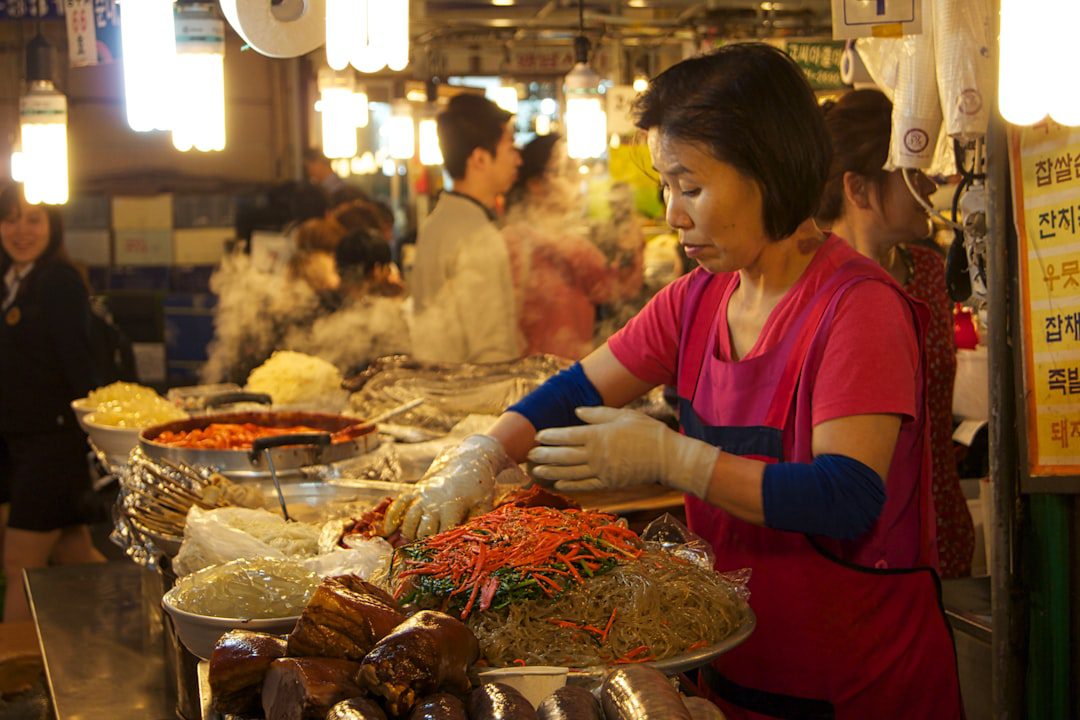
I still remember the first time I stumbled into Mangwon Market back in 1989—I was lost, hungry, and my Korean was barely functional. What I found wasn’t just food; it was a window into how real Seoulites actually live, eat, and connect with their neighborhood. Thirty-five years later, I’ve watched Mangwon transform from a quiet local market into one of Seoul’s most sought-after foodie destinations, yet it’s managed to keep something authentic that Myeongdong and Gangnam lost long ago.
Mangwon Market isn’t just a place to grab a quick bite—it’s a living, breathing expression of Seoul’s street food culture, community spirit, and culinary creativity. Whether you’re a serious food explorer or just looking for an afternoon adventure off the beaten path, this neighborhood has something that will stick with you long after you leave Korea.
Here’s everything you need to know about experiencing Mangwon Market like a true local.
Getting to Mangwon Market: Location & Access
Mangwon Market sits in the Dongjak neighborhood of Seoul’s Yongsan-gu district, nestled between the Han River and some of Seoul’s most charming residential areas. The market has been operating since 1974, though its popularity has surged in the last decade as food bloggers and Korean food media discovered what locals already knew.
Ted’s tip: The best subway access is Ichon Station (Line 6), Exit 3. From there, it’s a 5-minute walk downhill toward the river. You’ll know you’re getting close when you start smelling grilled meat and fresh tteokbokki sauce.
| Access Method | Time | Cost | Notes |
|---|---|---|---|
| Ichon Station (Line 6, Exit 3) | 5 min walk | ₩1,250 | Best & closest option |
| Ichon Station (Line 6, Exit 2) | 10 min walk | ₩1,250 | Less direct but okay |
| Hansung University Station (Line 4) | 15 min walk | ₩1,250 | Longer walk, not recommended |
| Taxi from downtown Seoul | 20-30 min | ₩15,000-20,000 | Use Kakao Taxi app |
The neighborhood itself is relatively compact—you can walk the entire market in 15 minutes, but trust me, you’ll want to take your time. The market’s main street runs north-south, parallel to the Han River. When you exit Ichon Station Exit 3, look for the main market street sign and follow the aroma of grilling meats and cooking oil.
Must-Try Street Foods at Mangwon Market
This is where Mangwon truly shines. The street food here isn’t the Instagram-famous stuff you’ll find in Myeongdong—it’s real, it’s delicious, and it’s what actual Seoul office workers eat on their lunch breaks. I’ve eaten at nearly every vendor at least a dozen times, and I still discover new favorites.
Tteokbokki & Bubu Arare (떡볶이 & 부부 아라레)
Let’s start with the obvious: Mangwon’s tteokbokki is legendary among locals. The signature dish is Bobo Arare—a combination of chewy rice cakes, crispy brown sugar-coated snacks (arare), and a sauce that’s perfectly balanced between sweet and spicy. Most vendors cook it fresh to order in massive metal bowls right in front of you.
The most famous vendor is Bobo Arare (부부 아라레), located in the main market corridor. A regular serving costs ₩5,000-6,000, and it comes in a paper cone that’s perfect for walking while eating. The vendor has been there since 1982—I know him by name, and he always remembers regular customers’ preferences.
Ted’s tip: Go early (before 2 PM) to catch the freshest batches. After 3 PM, the most popular stalls run low on supplies, especially on weekends. And don’t be shy about asking vendors to adjust the spice level—they’ll happily make it milder or spicier depending on your preference.
Bindaetteok (빈대떡) — Mung Bean Pancakes
Bindaetteok is one of Korea’s most underrated street foods, and Mangwon has several vendors who’ve perfected it. These are crispy, golden mung bean pancakes filled with kimchi, pork, and sometimes cheese. The outside is wonderfully crunchy, and the inside is warm and savory.
One piece costs around ₩2,500-3,000, and vendors typically sell them in sets of 2-3. I recommend trying Sinhyang Bindaetteok near the market’s northern entrance—their pancakes are so thin and crispy they practically shatter when you bite them.
Odeng (오뎅) & Fish Cakes
Odeng is Korea’s ultimate comfort street food—skewers of fish cake simmered in a broth that’s been cooking for hours. At Mangwon, you’ll find vendors with enormous metal pots filled with different varieties: regular odeng, squid odeng, and my personal favorite, cheese-filled fish cakes.
A typical serving of 3-4 skewers costs ₩3,000-4,000, and the vendor gives you a small cup of the hot broth to sip. I’ve spent countless afternoons leaning against the market wall with a bowl of odeng and a cup of broth, just watching the world go by.
| Street Food | Typical Price | Best Vendors | My Rating |
|---|---|---|---|
| Bobo Arare | ₩5,000-6,000 | Bobo Arare (main stall) | ⭐⭐⭐⭐⭐ |
| Bindaetteok | ₩2,500-3,500 | Sinhyang Bindaetteok | ⭐⭐⭐⭐⭐ |
| Odeng | ₩3,000-4,500 | Any corner vendor | ⭐⭐⭐⭐ |
| Hotteok (Pancakes) | ₩3,000-4,000 | Near north entrance | ⭐⭐⭐⭐ |
| Gyeran Mari (Egg rolls) | ₩4,000-5,000 | Central market vendors | ⭐⭐⭐⭐ |
Grilled Meat Skewers (꼬치/Kkochi)
This is where Mangwon gets serious. Vendors grill beef, chicken, and pork skewers over charcoal right in front of you, and the aroma is absolutely intoxicating. Most skewers are ₩2,000-3,500 each, and you can mix and match. My go-to combination is three beef skewers, two chicken heart skewers, and one shrimp skewer.
The key to enjoying Mangwon’s grilled meats is understanding the seasoning approach: some are brushed with a spicy gochujang sauce, others with soy-butter, and some are just salted. Ask the vendor to recommend their specialty—they’re usually happy to explain the differences.
Full Restaurants & Sit-Down Dining in Mangwon
Beyond the street food stalls, Mangwon has genuine restaurants where you can sit down and have a proper meal. These aren’t fancy establishments—they’re neighborhood restaurants where locals go for lunch or dinner.
Jjim & Bokkeum Restaurants (찜 & 볶음)
One of the most distinctive foods you’ll find at Mangwon is nakji-bokkeum (spicy stir-fried octopus) and nakji-jjim (steamed octopus). These are substantial, shareable dishes perfect for lunch or dinner. A typical serving (800g-1kg of octopus) costs ₩25,000-35,000 and feeds 2-3 people easily.
Cheonho Nakji is one of the most popular spots—it’s been operating for over 20 years, and they specialize in incredibly tender octopus (they use specific techniques to make sure it’s never rubbery). The restaurant fills up around 11:30 AM and 6 PM, so if you want a comfortable table, go slightly off-peak.
Ted’s tip: If you’re eating nakji-bokkeum, order it with a serving of rice and drinking snacks like odeng or gyeran mari to share. The spicy sauce is perfect for soaking into rice, and it’s a complete meal.
Kalguksu & Sujebi (칼국수 & 수제비)
Mangwon has several restaurants serving traditional kalguksu (knife-cut noodle soup) and sujebi (hand-torn noodle soup). These are comfort foods that locals eat year-round, though they’re especially popular in winter. A bowl typically costs ₩8,000-12,000.
Mangwon Kalguksu is the most famous—you can see why when you taste their broth, which is clearly made from scratch daily with fresh seafood and vegetables. The noodles are cut by hand each morning, giving them a slightly irregular texture that’s way better than factory-made alternatives.
| Restaurant | Specialty | Price Range | Hours |
|---|---|---|---|
| Cheonho Nakji | Octopus stir-fry | ₩25,000-35,000 | 11 AM – 10 PM |
| Mangwon Kalguksu | Knife-cut noodles | ₩8,000-12,000 | 10 AM – 9 PM |
| Mangwon Bunsik (만원분식) | Tteokbokki, odeng | ₩5,000-8,000 | 11 AM – 10 PM |
| Local kimbap shops | Kimbap, tteok | ₩4,000-6,000 | 10 AM – 8 PM |
Korean Drinking Culture at Mangwon
Mangwon is also famous for its pojangmacha (covered street tent bars) that come alive in the evening. These are casual drinking spots where locals gather after work with friends. You can order beer, soju, or makgeolli (rice wine) and pair it with street food or simple dishes.
The atmosphere is incredibly welcoming—I’ve made some of my longest friendships at Mangwon’s tent bars. Don’t be surprised if the person next to you starts up a conversation. This is Korean drinking culture at its most authentic. If you want to learn more about Korean drinking customs, I’ve written a comprehensive guide to anju (drinking snacks) that covers everything you need to know.
Cafes & Desserts in the Mangwon Neighborhood
Over the last 10 years, Mangwon has developed a thriving cafe culture alongside its traditional market. You’ll find everything from hipster specialty coffee shops to traditional Korean dessert cafes.
Specialty Coffee Cafes
The neighborhood around Mangwon Market has several excellent specialty coffee shops. Onion is a small cafe run by a passionate coffee roaster who roasts beans daily. A specialty pour-over costs ₩6,000-7,000, and you can watch the entire brewing process through the cafe’s large window.
Another favorite is Monmon Coffee, which has a cozy, minimalist aesthetic and serves an excellent flat white for ₩5,500. The owner speaks English and is happy to recommend local shops and restaurants.
Ted’s tip: Most cafes in Mangwon don’t have strict time limits, so it’s perfectly acceptable to camp out for 2-3 hours with your laptop or book. This is completely normal in Korean cafe culture, and no one will rush you out.
Korean Desserts & Bakeries
For something more traditionally Korean, check out Songpyeon Cafe, which serves fresh songpyeon (Korean crescent-shaped rice cakes) daily. These are seasonal treats, but the cafe usually has several varieties. A box of 5-6 songpyeon costs ₩8,000-10,000.
For bread, Mangwon Bakery offers traditional Korean-style pastries and breads. Their red bean buns (팥 앙금빵) and honey butter croissants are excellent and cost ₩3,000-4,000 each.
| Cafe/Dessert Shop | Specialty | Price | Vibe |
|---|---|---|---|
| Onion Coffee | Specialty pour-over | ₩6,000-7,000 | Serious coffee culture |
| Monmon Coffee | Flat white, espresso | ₩5,500-6,500 | Minimalist, chill |
| Songpyeon Cafe | Korean rice cakes | ₩8,000-10,000 | Traditional, cozy |
| Mangwon Bakery | Pastries, breads | ₩3,000-5,000 | Quick grab & go |
The Neighborhood Beyond the Market
Mangwon isn’t just about the market itself—the surrounding neighborhood has become increasingly interesting, especially in the last five years. There are galleries, vintage shops, and residential streets with a distinctly local feel.
Neighborhood Walks & Han River Access
One of my favorite things about Mangwon is its proximity to the Han River. After eating at the market, you can take a 5-minute walk toward the river and access the Ichon Han Park. The park has excellent biking trails, grassy areas for picnics, and some of the best sunset views over the river.
During cherry blossom season (late March to early April), this area fills with locals enjoying hanami (cherry blossom) season. If you want detailed recommendations for cherry blossom spotting, I’ve written a comprehensive guide to Korea’s cherry blossom season that includes riverside locations like this.
Vintage & Antique Shops
Walking the side streets around Mangwon, you’ll discover several vintage and antique shops. These aren’t high-end vintage boutiques—they’re casual shops where locals buy used furniture, books, and household items. Mangwon Antique has an excellent collection of vintage Korean ceramics and glassware, with prices ranging from ₩5,000-50,000 depending on the piece.
If you’re interested in Korean ceramics and pottery, you might also enjoy my guide to Korean pottery and ceramics shopping and classes, which covers where to buy and even how to learn traditional pottery-making.
Local Art Galleries
Mangwon has developed a small but vibrant art gallery scene. Several small galleries operate in converted residential spaces, showcasing local artists’ work. These aren’t the massive institutional galleries you’d find in Gangnam—they’re intimate spaces that often host artist talks and small exhibitions.
Mangwon Arts is one of the most established galleries, located just north of the main market. Exhibitions change monthly, and admission is typically free. It’s a nice break from eating if you need to slow down.
Best Times to Visit Mangwon Market
Mangwon is a year-round destination, but timing your visit strategically can make a huge difference in your experience.
Peak vs. Quiet Hours
If you hate crowds, absolutely avoid Mangwon on Saturday afternoons (2-6 PM) and Sunday mornings. During these times, the market is packed with weekend food tourists, and getting to your favorite vendor requires patience and persistence.
The best times are weekday lunchtimes (11:30 AM – 1:30 PM) and weekday evenings (5-7 PM). You’ll have a mix of office workers, students, and serious foodies without the massive tourist crowds. The vendors are more relaxed and happy to chat.
| Time | Crowd Level | Best For | Vendor Availability |
|---|---|---|---|
| Weekday 10-11 AM | Very Low | Early risers, breakfast | Limited vendors open |
| Weekday 11:30 AM-1:30 PM | Moderate | Lunch, office workers | All major vendors open |
| Weekday 5-7 PM | Moderate-High | Dinner, locals | All vendors at peak |
| Saturday 11 AM-1 PM | High | Weekend foodies | All open, frequent waits |
| Saturday 2-6 PM | Very High | Avoid if possible | Popular items sell out |
| Sunday morning | Very High | Avoid if possible | Popular items sell out |
Seasonal Considerations
Mangwon is excellent year-round, but each season has distinct characteristics:
Spring (March-May): The neighborhood is beautiful with cherry blossoms near the Han River. The weather is perfect for walking. Expect moderate crowds, especially on weekends.
Summer (June-August): Hot and humid, but the evening crowds at pojangmacha are lively and social. Perfect for drinking and eating street food with locals.
Fall (September-November): This is arguably the best season. The weather is perfect, foliage is beautiful, and the autumn comfort foods (like piping hot kalguksu) are at their peak. Moderate crowds.
Winter (December-February): Cold, but incredibly atmospheric. Hot foods like tteokbokki and odeng taste even better in the cold. Fewer tourists, more locals. Ted’s tip: if you visit in winter, bring hand warmers and be prepared to eat quickly so your food doesn’t get cold!
Food Combinations & Eating Strategy
Here’s something I’ve learned over 35 years: the best way to experience Mangwon is to eat like a local, not like a tourist trying to hit every famous spot. Locals typically get 2-3 items and take their time, often lingering to chat with vendors or eat while walking.
The Classic Mangwon Lunch
If I had to design the perfect Mangwon meal, it would be: bobo arare (₩5,500) + bindaetteok (₩3,000) + odeng (₩3,500) = ₩12,000 total for a very satisfying mix of sweet, savory, crispy, and comforting. This gives you variety in flavors and textures, and it’s enough to fill you up without being overly heavy.
The Evening Drinking Route
For an evening outing with friends, start with a pojangmacha beer (₩3,000) and order mixed kkochi (meat skewers). Then grab a portion of bindaetteok to snack on. If you want something more substantial, order nakji-bokkeum from one of the sit-down restaurants and split it among friends. The casual, social atmosphere is what makes this experience special.
Budget-Conscious Strategy
You can eat extremely well at Mangwon for under ₩15,000 per person if you stick to street food. Three items of street food (arare + pancake + skewer) = approximately ₩12,000 total. Add a coffee at a neighborhood cafe (₩5,500), and you’ve had a full morning for under ₩18,000. This makes Mangwon one of Seoul’s best food values.
Getting Around & Nearby Areas
Mangwon’s location makes it perfect for combining with other Seoul neighborhoods. The area is walkable and well-connected by subway.
Nearby Neighborhoods to Explore
From Mangwon, you can easily reach several other interesting Seoul areas. Take the subway north toward downtown, and you can visit Insadong (30 minutes by subway) for art galleries and traditional culture. Or head east toward Hongdae (20 minutes by subway) for hip cafes and nightlife.
South of Mangwon is Itaewon, a completely different neighborhood with international cuisine and expat culture. For a comprehensive guide to the various Seoul neighborhoods, I recommend reading my guide to Seoul’s best neighborhoods, which covers 10+ distinct areas with their unique characters.
Transportation for Day Trips
Mangwon is also well-positioned for day trips. Ichon Station connects to Line 6, which circles the entire south side of Seoul. You can easily reach jjimjilbang (Korean spas) if you want to relax after eating your way through the market. Or, hop on Line 4 and visit Gyeongbokgung Palace or other historic sites downtown.
Practical Information & Tips
What to Bring & What to Know
Bring cash. While some vendors accept card payments, many still operate on cash only. There’s a small ATM inside the market, but it’s better to have ₩30,000-50,000 in cash before you arrive. If you need to withdraw money, there are KEB Hana Bank ATMs right outside Ichon Station.
Wear comfortable walking shoes. The market’s ground is uneven in places, and you’ll be standing and walking for hours. I always wear sneakers when I visit.
Bring napkins or a small handkerchief. Korean markets can be messy, and while vendors provide napkins, having extras is helpful. Many vendors will also wipe their grills or benches for you before serving.
Learn basic Korean food vocabulary. You don’t need to be fluent, but knowing how to say “a little spicy” (덜 맵게) and “thank you” (감사합니다) goes a long way with vendors. I’ve written a guide to basic Korean phrases for tourists that covers food-related vocabulary.
Cultural Etiquette at Mangwon
Be respectful of the vendors and other customers. This is a working market where locals shop daily, not a theme park. Don’t push through crowds aggressively—say “excuse me” (잠깐만요) politely. Don’t photograph vendors without asking permission. Most are happy to have their photos taken, but asking first is respectful.
Ted’s tip: If you find a vendor whose food you love, visit them multiple times. Vendors remember repeat customers and often give you extra portions or special treatment. I’ve been visiting the same bobo arare vendor for 25+ years, and she always gives me extra arare.
Frequently Asked Questions
Is Mangwon Market open every day?
Mangwon Market is open almost every day, though some individual vendors may take occasional days off. The market is busiest Monday-Saturday and slightly quieter on Sundays. A few vendors close on Mondays or Tuesdays, but there’s always plenty of food available. Major Korean holidays (Chuseok and Seollal) may have reduced hours, so check ahead if visiting during these times. For details on when Korea celebrates major holidays, see my guide to Korean holidays and when NOT to visit.
What’s the best day to visit Mangwon?
Weekday afternoons (12-3 PM) offer the best balance of reasonable crowds and fresh food. If you prefer a more local, less touristy experience, visit on a weekday evening (5-7 PM) when office workers pop in for quick bites and drinks. Weekend mornings are acceptable but increasingly crowded. Avoid Saturday afternoons entirely.
Is Mangwon Market expensive for Seoul?
No—Mangwon is actually one of Seoul’s most affordable food neighborhoods. You can eat excellently for ₩10,000-15,000 per person with street food alone. Sit-down restaurants are slightly more expensive (₩15,000-35,000 per person), but still very reasonably priced compared to Seoul’s fine dining. This makes it ideal for budget-conscious travelers.
What’s the difference between Mangwon and other Seoul markets like Myeongdong?
Myeongdong is tourist-focused, expensive, and crowded with people buying makeup and cosmetics. Mangwon is local-focused, affordable, and genuinely centered on food. Myeongdong feels like a shopping district that happens to have food vendors. Mangwon is a food market that has evolved into a neighborhood destination. They’re completely different experiences—Mangwon is far more authentic.
Can I find vegetarian food at Mangwon Market?
Yes, though vegetarian options are limited compared to meat-based foods. Vegetarian-friendly items include: bindaetteok (though many have pork), pure odeng (ask for vegetarian varieties), tteokbokki (some vendors make vegetarian versions), and various vegetable-based street foods. I’d recommend asking vendors specifically about vegetarian options—they’re usually accommodating. Several restaurants also serve vegetable-based kalguksu or sujebi.
How long should I spend at Mangwon Market?
For a quick visit (sampling a few items): 45 minutes to 1 hour. For a proper market experience (trying multiple vendors, sitting down to eat, exploring cafes): 2-3 hours. For a full neighborhood exploration (market + cafes + galleries + Han River walk): 4-5 hours. I usually spend 2-3 hours, but I’ve easily spent full afternoons here just enjoying the atmosphere.
Are there English menus or English-speaking vendors?
Most vendors don’t have English menus, but many point at their food and show you prices. Some younger vendors speak basic English. The best strategy is to point at what you want, show fingers for quantity, and agree on the price. Google Translate is helpful for reading signage. Most vendors are patient and good-natured about the language barrier.
Final Thoughts
After 35 years in Korea, I can tell you that Mangwon Market represents something increasingly rare in Seoul: a neighborhood that hasn’t lost its soul to gentrification and tourism. Yes, it’s become more famous in recent years, and yes, there are more food tourists now than there were in 1995. But the heart of Mangwon—the connection between vendors and customers, the genuine care in preparing food, the casual social atmosphere—remains intact.
Mangwon isn’t a destination you “complete.” You don’t come here to check off a list and move on. You come here to eat well, move slowly, and get a genuine taste of how Seoulites actually live and eat. That’s what makes it, in my opinion, Seoul’s truest foodie paradise.
Whether you’re a serious food explorer, a budget traveler, or just someone who wants to experience authentic Seoul away from the major tourist zones, Mangwon deserves to be on your list. Go hungry, bring cash, wear comfortable shoes, and be prepared to have some of the best street food of your Korea trip.
— Ted K
Image Credits: Photos sourced from Unsplash. By using this site, you agree to our Privacy Policy and Disclaimer.