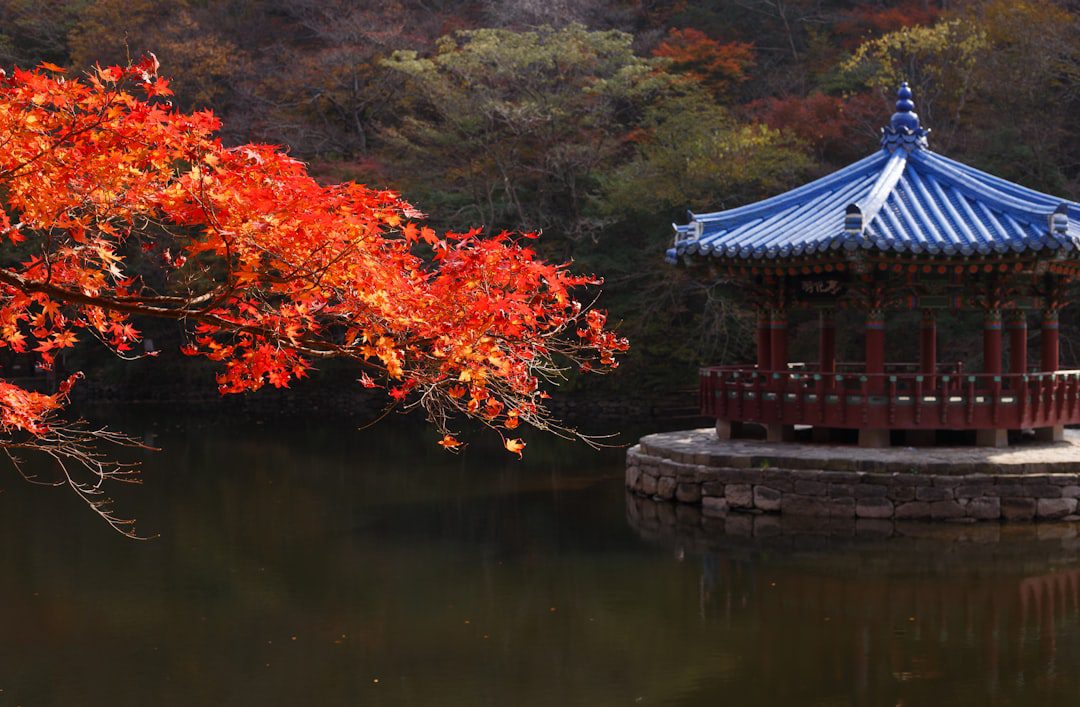
Every autumn for the past 35 years, I’ve watched the same magical transformation happen across Korea. The summer heat fades, the air gets crisp, and suddenly the entire peninsula turns into a patchwork of crimson, gold, and amber. It’s genuinely one of the most underrated seasons to visit Korea — fewer crowds than spring cherry blossoms, better weather than summer, and scenery that’ll make you forget Instagram filters exist.
I remember my first Korean autumn back in 1989. I was hiking Seoraksan in early November, completely unprepared for how breathtaking it would be. A Korean hiker next to me turned and said, “가을이 최고야” (Fall is the best). He was right. That experience changed how I travel in Korea entirely.
The thing is, autumn foliage in Korea doesn’t just happen in one week. It’s a slow, predictable process that cascades from north to south over three months, and knowing when and where to catch peak colors is the difference between an okay trip and an unforgettable one. I’ve spent decades tracking these seasonal patterns, and I’m going to share everything I’ve learned so you don’t waste time chasing leaves that haven’t turned yet.
Here’s everything you need to know about experiencing Korean autumn like a local.
When Autumn Colors Peak: The Complete Timeline
Korean autumn foliage follows a predictable pattern, moving from north to south like a wave. This matters more than you’d think. Show up a week too early, and you’ll see mostly green trees. A week too late, and the leaves are already falling. Understanding this timeline is crucial.
The color change happens because of day length and temperature drops. When nighttime temperatures consistently hit around 5-10°C (41-50°F), ginkgo and maple trees start their transformation. Colder weather at higher elevations means peaks happen there first.
| Region | Peak Foliage Dates | Best Timing |
|---|---|---|
| Northern Mountains (Seoraksan, Odaesan) | Late September – Early October | Oct 1-15 |
| Central Mountains (Jirisan, Samseonbong) | Mid-October | Oct 10-20 |
| Seoul & Gyeonggi Province | Mid to Late October | Oct 15-31 |
| Southern Regions (Busan, Namhae) | Late October – Early November | Oct 25 – Nov 10 |
Ted’s tip: I use the Korea Tourism Organization’s official foliage forecast (korean.visitkorea.or.kr) starting in mid-September. They update it weekly with real percentages of color change by region. Bookmark it immediately if you’re planning an autumn trip.
Here’s a practical reality I’ve learned: if you’re visiting Seoul in mid-October, you’ll catch some beautiful colors in the city parks and nearby mountains, but you won’t see peak foliage. For TRUE peak colors — the kind that stops you mid-hike — you need to either travel north in early October or wait until late October/early November in the central and southern regions.
Best Hiking Trails for Autumn Foliage
Korea has some of the world’s most spectacular hiking, and autumn is undeniably the best season. The temperatures are perfect (no summer humidity, rare winter snow), trails are drier, and every step rewards you with unreal scenery. Here are the spots I recommend most to friends and family.
Seoraksan National Park (강원도 설악산)
Seoraksan is the undisputed king of Korean autumn foliage. This isn’t just my opinion — it’s genuinely where the colors peak first and most dramatically. Located in Gangwon Province near the East Coast, the mountain reaches 1,708 meters and features everything from easy valley walks to challenging ridge hikes.
The reason Seoraksan is so special for autumn colors is the elevation and mineral-rich soil. The ginkgo, maple, and birch trees here turn colors so vivid it almost looks unnatural. I’ve been there fifteen times in October alone, and I’ve never seen the same colors twice.
| Trail | Difficulty | Duration | Best For |
|---|---|---|---|
| Biryong Falls (비룡폭포) | Easy | 2-2.5 hours | Families, first-timers |
| Seoraksan Outer Loop | Moderate | 3-4 hours | Valley foliage views |
| Ulsan Bawi & Ulsanbawi Ridge | Challenging | 5-6 hours | Peak colors, summits |
How to get there: Take the subway to Chuncheon (ITX-Cheongchun from Seoul Station, 1 hour 40 minutes, ₩14,000). From Chuncheon, take a regional bus directly to Seoraksan National Park entrance (1 hour 20 minutes, ₩6,500). Alternatively, catch an express bus from Dong Seoul Terminal directly to Seorak (2 hours, ₩15,000).
Entrance fee: ₩3,000 for national park entry (valid all day).
Ted’s tip: Arrive before 8 AM during peak foliage season. Parking fills up by 9:30 AM, and honestly, hiking in crowds kills the autumn vibe. I always pack my hiking boots the night before and catch the earliest bus.
Jirisan National Park (지리산)
Jirisan is the longest mountain in South Korea and feels more remote than Seoraksan. It straddles three provinces (Jeolla, Gyeonggi, and Gyeongsan), and the foliage is stunning but peaks a week or two later than Seoraksan.
I love Jirisan because it feels less touristy than Seoraksan. The crowds are smaller, the trails are more forgiving for medium hikers, and the autumn colors reflect beautifully in the valleys below. The mountain is also home to Korean temples like Ssanggye-sa, so you can combine hiking with temple visits.
| Trail | Difficulty | Duration | Best For |
|---|---|---|---|
| Ssanggye Valley (쌍계계곡) | Easy-Moderate | 2-3 hours | Water + foliage combo |
| Nogodan Ridge (노고단) | Moderate-Challenging | 4-5 hours | Panoramic views |
How to get there: Take the KTX to Namwon Station (2 hours 40 minutes from Seoul, ₩50,000), then catch a local bus to Jirisan entrance (45 minutes, ₩4,000). Or catch an intercity bus from Dong Seoul Terminal to Samcheok/Guro (3 hours, ₩20,000).
Bukhansan National Park (북한산) — For Seoul-Based Travelers
If you’re staying in Seoul and don’t have time for a day trip to distant mountains, Bukhansan is your answer. This mountain is literally on Seoul’s northern edge, reachable by subway. Autumn colors here are respectable (not Seoraksan-level, but beautiful), and the accessibility is unbeatable.
How to get there: Take subway Line 3 to Gireum Station, Exit 1. From there, it’s a 5-10 minute walk to the main trail head. You can also take Line 1 to Bulgwang Station for alternative routes.
Ted’s tip: The Sukjeongbong-Baegundae Ridge loop is stunning in October. It takes 3-4 hours, and you’ll have Seoul sprawled out below while surrounded by autumn colors. Go on a weekday if possible — weekends get packed.
Korean Temples & Temple Stays During Autumn
One of the most magical ways to experience Korean autumn is through a temple stay. Imagine waking up to temple bells, meditating while surrounded by crimson maples, and eating simple vegetarian meals in a historic temple pavilion. This is possible, and it’s genuinely transformative.
If you’ve never done a temple stay, I wrote a complete guide to Korean temple stays that covers everything from how to book to what to expect. For autumn specifically, here are my top temple recommendations:
Bulguksa Temple (불국사) — Gyeongju
Bulguksa is one of Korea’s most iconic Buddhist temples, built in 751 AD. In autumn, the temple is surrounded by massive ginkgo and maple trees that turn golden and crimson. The temple also overlooks valleys with cascading foliage colors.
Peak foliage at Bulguksa hits around October 20-November 5. They offer temple stays year-round, and autumn stays fill up months in advance. Booking is ₩50,000-80,000 per night including meals.
How to get there: Take the KTX to Singyeongju Station (3 hours from Seoul, ₩65,000), then local bus or taxi (15 minutes, ₩5,000).
Haeinsa Temple (해인사) — Gaya Mountain
Haeinsa is famous as the home of the Tripitaka Koreana (the complete Buddhist scriptures carved on wooden blocks). The temple is nestled in Gaya Mountain, and autumn here is absolutely breathtaking. The mountain valley fills with mist, and the foliage colors are incredibly vibrant.
Peak foliage: October 10-25. Temple stays: ₩60,000-90,000.
How to get there: Take the KTX to Daegu (2 hours, ₩55,000), then intercity bus to Haeinsa (1 hour 30 minutes, ₩8,000).
Ssanggye-sa Temple (쌍계사) — Jirisan Foothills
This temple sits at the base of Jirisan and is surrounded by one of Korea’s most beautiful temple valleys. The Ssanggye Valley fills with autumn colors in October, and hiking from the temple up into the mountain is incredibly scenic.
Peak foliage: October 15-November 5. Temple stays: ₩50,000-70,000.
Ted’s tip: If you’re doing a temple stay, go for the 2-3 night package. You’ll participate in dawn meditation (usually 4 AM), learn about Buddhist practice, and actually relax. One night feels rushed. Also: temple food is vegetarian and delicious (we have a whole guide to Korean temple food if you want details).
City Parks & Urban Foliage Spots
Not everyone wants to spend hours hiking in mountains. Some of my best autumn memories in Korea are actually from parks in Seoul, Busan, and other cities. Here’s where to find stunning foliage without the altitude gain:
Jongmyo Park & Changdeokgung Palace (종로구)
Both of these Seoul spots are absolutely stunning in autumn. Changdeokgung Palace has ancient trees that are probably hundreds of years old. When they turn golden in late October, the palace becomes otherworldly.
Changdeokgung Palace entrance fee: ₩3,000. Hours: 9 AM-5 PM (closed Mondays). Subway: Line 3 or 5, Anguk Station.
Best time: October 20-31. Go early morning (9-10 AM) before tour groups arrive.
Namsan Park (남산공원)
Namsan is right in the center of Seoul, reachable by subway or cable car. The park has ginkgo trees that turn brilliant gold in late October. From the top, you can see Seoul’s cityscape surrounded by autumn colors.
How to get there: Take subway Line 3 or 4 to Myeongdong Station, then walk 10 minutes, or take the cable car from Myeongdong for ₩8,500 round-trip.
Yeouido Park (여의도 공원)
I wrote a full guide to Yeouido, but the park is equally beautiful in autumn as it is in spring. The Hangang River runs alongside it, and the combination of water, foliage, and Seoul’s skyline is genuinely Instagram-worthy.
Best time: October 25-November 5.
Bongeunsa Temple (봉은사) — In Gangnam
This temple is in the middle of Seoul’s wealthy Gangnam district, surrounded by skyscrapers. But step inside, and you’re transported to old Korea. In autumn, the temple courtyard fills with maple leaves, and the contrast between ancient temple and modern city is striking.
Entrance: Free. Subway: Line 2 or 9, Gangnam Station.
| Park/Site | Peak Foliage | Entrance Fee | Best For |
|---|---|---|---|
| Changdeokgung Palace | Oct 20-31 | ₩3,000 | Historic beauty + foliage |
| Namsan Park | Oct 20-31 | Free | City views + ginkgo |
| Yeouido Park | Oct 25-Nov 5 | Free | River walks, photos |
| Bongeunsa Temple | Oct 20-Nov 5 | Free | Temple gardens |
Ginkgo Tree Spots (은행나무)
Let me be specific about ginkgo trees because they’re iconic to Korean autumn. Ginkgo leaves turn the most brilliant gold you’ve ever seen — it’s not orange, not brown, but this pure, almost neon gold that seems to glow when backlit by the sun.
Every Korean city has certain streets and areas famous for ginkgo trees. These trees were planted widely during Korea’s urban development in the 1970s-80s, so you’ll find them everywhere. But some spots are legendary.
Myeongji University Campus (명지대학교) — Incheon
This university has a ginkgo tree-lined avenue that becomes a viral Instagram spot every late October. The trees line both sides of a pedestrian walkway, and when they’re in peak gold, it looks like a tunnel of light. Students joke it’s the only time tourists visit their campus.
Best time: October 25-November 5. Go early morning or late afternoon for the best light.
How to get there: Take subway Line 1 from Seoul to Incheon, then transfer to local bus. It’s about 1 hour 30 minutes total from downtown Seoul. Honestly, it’s a bit of a trip, but if you’re based in Incheon or the western suburbs, it’s worth it.
Hongdae Street (홍대)
The Hongdae area has ginkgo trees lining several major streets. It’s more accessible than driving to Myeongji, and you can combine foliage viewing with exploring Hongdae’s cafes and galleries. We have a full Hongdae neighborhood guide if you want other things to do there.
Best time: October 25-November 5. Subway: Line 2, Hongik University Station.
Busan Ginkgo Spots
If you’re heading to Busan (about 3 hours by KTX from Seoul), the city’s trees turn later but incredibly vivid. The areas around Busan Museum, Beomeosa Temple, and the tree-lined streets in residential districts like Seomyeon are all stunning. Peak foliage hits late October to early November.
Ted’s tip: Ginkgo trees drop all their leaves at once — sometimes overnight if the weather turns cold. When peak ginkgo season hits, check photos from the previous day before making a trip. An area can look bare by noon if temperatures dropped the night before.
Practical Tips for Autumn Foliage Season
After 35 years, I’ve learned that experiencing autumn foliage successfully is 50% timing, 50% logistics. Here are the practical things that actually matter:
What to Wear
| Item | Why It Matters |
|---|---|
| Layered clothing | Mornings are cold (5-10°C), afternoons warm (15-20°C). Wear a base layer, fleece, and waterproof jacket |
| Hiking boots with good traction | Fallen leaves hide rocks and roots. Proper boots prevent twisted ankles |
| Hat and gloves | At elevation, it’s actually cold. Protect your extremities |
| Comfortable walking shoes for city | If you’re doing parks in Seoul, you’ll walk 5+ km. Comfort matters |
What to Pack
When I hike in autumn, I always bring:
- At least 2 liters of water (dehydration happens faster in cold, dry air)
- Energy snacks (nuts, dried fruit, chocolate)
- Sun protection (seriously — snow and reflection intensify UV rays at altitude)
- A portable battery pack (for photos — you’ll take a LOT)
- A light rain jacket (Korean autumn weather can be unpredictable)
- A headlamp or flashlight (sun sets earlier; you might finish hikes in twilight)
Accommodation Booking
Peak foliage season is busy. Not cherry blossom spring busy, but busy. Hotels and temples near foliage hotspots book out 4-6 weeks in advance. If you’re traveling in late October or early November:
- Book accommodations by mid-September
- Book rental cars or tours by late September
- For temple stays, book 2-3 months in advance
- If you’re traveling spontaneously, focus on Seoul-area parks or less famous mountains
Ted’s tip: I use Naver or Kakao maps to check hiking difficulty, hours, and parking info. These Korean apps have more accurate real-time info than English travel sites. Download them and use Google Translate if needed.
Transportation Hacks
Getting to mountain trailheads is easier than you’d think, but you need to plan right.
| Option | Cost | Best For | Booking |
|---|---|---|---|
| Intercity Bus (고속버스) | ₩15,000-25,000 | Solo travelers, budget-conscious | Naver/Kakao or buy at terminal |
| KTX + Local Bus | ₩50,000-70,000 | Comfort + speed | Korail.com or stations |
| Rental Car (1 day) | ₩50,000-80,000 | Groups, flexible schedule | Naver/Kakao/GMarket |
| Organized Tour | ₩80,000-150,000 | Hassle-free, English guide | Viator, local tour companies |
Photography Tips
You’re going to want to capture autumn foliage. Here’s what actually works:
- Shoot in golden hour: Early morning (30 minutes after sunrise) and late afternoon (1-2 hours before sunset) have the best light. Colors look more vibrant
- Include foreground and background: The best foliage photos show depth — trees in the distance, trees close-up, and a person or path for scale
- Wet foliage looks better: After rain or morning dew, colors pop more. Wet leaves also reflect light beautifully
- Backlighting is your friend: Shoot with the sun behind the trees. This makes fall foliage glow
- Skip midday: Between 11 AM and 3 PM, the sun is too harsh and colors look washed out
Combining Autumn Foliage with Other Activities
Korean autumn is perfect for combining foliage trips with other experiences. Here are natural pairings:
Foliage + Traditional Markets
If you’re in a mountain area, visit nearby traditional markets. I love visiting Namwon Market near Jirisan or the markets in Guro before/after hiking. Autumn markets have fresh persimmons, chestnuts, and mushrooms. We have a full guide to Korean traditional markets if you want to dive deeper.
Foliage + Temple Stays
We already covered this, but the combination is perfect. A 2-night temple stay in early November at a mountain temple is genuinely transformative.
Foliage + Photography Tours
Korea offers photography-specific autumn tours. Companies like Autumn Colors Korea run small-group photo tours to the best peaks on the exact right days. It’s pricier (₩200,000-300,000 for multi-day tours), but you get professional guidance on where to be when.
Foliage + Hanbok Rental
Renting traditional Korean hanbok and photographing yourself in foliage-filled locations is incredibly popular. Check out our hanbok rental guide for options. Peak foliage + traditional clothing = stunning photos.
Frequently Asked Questions
What’s the best time to visit Korea for autumn foliage?
It depends on your region. For northern mountains like Seoraksan, October 1-15 is peak. For Seoul and central areas, October 15-31. For southern regions and cities like Busan, October 25-November 10. The official Korea Tourism Organization foliage forecast updates weekly in September/October, and that’s your best resource for exact timing.
Is September too early for autumn foliage in Korea?
Yes, mostly. September in Korea is still warm (often 25-30°C), and trees haven’t started their color change yet. The earliest you’ll see any meaningful foliage is late September in far northern mountains. For most travelers, October is the sweet spot.
How long do peak foliage colors last once they start?
Peak colors typically last 2-3 weeks per region. However, once colors peak, they can drop quickly if temperatures plummet or heavy rain comes. This is why checking real-time photos from hikers is helpful — you can see the current state of foliage the day you’re planning to hike.
Can I see autumn foliage near Seoul without traveling far?
Absolutely. Bukhansan National Park (reachable by subway), Namsan Park, Changdeokgung Palace, and parks along the Hangang River all have beautiful autumn colors. They won’t match remote mountains like Seoraksan, but they’re genuinely lovely and much more accessible.
What should I do if the weather forecast shows rain during my hiking plans?
Don’t automatically cancel. Light rain can actually make foliage colors look more vibrant and the air smell incredible. However, if heavy rain or storms are forecasted, absolutely postpone — mountain trails become slippery and dangerous. Check your hiking app’s difficulty ratings and err on the side of caution.
Are Korean autumn foliage areas crowded?
Peak foliage season, especially early October at famous spots like Seoraksan, is definitely busy. Popular parking areas fill by 8-9 AM. However, it’s nowhere near as crowded as spring cherry blossom season. If you hike on weekdays instead of weekends, you’ll have a much better experience.
Do I need to be an experienced hiker to see autumn foliage in Korea?
Not at all. Easy walks like Seoraksan’s Biryong Falls (2 hours) or valley trails let you see stunning foliage without any hiking experience. You can also just visit parks and temples without hiking at all. The foliage is everywhere — you just need to be there at the right time.
What’s the best app or website to check foliage timing?
Absolutely use the official Korea Tourism Organization forecast: korean.visitkorea.or.kr. They update it weekly starting mid-September with percentage estimates for each region. For hiking-specific information, Naver Map and Kakao Map (Korean apps, available in English) have trail reports and real-time foliage photos from hikers.
Final Thoughts
I started this article by talking about that first autumn hike at Seoraksan in 1989. That experience — the unexpected beauty, the way the light filtered through golden leaves, how a stranger’s simple comment about autumn being “최고” (the best) perfectly captured the feeling — that’s stayed with me for 35 years.
Korean autumn foliage isn’t just a pretty backdrop for Instagram photos (though it’s definitely that). It’s a rhythm. It’s a reminder that Korea’s seasons move in patterns you can predict and prepare for. It’s a conversation starter with local hikers. It’s sitting in a temple courtyard at dawn, watching the world slowly get lighter while surrounded by impossible colors.
If you time your visit right — even just by a week or two — you’ll understand why Koreans have celebrated autumn for thousands of years. You’ll come back with photos you won’t believe you took yourself. And you’ll probably end up like me: already planning next year’s autumn trip before this one ends.
The leaves are waiting. Go catch them.
— Ted K
Image Credits: Photos sourced from Unsplash. By using this site, you agree to our Privacy Policy and Disclaimer.