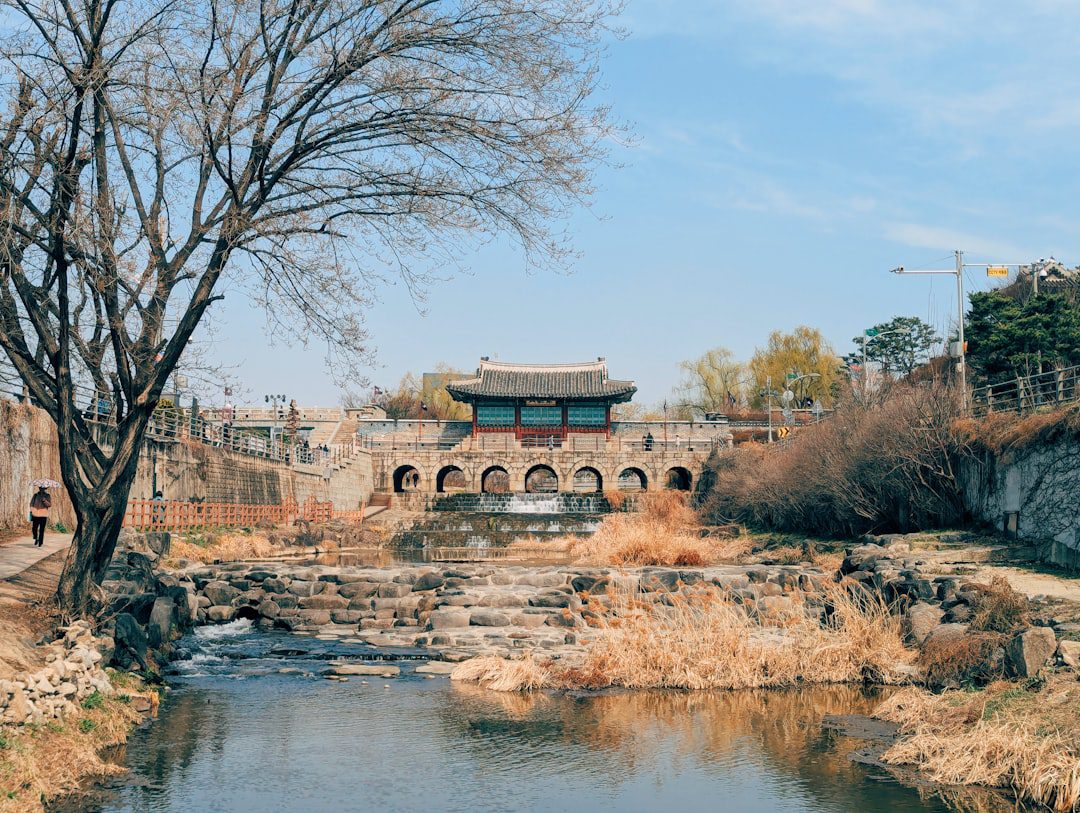
I first visited Suwon’s Hwaseong Fortress on a brutally hot summer day back in 1992—my second year in Korea. I was teaching English in Seoul and had a free Saturday, so I hopped on the train with nothing but a water bottle and misplaced confidence that I could navigate a UNESCO World Heritage site with my broken Korean. I got hopelessly lost in the fortress, sweating through my shirt, but by the end of the day, I was absolutely captivated. There’s something about walking those 5.7 kilometers of ancient stone walls, built over 230 years ago, that makes you feel genuinely connected to Korea’s history.
Three decades later, Hwaseong Fortress remains one of my favorite day trips from Seoul—and I recommend it to nearly every traveler I meet. Unlike the crowded palaces in the capital, you can actually experience this fortress at your own pace. The walls are yours to explore, the views across Suwon city are stunning, and the whole trip from Seoul takes just 30-40 minutes by train. Whether you’re a history buff, photography enthusiast, or just someone looking to escape the Seoul chaos for a day, this is genuinely worth your time.
Here’s everything you need to know about planning the perfect Hwaseong Fortress day trip.
What Is Hwaseong Fortress?
Hwaseong Fortress (화성, Hwaseong Sanseong) is a 5.74-kilometer defensive wall complex built between 1794 and 1796 during the Joseon Dynasty. King Jeongjo constructed it to protect his new fortress city, designed by military engineer Yu Hyungwon. It’s a masterpiece of 18th-century military architecture—blending ancient Korean defensive techniques with innovative engineering that was ahead of its time.
What makes Hwaseong special isn’t just its age. The fortress features 40 historical structures including four gates, observation towers, bastions, and firing platforms. Every stone, every angle, every structure served a strategic purpose. In 1997, UNESCO recognized it as a World Heritage Site, acknowledging its exceptional architectural and historical value.
The fortress was partially destroyed during the Korean War but has been carefully reconstructed. Walking the walls today, you’re experiencing both the original 18th-century stones and thoughtfully authentic restorations—Korea takes its heritage seriously.
Ted’s tip: Most visitors only walk 1-2 sections of the fortress. The entire 5.7km walk takes about 2-3 hours at a leisurely pace, but you can absolutely do a shorter 1-2 hour version if you have limited time. Even a 30-minute walk gives you the essential experience.
How to Get There from Seoul
Train (Recommended Option)
This is the easiest and most popular way. Take the Seoul Metropolitan Subway Line 1 to Seoul Station (서울역), then transfer to the Gyeongbu Line train heading to Suwon (수원).
| Detail | Information |
|---|---|
| Train Type | Mugunghwa (무궁화) or Korail (일반) |
| Travel Time | 30-40 minutes |
| Frequency | Every 10-20 minutes |
| One-way Fare | ₩3,100-4,500 |
| Destination | Suwon Station (수원역) |
From Suwon Station, you have two options to reach Hwaseong Fortress:
Option 1: City Bus (Budget-friendly)
Take Bus No. 36, 39, or 66 from outside Suwon Station. The ride takes about 15 minutes. Cost is ₩1,250. Get off at Hwaseong Fortress (화성) stop. The bus drops you at the south entrance.
Option 2: Taxi (Convenient)
A taxi from Suwon Station to the fortress costs ₩6,000-8,000 and takes about 10 minutes. If you’re traveling in a small group, split the cost and it becomes very reasonable.
Car Rental
If you’re renting a car in Seoul, the drive to Suwon takes about 1 hour via the Seoul-Busan Expressway. Parking at Hwaseong Fortress is free and plentiful, which is nice. However, I don’t recommend this for solo travelers or first-timers—driving in Korea takes some adjustment, and you’ll miss the relaxation of the train ride.
KTX Speed Train
The KTX actually bypasses Suwon, so it’s not practical for this trip. Stick with the regular Gyeongbu Line train.
Ted’s tip: If you’re staying in southern Seoul (Gangnam, Jamsil area), you can also catch the Gyeongbu Line from Ichon Station (이촌역) or Hansung University Station, which might be closer than Seoul Station depending on where you’re staying. Check the Naver Map or Subway Korea apps for the most convenient starting point.
Admission & Hours
| Category | Adult | Teen (13-18) | Child (7-12) |
|---|---|---|---|
| General Admission | ₩5,000 | ₩3,000 | ₩2,500 |
| Seniors (65+) | ₩2,500 | — | — |
| Infants (under 6) | Free | — | — |
Hwaseong Fortress is open year-round. Here are the seasonal hours:
| Season | Opening Time | Closing Time |
|---|---|---|
| March-October | 9:00 AM | 6:00 PM |
| November-February | 9:00 AM | 5:00 PM |
| Closed | Mondays | — |
The ticket office closes 1 hour before the fortress closes, so plan accordingly. I typically recommend arriving by 2:00 PM in winter and 3:00 PM in summer to give yourself decent time to explore.
Ted’s tip: The fortress doesn’t close completely on Mondays—some sections remain accessible. But the major structures (Paldalmun Gate, museum, viewing platforms) are closed. Plan your visit for Tuesday-Sunday if possible.
The Best Walking Routes (What to Actually See)
Okay, here’s what confuses most first-time visitors: Hwaseong has multiple entry points, the walls form a massive loop, and you can easily waste time walking in circles. Let me break down the smartest routes based on your time and energy level.
Route 1: The Essential 1-Hour Walk (Busy Travelers)
Start at the South Gate (Paldalmun), which is where the main ticket office is. Walk north along the eastern wall for about 20 minutes to reach Dongnamgongsimdon (a bastion with great city views). Then backtrack slightly and explore Banghwasuryujeong pavilion, a beautiful riverside structure. Head west and finish at the Seonamgongsimdon (western bastion). This hits the most photogenic spots without exhausting yourself.
Distance: About 2km. Best for: Limited time, older visitors, families with small kids.
Route 2: The Serious History Walk (2.5-3 Hours)
This is what I typically do. Start at Paldalmun (South Gate), walk the entire eastern wall to Nangnyeongnu (a northern tower with 360-degree views), then work your way around the western wall back to Paldalmun. You’ll see four major gates, multiple bastions, and get a real sense of the fortress’s strategic design.
Distance: About 4km. Best for: History enthusiasts, photographers, reasonably fit visitors.
Route 3: The Complete Loop (4-5 Hours)
Walk the entire 5.7km perimeter. Honestly? Most tourists don’t need this. But if you’re a serious history nerd or have a full day in Suwon, go for it. Bring plenty of water and sunscreen. The northwestern section is less crowded and surprisingly beautiful.
Distance: 5.7km (full loop). Best for: Dedicated history buffs, sunset lovers, experienced hikers.
Key Structures Not to Miss
Paldalmun (팔달문) — The South Gate, most intact and impressive of the four gates. Beautiful architecture, dramatic stonework.
Nangnyeongnu (낭영루) — Northern observation tower with panoramic views across Suwon. On clear days you can see far into the distance. This is my favorite photo spot.
Hwasomun (화서문) — West Gate, less crowded than the south gate, elegant design.
Janganmun (장안문) — North Gate, most reconstructed of the gates but impressive nonetheless.
Dongnamgongsimdon & Seonamgongsimdon — Twin bastions on the eastern and western sides. Great city views and strategic vantage points.
Banghwasuryujeong — Riverside pavilion in the southeastern section, peaceful and lovely for photos.
Ted’s tip: Avoid visiting mid-afternoon in summer (July-August, 1-4 PM). The sun beats down mercilessly on the stone walls, there’s zero shade, and the reflected heat is brutal. Visit early morning (9-11 AM) or late afternoon (4-6 PM) for better conditions and better light for photography. Bring at least 1.5 liters of water—I’m not exaggerating.
Hwaseong Fortress Museum & Exhibits
Inside the fortress complex is a small museum that provides excellent context for your walk. It covers the fortress’s construction history, the engineering innovations King Jeongjo approved, and the fortress’s role during various conflicts. There are detailed scale models of the original structures and information about the reconstruction efforts.
| Museum Detail | Information |
|---|---|
| Location | Inside fortress complex, near Paldalmun |
| Admission | Included with fortress ticket |
| Hours | Same as fortress |
| Duration | 30-45 minutes |
| English Materials | Yes, some exhibits have English |
I recommend spending 30 minutes in the museum before your walk, not after. It gives you context that makes the actual stones and structures much more meaningful. You’ll understand why certain gates were placed where they were, what the bastions actually did, and appreciate the engineering more.
Ted’s tip: If English descriptions aren’t sufficient, download the Papago app and use the translate camera feature to read Korean placards. It’s not perfect but gives you the gist of what you’re looking at.
Where to Eat Near Hwaseong Fortress
Unlike central Seoul, you won’t find fancy fusion restaurants near the fortress. But Suwon has its own food identity, and there are some genuinely excellent local spots worth trying.
Suwon Galbi (Suwon Short Ribs)
Suwon is famous for its galbi—beef short ribs grilled right at your table. The meat is thinner and more tender than Seoul’s style, marinated in a sweet soy sauce, and it’s absolutely delicious. The main galbi street is about 10 minutes from the fortress by taxi. Expect to spend ₩35,000-50,000 per person for a full meal with multiple dishes.
Recommended spot: Suwon Galbi Town (수원갈비골목) — dozens of restaurants clustered together. Pick any busy one; they’re all competitive and good. Hours typically 11:00 AM – 10:00 PM.
Convenient Lunch Options
If you want to stay near the fortress and eat quick:
| Restaurant | Cuisine | Cost | Walking Distance from South Gate |
|---|---|---|---|
| Convenience Store (GS, CU, Emart24) | Kimbab, ramyeon, sandwiches | ₩4,000-8,000 | 5 minutes |
| Local Lunch Places (식당) | Korean home cooking | ₩8,000-12,000 | 10 minutes |
| Korean BBQ Restaurants | Grilled meats | ₩15,000-30,000 | 15 minutes |
| Café Chains (Caffe Bene, Hollys) | Coffee, light food | ₩4,000-8,000 | 5-10 minutes |
Honestly? My favorite move is to grab a kimbab and coffee from a convenience store, eat it on one of the fortress walls while enjoying the view, then walk hungry so I’m ready for a proper dinner. But that’s just me being efficient.
Ted’s tip: Convenience stores near the fortress are your best friends for quick, cheap meals. You can find them literally at every entrance. Grab a ₩5,000 lunch box and a bottle of water, and you’re set. Save your appetite for a proper galbi dinner if you want.
Best Time to Visit: Seasons & Weather
Hwaseong Fortress is open year-round, but certain seasons are definitely better than others.
| Season | Weather | Crowds | Vibe |
|---|---|---|---|
| Spring (April-May) | 15-25°C, pleasant | Moderate | Cherry blossoms early April, green leaves, ideal |
| Summer (June-August) | 25-35°C, hot, humid | High | Go early morning/evening, intense sun on stones |
| Autumn (Sept-Nov) | 10-25°C, crisp | Very high (mid-Oct) | Stunning foliage late Oct, best time honestly |
| Winter (Dec-Feb) | -5 to 5°C, cold | Low | Crisp air, clear views, fewer tourists, shorter hours |
My honest take: October is the sweet spot. The weather is perfect (around 18-22°C), the autumn colors around the fortress are gorgeous, and you’ll actually want to be outside for several hours. April is also excellent with spring greenery. Summer is tough unless you’re a heat warrior. Winter is beautiful but the shorter hours (closes at 5 PM) limits exploration.
Ted’s tip: If you’re visiting in October, expect heavy crowds on weekends. Go on a weekday if possible. Autumn foliage peaks mid-October, so aim for October 10-20 for the best colors. Don’t rely on this for planning though—weather is unpredictable. Check the Korean autumn foliage reports about 1-2 weeks before your trip.
Photography Tips & Best Viewpoints
I’ve taken approximately 10,000 photos of Hwaseong Fortress over the years. Here’s what actually works:
Golden Hour Magic (6:00-7:00 AM & 4:00-5:30 PM)
The best light hits the fortress walls during the first and last hours of operation. The angles are dramatic, shadows are long, and the stonework absolutely glows. If photography is your thing, plan your visit around these windows.
Best Photo Spots
Nangnyeongnu (Northern Tower): Hands down the most dramatic fortress shot. The tower sits on elevated ground, and you get panoramic views of the entire structure and city beyond. Go at sunset for golden light reflecting off the walls.
Dongnamgongsimdon Bastion (Southeast): Tight architectural shots of the stonework. The bastion’s angle creates interesting shadows. Great for detail photography.
Paldalmun from a distance: Walk about 50 meters away from the South Gate and shoot it from below. The angle makes it look more imposing and dramatic than close-up shots.
Banghwasuryujeong Pavilion at sunset: The riverside location with city lights starting to twinkle behind it creates a romantic, almost cinematic vibe.
The walls themselves: The ancient stonework is beautiful. Macro shots of the textures, the moss, the perfectly fitted stones—these often make better images than the big architectural shots.
Camera Settings (If You Care)
For mirrorless or DSLR:
- Golden hour: f/2.8-4, ISO 100-400, shutter speed 1/250-1000s depending on light
- Midday (harsh light): stop down to f/8-11 to reduce lens flare, increase shutter speed accordingly
- Sunset: f/2.8-5.6, ISO 400-1600, depending on how fast your lens is
For smartphone: Use portrait mode on the walls to create depth. Golden hour is your best friend—the automatic processing in modern phones actually handles warm tones beautifully. Shoot wide and then crop later.
Ted’s tip: Bring a polarizing filter if you have one. The stone walls can be reflective, and a polarizer cuts glare and makes the colors more saturated. Also, bring a tripod if you’re serious about photography—the walls are stable, and sunset shots with 2-3 second exposures create gorgeous motion-blurred sky effects.
Practical Tips & What to Pack
After 35 years of taking tourists through Korea, I’ve learned what actually matters on a fortress day trip.
| Item | Why It Matters | Alternatives |
|---|---|---|
| Water (1.5L minimum) | Stone walls = intense heat. Dehydration sneaks up fast | Buy at convenience store near fortress entrance (₩2,000) |
| Sunscreen (SPF 50+) | Zero shade on walls. Sun reflects off stone | Buy at CU/GS ₩8,000-12,000 |
| Hat or visor | Direct sun for 2-3 hours is brutal on your head | Buy cheap one near Suwon Station ₩5,000 |
| Comfortable walking shoes | Stone walls and terrain are uneven. Blisters ruin days | Wear broken-in shoes, not new ones |
| Light layers/jacket | Wind at higher points can be chilly, even in summer | Easy to tie around waist if you don’t need it |
| Phone charger/power bank | Navigation apps kill battery in 2 hours | Bring portable charger ₩20,000-40,000 |
| Small backpack | Hands-free carrying for water, phone, snacks | Daypacks ₩30,000-80,000 at Korean outdoor stores |
| Snacks | Fortress has no internal food vendors | Energy bars, fruit, nuts from convenience store |
One more thing: wear actual walking shoes, not flip-flops or fashion sneakers. I’ve seen way too many tourists hobbling around in inappropriate footwear. The walls have uneven surfaces, and your feet will thank you for proper support.
Ted’s tip: Download the Korean subway app (Subway Korea or Naver Map) before you go. When you’re ready to leave Suwon, you can instantly see which bus number takes you back to the station and exactly when it arrives. No guessing, no wasting time.
Making This a Longer Day Trip
If you have 8+ hours in Suwon, combine Hwaseong Fortress with other attractions to make a proper day of it.
Suwon Hwaseong History Museum
Located just outside the fortress complex, this museum goes deeper into the fortress construction, King Jeongjo’s vision, and the restoration efforts. It’s more detailed than the on-site museum. Spend 45 minutes to 1 hour here if you’re really interested in the history.
Cost: ₩3,000 adults | Hours: 9:00 AM – 6:00 PM (closed Mondays)
Suwon Paldalmun Market (Traditional Market)
Just outside the fortress’s south gate is a bustling traditional market with food, textiles, and local goods. It’s authentic, not touristy, and genuinely interesting. Spend 30-45 minutes wandering, grab some street snacks. This is where real Suwon residents shop.
Hours: Varies by vendor, but most open 9:00 AM – 6:00 PM. Some close Sundays.
Galbi Dinner
Make your main meal a proper Suwon galbi experience. Spend 1.5-2 hours here. It’s genuinely worth the experience—Suwon’s galbi reputation is legit, and it’s only about 15 minutes from the fortress by taxi.
Sample Itinerary for 8-Hour Day Trip
| Time | Activity | Duration |
|---|---|---|
| 9:30 AM | Arrive Suwon Station | — |
| 9:50 AM | Taxi to Hwaseong Fortress | 15 min |
| 10:00 AM – 10:30 AM | Buy ticket, visit on-site museum | 30 min |
| 10:30 AM – 1:00 PM | Walk the fortress walls (Routes 1-2) | 2.5 hours |
| 1:00 PM – 2:00 PM | Lunch at convenience store or local restaurant | 1 hour |
| 2:00 PM – 3:00 PM | Paldalmun Market or additional fortress walking | 1 hour |
| 3:00 PM – 5:00 PM | Free time: cafes, photos, rest | 2 hours |
| 5:00 PM – 6:30 PM | Suwon galbi dinner | 1.5 hours |
| 6:30 PM | Taxi back to Suwon Station | 15 min |
| 7:00 PM | Train back to Seoul | 40 min |
This gets you back to central Seoul by around 8:00 PM with a full day of authentic Suwon experience packed in.
Frequently Asked Questions
Is Hwaseong Fortress worth visiting if I’m only in Seoul for 2-3 days?
Honestly? Yes. The train ride is 30-40 minutes, so it doesn’t eat your day. You can do a quality 3-hour visit with the fortress walk and lunch for about 8-9 hours total including travel. It’s genuinely one of the most significant historical sites near Seoul, and it’s a legitimate UNESCO World Heritage Site. Skip it if you’re exhausted or have serious museum fatigue, but it’s worth the time.
Can I walk the fortress walls in regular clothes, or do I need hiking gear?
Regular comfortable clothes are fine. You’re not mountain hiking—you’re walking maintained paths on fortress walls. Comfortable walking shoes are important, but you don’t need technical hiking boots or special gear. Just dress for the weather and bring water.
Is there a guided tour available?
Yes, but they’re typically in Korean. The fortress office sometimes arranges English-language tours on weekends, but availability is inconsistent. Call ahead (033-228-4261) if you want to request one. Honestly, the self-guided walk with the museum context is perfectly fine and gives you more flexibility.
Can I combine Hwaseong Fortress with other day trips from Seoul?
Suwon is relatively close to other nearby attractions like Korean Folk Village (약 30 minutes from the fortress) and Hwon (a historical site), but I wouldn’t cram too much into one day. Hwaseong Fortress deserves 4-5 hours minimum. Better to do Suwon as a dedicated day trip or combine it with just one other activity like the galbi meal.
What if it rains during my visit?
The fortress doesn’t close for rain, but the experience is significantly less pleasant. Stone walls become slippery, visibility drops, and you lose the view payoff. That said, rain creates moody atmospheric photos if you’re willing to get wet. Bring waterproof shoes and a compact rain jacket. The museum is dry and worth spending more time in if weather is bad.
Are there restroom facilities on the fortress?
Yes, there are bathrooms near Paldalmun (South Gate) and a few other spots, but they’re basic Korean-style facilities. Use the restroom before you start your walk if possible. There’s no toilet in the middle of the walls—you need to plan ahead.
Can families with young children visit?
Absolutely. The Route 1 walk (1 hour) is perfectly manageable for families. Kids are surprisingly interested in climbing walls and exploring towers. The main challenge is the sun and heat in summer—visit early morning or late afternoon. Consider bringing a stroller for very young kids, though the uneven terrain isn’t ideal for strollers. A child carrier might be better.
Is the fortress accessible for people with mobility issues?
Partially. The museum is accessible, and Paldalmun (South Gate) is reachable with no major obstacles. However, the fortress walls themselves involve stairs, uneven terrain, and elevation changes. If you have significant mobility limitations, stick to the museum and the gate area. Discuss specific needs with staff at the ticket office—they may have solutions.
Final Thoughts
I’ve stood on those fortress walls maybe 40 times over the past 35 years, and I still find something new to notice each visit. The way light hits the ancient stones at sunset, a detail in the engineering I’d somehow missed before, the view from a section I haven’t explored in years—Hwaseong Fortress rewards repeated visits.
But what strikes me most is how alive it is. This isn’t a museum frozen in time. It’s a functioning cultural space where Korean families bring their kids, where joggers run the perimeter, where photographers chase light. It’s integrated into Suwon’s modern life while remaining absolutely respectful of its historical significance. That’s the Korean approach to preservation, and it’s beautiful to witness.
If you’re visiting Korea and have even a half-day flexibility, get out of Seoul and see Hwaseong Fortress. Take the train, grab a water bottle, and walk those walls. You’ll understand something real about Korean history and architecture that no palace museum can quite capture. And honestly, the galbi dinner afterward won’t hurt either.
— Ted K
Image Credits: Photos sourced from Unsplash. By using this site, you agree to our Privacy Policy and Disclaimer.