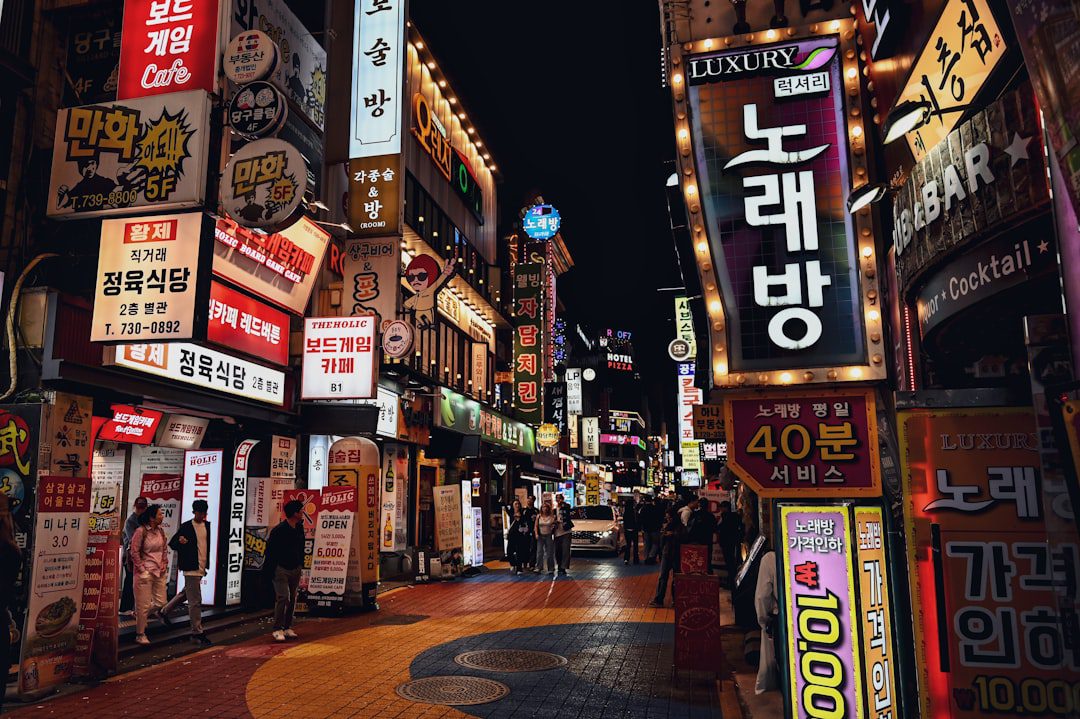
I discovered Insadong on a rainy afternoon in 1989, when my Korean girlfriend insisted on dragging me away from my office to show me “where real Seoul lives.” I was skeptical—I wanted coffee and air conditioning, not what I assumed would be a musty tourist trap. But the moment we turned onto Insadong-gil, its pedestrian main street, I felt something shift. The smell of traditional ink and paper mixed with fresh hwangnyung (a medicinal Korean drink), the sound of classical gayageum music drifting from a teahouse, the sight of artists hunched over paintings in street-level studios—it was like stepping into a different Seoul entirely.
That was 35 years ago. Insadong has changed tremendously since then, but it’s managed something few neighborhoods do: it’s evolved while staying true to itself. Today, it’s arguably Seoul’s most authentic cultural district—a place where you’ll find everything from 500-year-old temples hidden between modern art galleries to tiny sojutjangs where ajummas have been serving the same regulars for decades. International tourists are certainly here now, but so are Korean art students, Buddhist monks, antique collectors, and locals who simply want to escape the intensity of Gangnam or Myeongdong.
If you’re serious about understanding Seoul beyond the surface—about feeling the pulse of Korean culture, history, and creativity—Insadong is non-negotiable. Here’s everything you need to know to experience it like I do.
Where Insadong Is (and How to Get There)
Insadong sits in the Jongno-gu district, in central Seoul, just east of Gyeongbokgung Palace and north of Seoul City Hall. If you’re coming from Incheon Airport, it’s roughly 45 minutes via airport railway to Seoul Station, then a 10-minute subway hop to Insadong.
The neighborhood’s geographic heart is Insadong-gil, a 500-meter-long pedestrian street that runs roughly north-south. Everything I’ll describe clusters around this main artery and the alleys branching off it. The entire neighborhood is walkable—I genuinely mean that; you could spend a full day just wandering.
| Nearest Subway Stations | Line | Distance to Insadong-gil |
|---|---|---|
| Anguk Station (Exit 6) | Line 3 | ~2 minutes (closest) |
| Jongno 3-ga Station (Exit 5) | Lines 1, 3, 5 | ~5 minutes |
| Gyeongbokgung Station (Exit 2) | Line 3 | ~8 minutes |
Ted’s tip: Always exit at Anguk Station, Exit 6. This puts you at the south end of Insadong-gil, and you can naturally walk northward, discovering things as you go. If you exit at Jongno 3-ga, you’re on the busier commercial side and you’ll feel the chaos sooner.
The Art & Gallery Scene: Where Seoul’s Soul Meets Canvas
When I tell people Insadong is “the art district,” they sometimes think I mean indie museums or Instagram-friendly installations. That’s part of it, but Insadong’s art scene is far deeper—it’s where contemporary Korean artists actually work, exhibit, and sell. You’ll find galleries ranging from prestigious, multi-floor spaces that show internationally recognized artists to single-room studios where a 28-year-old is painting her first solo exhibition.
The Big Players: Museum-Scale Galleries
These are the galleries you’ll hear about in guidebooks, but they genuinely deserve the attention. They’re also free to browse (no purchase expected).
Ssamzie Art Space (삼지아트스페이스) is a five-story behemoth that occupies an entire building on Insadong-gil itself. It opened in 1985 and remains the neighborhood’s flagship. I’ve watched it evolve from a semi-chaotic artist collective to a proper gallery with rotating exhibitions across media—painting, sculpture, digital art, photography. Each floor is curated separately, so you might encounter traditional Korean ink painting on Floor 1 and contemporary video art on Floor 3. Entry is free; exhibitions change monthly.
Gallery Hyundai (갤러리 현대), just off Insadong-gil on a quieter side street, is more upscale and selective in what it shows. This is where you’ll see established Korean and international artists. It’s smaller than Ssamzie—just two main floors—but the quality is museum-grade. Expect to see prices in the tens of millions of won for the work on display.
Kukje Gallery (국제갤러리) spans two elegant floors and focuses on contemporary painting and sculpture. I’ve spent hours here watching collectors and serious art students move slowly from piece to piece. The staff speaks English and actually enjoy explaining the work.
| Gallery | Address (Insadong area) | Focus | Hours |
|---|---|---|---|
| Ssamzie Art Space | Insadong-gil main street, center | Mixed media, rotating | 10 AM–7 PM (closed Mondays) |
| Gallery Hyundai | Off Insadong-gil, east side | Contemporary fine art | 10 AM–6 PM (closed Sundays) |
| Kukje Gallery | Off Insadong-gil, center | Contemporary painting, sculpture | 10 AM–6 PM (closed Sundays) |
The Real Stuff: Small Artist Studios & Emerging Galleries
This is where I actually spend most of my time in Insadong. In the narrow alleys branching off Insadong-gil (particularly toward the east side), you’ll find dozens of tiny galleries, often just 2–3 meters wide, run by individual artists. There’s no formal directory—you discover them by wandering. One afternoon, I stumbled into a gallery called Project Space Sarok, where a 26-year-old artist was showing abstract charcoal drawings. We talked for an hour, and I bought one for 200,000₩. That’s the Insadong magic: access to working artists, not just finished products in climate-controlled showrooms.
Ted’s tip: If you see a handmade sign in Korean on a narrow alley staircase pointing upward, follow it. Seriously. The odds are good it’s leading you to a small gallery or studio you won’t find online. Bring a notebook to jot down names; the artist cards typically have no English.
Tea Houses & Coffee Roasteries: The Insadong Ritual
If galleries are Insadong’s intellectual heart, its tea houses are its soul. I’ve spent more hours in Insadong teahouses—yucha-bang (유차방) in Korean—than I care to admit. They’re not trendy; they’re havens.
Traditional Tea Houses with Centuries of Legitimacy
Dawon (다원) is the most famous, and deservedly so. It opened in 1972 and occupies a three-story hanok (traditional wooden house) tucked into an alley off Insadong-gil. Walk in and you’re transported—low wooden tables, paper screens, the smell of roasting barley. They serve everything from yujacha (citron tea) to traditional omija (five-flavor berry) tea. A pot of tea for two runs about 15,000–20,000₩. I go here when I need to think; the owner has never rushed me, even when I’ve nursed a single pot for two hours.
Tearoom Jongno (다실종로) is smaller, quieter, less touristy than Dawon, and honestly superior if you want the authentic experience. The owner, an elderly woman, has been serving the same regulars for 30+ years. The tea list is handwritten and in Korean only, but the staff will explain options. Green tea, oolong, ginseng tea—all properly prepared.
Sujata (수자타) is newer (opened 1998) but feels timeless. It’s located in a restored hanok and specializes in herbal teas. Their yujacha and omija-cha are exceptional. Prices are slightly higher—25,000–30,000₩ for a pot—but the quality justifies it.
Modern Coffee Roasteries with Insadong Soul
If you’re more of a coffee person, Insadong has quietly become a hub for serious specialty coffee. These aren’t franchise cafés; they’re working roasteries run by people obsessed with beans and brewing methods.
Coffee Hanyak (커피한약) is my regular. It’s a tiny storefront roastery where the owner roasts beans daily and pulls meticulous espressos. A single-origin pour-over runs about 7,000–8,000₩, and he’ll spend 10 minutes explaining the origin and tasting notes. The café seats maybe 8 people on wooden stools. It’s perfect.
Blue Bottle Coffee has a location on Insadong-gil (the only one in central Seoul outside of Gangnam), and while it’s more commercial than my beloved Coffee Hanyak, the quality is undeniable. It’s also a good fallback if you want reliable WiFi and English-speaking baristas.
| Teahouse/Café | Type | Price Range | Vibe |
|---|---|---|---|
| Dawon | Traditional tea house | 15,000–20,000₩ | Iconic, timeless, slightly touristy |
| Tearoom Jongno | Traditional tea house | 12,000–18,000₩ | Local, authentic, quiet |
| Sujata | Traditional tea house | 25,000–30,000₩ | Refined, upscale, herbal focus |
| Coffee Hanyak | Specialty coffee roastery | 7,000–8,000₩ | Minimal, focused, passionate |
| Blue Bottle Coffee | Modern café | 7,000–10,000₩ | Upscale, reliable, English-friendly |
Ted’s tip: Visit a teahouse in the late afternoon (3–5 PM). This is when locals come to escape work, when the light slants beautifully through wooden screens, and when the pace feels most authentically Insadong. Morning brings tourists; afternoon brings Seoul residents seeking refuge.
Antiques, Crafts & Artisan Goods: Shopping Beyond Myeongdong
While Myeongdong sells you cosmetics and phone cases, Insadong sells you Korean culture. This is where collectors, museum curators, and serious interior designers shop.
Antique Shops & Curiosity Dealers
Insadong’s antique scene is no joke. You’ll find everything from 100-year-old celadon bowls (₩500,000+) to vintage Buddhist statues to 1970s Korean movie posters. The key is knowing which shops cater to which market.
Yido Antique (이도 고미술) is legitimate high-end—museum-quality pieces. If you’re buying, expect four-figure prices in USD. But even browsing is an education. They specialize in Joseon-era ceramics and metalwork.
Kangnam Antique is more approachable. You’ll find genuine 50–100-year-old pieces—hand-painted Korean porcelain boxes, wooden furniture, Buddhist scrolls—in the ₩100,000–500,000 range. The owner speaks some English and enjoys chatting about provenance.
Small alley shops
Modern Artisan Goods & Crafts
Insa Art Square (인사아트스퀘어) is a multi-floor collective of craftspeople. You’ll find Korean calligraphers, paper makers, woodworkers, and textile artists all working and selling from the same building. Prices range from 5,000₩ for a handmade bookmark to 100,000₩+ for a piece of bespoke Korean fabric art. This is where I buy gifts—every piece has a story.
Soda (소다) is a small shop specializing in traditional Korean paper (hanji) products. Think notebooks, envelopes, decorative panels—all handmade or hand-finished. A pack of hanji notecards costs about 8,000₩, and they make wonderful gifts that feel authentically Korean without being touristy.
Cheongsong Paper (청송지) focuses specifically on paper-making workshops and sales. You can buy finished products or actually participate in a paper-making class (2–3 hours, around 50,000₩). I’ve done this twice; it’s meditative and genuinely fun.
| Shop | Specialization | Price Range | Best For |
|---|---|---|---|
| Yido Antique | Museum-quality antiques | ₩500,000–millions | Collectors, serious buyers |
| Kangnam Antique | Vintage Korean pieces | ₩100,000–500,000 | Decorative items, mid-range |
| Insa Art Square | Contemporary artisan crafts | ₩5,000–100,000+ | Unique gifts, art pieces |
| Soda | Hanji paper products | ₩8,000–30,000 | Souvenirs, stationery gifts |
| Cheongsong Paper | Traditional paper & workshops | ₩10,000–50,000 (classes) | Hands-on experience, artisan goods |
Ted’s tip: Shop prices aren’t fixed in small antique shops. If you’re genuinely interested in a piece and willing to pay cash (not card), don’t be shy about asking if there’s any negotiation room. I’ve gotten 10–20% discounts this way. It’s not haggling culture like Southeast Asia, but respectful inquiry is appreciated.
Temples & Spiritual Sites: The Buddhist Soul of Insadong
Insadong’s spiritual energy often surprises visitors. This neighborhood has deep Buddhist roots; there are three temples of note, plus smaller meditation spaces and prayer halls tucked into buildings.
Jogyesa Temple: Seoul’s Premier Zen Buddhist Site
Jogyesa (조계사) is the headquarters of the Jogye Order of Korean Buddhism. It’s just north of Insadong-gil, a 5-minute walk from Anguk Station. This isn’t a tourist attraction, though tourists certainly come—it’s an active temple with hundreds of daily practitioners. The main hall, rebuilt in 1910, is architecturally stunning.
If you visit during morning prayers (typically 5–6 AM or 7–8 AM), you’ll experience something genuinely spiritual, not touristic. The wooden structure, the sound of temple bells, the monks chanting sutras in unison—it’s profound. Visitors are welcome to observe from the back, but dress modestly and remove your shoes.
If you’re not an early riser, visit during the day. Entrance is free. The temple grounds are peaceful, and the main hall is always open. I often go here when Seoul feels overwhelming, just to sit in the main hall for 15 minutes and reset.
Sunggyungwan & Confucian Culture
Just east of Insadong is Sunggyungwan (성균관), a Confucian academy founded in 1398. It predates Jogyesa by centuries. You can walk through the grounds (free entry) to see the lecture halls, gates, and courtyards where Confucian scholars studied for 600+ years. There’s a small museum explaining the history.
I bring this up because Sunggyungwan and Jogyesa represent Insadong’s cultural duality: Buddhism and Confucianism have coexisted here for centuries, shaping Korean intellectual and spiritual life. Understanding this duality helps you understand the neighborhood’s essence.
Visiting Temples: Practical Tips
| Temple | Address | Nearest Station | Entry Fee | Best Time to Visit |
|---|---|---|---|---|
| Jogyesa | 45 Ujeongguk-ro, Jongno-gu | Anguk (Line 3, Exit 5) | Free | Early morning or midday |
| Sunggyungwan | 50 Seonggyungwan-ro, Jongno-gu | Anguk (Line 3, Exit 2) | Free | Daytime |
Ted’s tip: If you want a deeper experience, both Jogyesa and many other Korean temples offer temple stay programs (templestay.com). A single night includes meditation, meals, and early morning prayers. It’s transformative. The nearest option to Insadong is Jogyesa itself, though spots are limited and should be booked weeks ahead.
Food in Insadong: Beyond Tourist Trap Restaurants
I need to be honest: Insadong-gil has touristy restaurants now, and many aren’t great. Chain restaurants have moved in. But venture into the side alleys, and you’ll find authentic eating experiences that locals actually patronize.
Insadong’s Traditional Restaurants with Decades of History
Samcheong-dong Sujebi (삼청동수제비) has been serving hand-torn noodle soup (sujebi) since 1983. It’s a tiny place, maybe 6 tables, and the owner’s been doing this for over 40 years. A bowl of sujebi with clams costs about 9,000₩. The broth is rich, the noodles tender. I go here every few months.
Sinseollo House (신선로하우스) specializes in sinseollo, an elaborate Korean royal court dish with meat, vegetables, and seafood cooked together. It’s usually served for special occasions, not everyday eating. A portion for two runs about 40,000–50,000₩. The restaurant feels old-school; the owner’s family has been cooking this for three generations.
Insa Mandu (인사만두) is a hole-in-the-wall dumpling shop. Steamed dumplings (mandu) are about 6,000₩ for an order of 6–7. The owner’s in her 70s and she’s been here since the 1990s. Every dumpling is hand-folded.
Modern Insadong: Young Chefs & Fusion Concepts
Insadong also attracts younger chefs experimenting with Korean traditions. Mingles (밍글스) is a Michelin-starred restaurant doing elevated Korean cuisine. It’s pricey (60,000–80,000₩ per person for a course), but if you want to see where Korean food is heading, this is it. Reservations essential.
For something casual but excellent, Jogyesa Vegetarian Kalguksu (조계사 채식칼국수) is run by temple practitioners and serves noodle soup without meat or fish. It’s cheap (8,000₩), delicious, and supports the temple. I eat here at least once a month.
| Restaurant | Cuisine Type | Price (per person) | Vibe |
|---|---|---|---|
| Samcheong-dong Sujebi | Hand-torn noodle soup | 9,000₩ | Humble, authentic, local |
| Sinseollo House | Royal court cuisine | 20,000–25,000₩ | Traditional, formal, special occasions |
| Insa Mandu | Dumplings | 6,000₩ | Casual, hole-in-wall, genuine |
| Mingles | Modern Korean (Michelin-starred) | 60,000–80,000₩ | Upscale, sophisticated, innovative |
| Jogyesa Vegetarian Kalguksu | Buddhist vegetarian noodles | 8,000₩ | Casual, spiritual, affordable |
Ted’s tip: Never eat on Insadong-gil itself unless you’re grabbing coffee or tea. The best food is always one or two alleys over. Any restaurant directly on the main pedestrian street is almost certainly tourist-oriented and overpriced.
Practical Information: Hours, Transportation & Logistics
Let me give you the nitty-gritty details so you can plan your visit efficiently.
Getting There & Around
I’ve mentioned Anguk Station multiple times, but let me emphasize: take Line 3 to Anguk, Exit 6. This is your entry point. From there, Insadong-gil is literally straight ahead. The walk is flat, pleasant, and takes about 2 minutes.
Insadong is entirely walkable. The main street is a 500-meter pedestrian zone; side alleys are narrow but well-lit and safe. I wouldn’t recommend bringing luggage if you’re exploring; leave large bags at your hotel. A small crossbody bag is fine.
Best Times to Visit
Insadong is busy year-round, but some times are better than others.
| Season | Weather | Crowds | Best Days/Times |
|---|---|---|---|
| Spring (Mar–May) | Mild, 15–20°C | Heavy (April) | Weekday mornings before 10 AM |
| Summer (Jun–Aug) | Hot, humid, 25–30°C | Heavy | Early morning, rainy days |
| Fall (Sep–Nov) | Cool, crisp, 15–20°C | Medium (Oct) | Weekday afternoons 2–5 PM |
| Winter (Dec–Feb) | Cold, dry, 0–5°C | Light | Anytime (perfect season) |
Ted’s tip: Visit Insadong on a weekday, not weekends. Weekends bring tour groups and families. If you’re visiting on a weekend, go very early (before 9 AM) or later (after 5 PM) to catch the quieter moments.
What to Bring & Wear
Insadong involves a lot of walking and climbing stairs (many galleries and shops are on upper floors). Wear comfortable shoes. If you’re visiting traditional establishments or temples, dress modestly—no short shorts or tank tops. For cooler months, layers are essential; you’ll move between unheated alleyways and warm teahouses.
Bring cash. Many small shops, particularly antique dealers and tiny restaurants, don’t accept cards. There are ATMs on Insadong-gil (look for GS25 convenience stores), but it’s better to arrive with cash already withdrawn.
Language & Communication
English is less common in Insadong than in Myeongdong or Gangnam. Many shop owners and restaurant staff speak minimal English. I recommend downloading a translation app or learning a few key Korean phrases:
- “Gamsahamnida” (감사합니다) = Thank you
- “Eolmayeyo?” (얼마예요?) = How much?
- “Mwot-eul gwanch’wahae?” (뭘 관찰해?) = What do you recommend?
Most young shop owners will have some English; elderly shop owners often won’t. But everyone appreciates the effort.
Related Neighborhoods Worth Combining with Insadong
If you’re doing a full day in this area, you can easily combine Insadong with adjacent neighborhoods. Just north is Bukchon Hanok Village, a traditional residential area with even more hanok buildings. Just south is Gyeongbokgung Palace. Just west is Myeongdong (though it’s a different energy entirely).
A perfect day: Start at Insadong in the morning, explore galleries and shops until early afternoon, have lunch at a small restaurant, then walk north to Bukchon for the late afternoon light. End with evening tea at Dawon.
Frequently Asked Questions
Is Insadong touristy? Should I bother visiting?
It’s touristy on the surface—especially on Insadong-gil itself—but genuinely authentic if you venture into side alleys. The galleries are real, the teahouses are legitimately old, the temples are active. Yes, go. Just don’t eat on the main street and expect pure authenticity. The neighborhood is what you make of it.
How long should I spend in Insadong?
Plan 4–6 hours minimum if you want to browse galleries and visit a teahouse. A full day (6–8 hours) is ideal if you want to eat lunch, explore slowly, visit temples, and actually absorb the atmosphere. I’ve easily spent 12 hours there and left wanting more.
Can I buy something genuinely old at a reasonable price?
Yes, but you need to shop side alleys, not flagship galleries. Expect 100,000–300,000₩ for genuine 50–100-year-old pieces. Anything cheaper is likely reproduction; anything more expensive should come with documented provenance from the antique dealer.
Are the temples welcoming to non-Buddhists?
Absolutely. Jogyesa welcomes visitors of all faiths. Remove your shoes before entering the main hall, be respectful, and don’t photograph if there are active ceremonies. Early morning prayers are beautiful; daytime visits are quieter and more contemplative.
What’s the best teahouse for a first-time visitor?
Dawon is the iconic choice and it’s worth doing once. But if you want authentic without the tourist undertones, go to Tearoom Jongno. The owner is lovely, the tea is exceptional, and you’ll encounter actual locals.
Do I need to speak Korean to shop for antiques?
Not essential, but helpful. Many antique shop owners are older and speak no English. Write down your interest in a notebook (vintage ceramics, Buddhist art, etc.) and use Google Translate for questions. The effort counts for a lot.
Is Insadong safe at night?
Yes, very safe. The neighborhood is well-lit, busy, and has a strong police presence. I walk around Insadong at midnight without hesitation. That said, don’t wander into dark alleys you haven’t explored during daylight, just as a general rule anywhere in Seoul.
What’s the best street food in Insadong?
Honestly, Insadong isn’t a street food destination—that’s more Myeongdong or Namdaemun Market. But there’s a small vendor near Insadong-gil selling hotteok (stuffed pancakes) that’s been operating for 20+ years. Look for it on the west side of the pedestrian street, near the north end.
Final Thoughts
Insadong has changed in 35 years. There are convenience stores where there used to be artist studios. Tourist restaurants where neighborhood hole-in-the-walls used to thrive. Chain cafés where independent roasteries quietly served regulars for decades. Some days, I mourn these losses.
But then I turn a corner and discover a new small gallery I’ve never seen, run by a 24-year-old artist showing her first solo exhibition. Or I stumble into a teahouse that’s been serving the same herbal blend for 45 years, and the owner tells me about the customers he’s watched raise families over decades. Or I watch a young couple, clearly local, sitting in a hanok tearoom with no photos, no phones, just tea and each other—exactly as it should be.
Insadong is what Seoul’s soul looks like. Not the glitzy, futuristic Seoul you see in K-dramas or Instagram. But the Seoul of artists, monks, collectors, history, and quiet reflection. It’s imperfect and changing, but it’s real.
Come here with intention. Put away your phone sometimes. Talk to shop owners. Sit in a teahouse for longer than you planned. Wander alleys. Let yourself get a little lost. That’s how you’ll understand not just Insadong, but Seoul itself.
— Ted K
Image Credits: Photos sourced from Unsplash. By using this site, you agree to our Privacy Policy and Disclaimer.