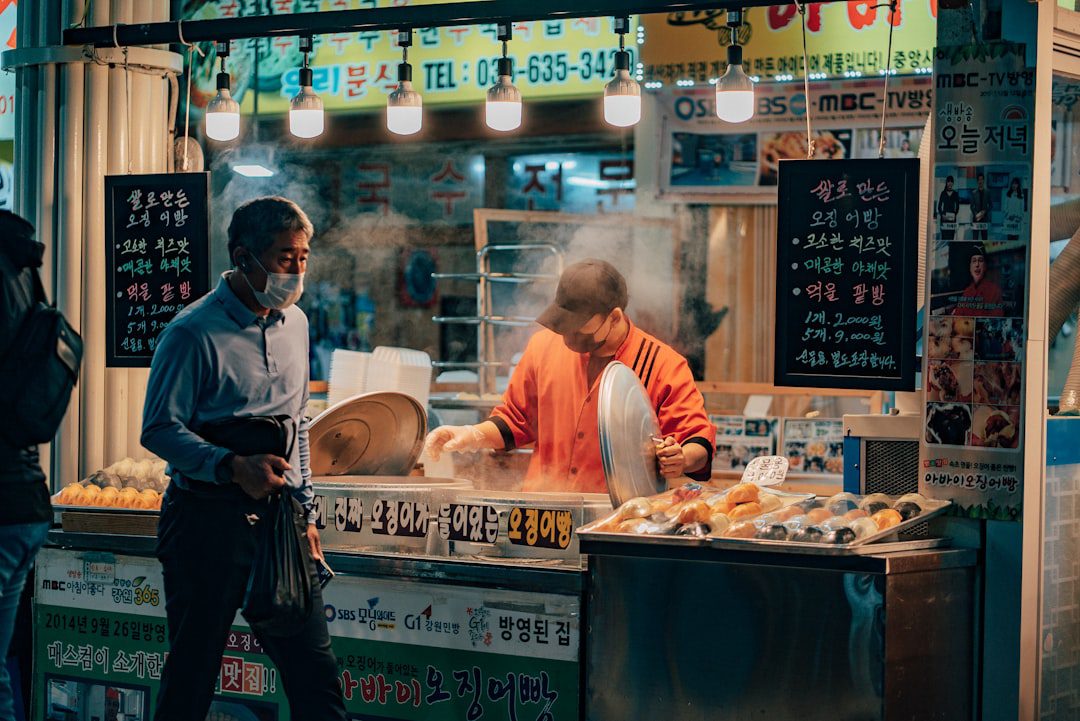
I’ve spent 35 years wandering the crowded aisles, narrow vendor stalls, and labyrinthine passages of Seoul’s traditional markets, and I still discover something new nearly every visit. Back in 1990 when I first arrived in Korea, these jjangteul (장터)—traditional outdoor and covered markets—were the beating heart of Korean commerce. Grandmothers haggled over vegetable prices, fishmongers shouted their daily catches, and the air hung thick with the smell of grilled seafood and kimchi fermentation. Fast-forward to today, and while Korea has transformed into a gleaming high-tech nation with shopping malls on every corner, these markets remain gloriously unchanged—chaotic, authentic, and absolutely essential to understanding how ordinary Koreans actually live.
The three major markets everyone visits are Namdaemun Market (the largest traditional market in Korea), Gwangjang Market (street food heaven), and Dongdaemun Market (though it’s evolved into something different). But the real treasure hunt begins with the hidden neighborhood markets that locals prefer: the ones where prices are lower, the vendors know your name, and you’ll eat better than anywhere touristy.
Here’s everything you need to know about Korea’s traditional markets—where to go, what to eat, how much to spend, and how to navigate them like someone who’s been doing this for three decades.
What Are Korean Traditional Markets?
Korean traditional markets (전통시장) are open-air or semi-covered shopping areas that have existed in the same locations for decades—sometimes centuries. Unlike the sterile, air-conditioned shopping malls that now dominate Korean cities, these markets are sensory overload in the best possible way: the noise, the smells, the haggling, the generations-old vendor relationships, the way grandmothers in visors can simultaneously wrap your purchase in newspaper while conducting three other transactions.
Ted’s tip: Korean traditional markets operate on a completely different rhythm than the rest of Seoul. They typically open early (6-7 AM) and wind down by mid-afternoon. Early morning is when you’ll see the real market—fishmongers setting up, restaurants buying ingredients, and the authentic energy before tourist crowds arrive.
These markets serve multiple functions simultaneously: they’re shopping destinations (where locals buy vegetables, fish, meat, and household goods at prices 20-40% cheaper than supermarkets), they’re social hubs where neighbors meet and gossip, they’re food courts where you can eat traditional street food, and increasingly, they’re tourist attractions where visitors experience “real Korea.”
The Korean government has actually made preserving traditional markets a national priority in recent years, recognizing them as cultural heritage sites. Many older markets have been renovated with improved sanitation and modern amenities while maintaining their historic character—a delicate balance that doesn’t always work, but in the best cases, creates something magical.
Namdaemun Market: Korea’s Largest Traditional Market
Namdaemun Market (남대문시장) is the heavyweight champion of Korean traditional markets. Located directly below Namdaemun Gate in central Seoul, this market sprawls across approximately 49 city blocks with somewhere between 4,000-10,000 vendor stalls (depending on who’s counting). I still remember the first time I visited in the early 1990s—I was completely lost within 30 seconds and wandered for two hours before finding my way out. These days, I navigate it with the confidence of someone who’s learned that it’s organized by product category, but the layout still feels intentionally labyrinthine.
What to Buy at Namdaemun
| Product Category | Best For | Typical Price Range | Vendor Tips |
|---|---|---|---|
| Clothing & Textiles | Bulk fabric, traditional hanbok, workwear | ₩5,000-50,000 | Haggle aggressively; prices for tourists are 2-3x locals |
| Leather Goods | Bags, wallets, belts, shoes | ₩15,000-100,000 | Quality varies wildly; inspect stitching carefully |
| Ginseng & Medicinal Herbs | Premium gifts, health supplements | ₩20,000-500,000+ | Prices are negotiable; check harvesting year |
| Kitchen Items | Korean cooking equipment, utensils, banchan bowls | ₩3,000-50,000 | Great for souvenir shopping at wholesale prices |
| Electronics & Mobile Phones | Budget electronics (phones are mainly Korean models) | ₩50,000+ | Warranty issues; better deals at malls |
| Food & Street Food | Grilled skewers, kimbap, tteokbokki, hotteok | ₩3,000-12,000 | Eat standing up; peak times are 11 AM-1 PM |
Getting There & Practical Details
Address: Jung-gu, Seoul (spreads across 49 blocks—no single address really captures it)
Nearest Subway: Line 4, Myeongdong Station, Exit 8 (this is the most direct route)
Hours: Most stalls open around 6-7 AM and close around 6-8 PM. Some clothing sections stay open later. Lunch hour (11 AM-2 PM) is busiest.
Parking: Multiple paid parking lots exist beneath the market. Expect to pay ₩2,000-3,000 per hour. Public parking fills up quickly during peak hours.
Ted’s tip: Namdaemun has a reputation for “haggling culture” that’s actually more intense here than in other markets. Vendors often quote inflated initial prices expecting negotiation. This isn’t a scam—it’s just how it works. For items like ginseng, leather goods, or bulk fabric purchases, you should expect to negotiate. For food, however, prices are fixed.
The best time to visit Namdaemun is either early morning (6-9 AM) when you’ll see the actual market function for locals, or late afternoon (after 4 PM) when you can linger without the midday chaos. Tourist groups tend to arrive between 10 AM-2 PM, so plan accordingly.
The Namdaemun Food Scene
Don’t come to Namdaemun expecting fine dining—come for authentic street food that’s been made the same way for 50+ years. The food vendors in Namdaemun have a particular style: efficient, no-nonsense, and completely indifferent to whether you’re a tourist or local (which is refreshing). Here are the must-try foods:
Hotteok (호떡): Sweet pancakes filled with brown sugar and cinnamon. The legendary vendor near the main gate has been making these since 1976. ₩3,000-4,000 per piece. Don’t wait for your change—locals just walk away, and vendors expect this.
Tteokbokki (떡볶이): Spicy rice cakes in red sauce. Multiple vendors compete directly facing each other, so quality is consistent and prices competitive (₩4,000-6,000). The heat level is authentic Korean—prepare yourself.
Grilled Seafood Skewers: Squid, shrimp, and scallops on sticks cooked over charcoal. ₩5,000-8,000. Watch the vendors grill—they do this with remarkable speed and confidence.
Gimbap (김밥): The Namdaemun versions are heartier than convenience store versions. ₩5,000-8,000.
Kimbap & Ramyeon Combo: Many vendors offer combo meals (₩8,000-10,000) that include gimbap plus a small bowl of instant noodles. This is quintessential Korean market food.
Gwangjang Market: Street Food Paradise
If Namdaemun is Korea’s largest market, Gwangjang Market (광장시장) is Korea’s most beloved. Located in the Jongno district, Gwangjang is smaller and more focused than Namdaemun—but it’s where Seoulites actually come to eat. This market is legendary in Korean food culture, and for good reason: the street food here is not an afterthought or tourist attraction, it’s the point.
What makes Gwangjang special is the density of street food vendors and the specific dishes that originated here. Several dishes that are now found throughout Korea were first popularized at Gwangjang: bindaetteok (mung bean pancakes), kimbap, and a particular style of grilled beef that locals call “Gwangjang bulgogi.” The market still maintains an old-school energy that feels genuinely untouched by time, though it’s become increasingly famous among tourists in recent years (partly because of K-drama filming locations and YouTube food videos).
Getting There & Practical Details
Address: 35 Changgyeonggung-ro, Jongno-gu, Seoul (핸드폰: 02-2267-0291)
Nearest Subway: Line 1 or 3, Jongno 3-ga Station, Exit 5 (literally 1-minute walk)
Hours: Most stalls open around 8 AM, peak time is 11 AM-2 PM, closes around 7-8 PM. Some vendors operate even later.
Best Time to Visit: Mid-morning (10-11 AM) is perfect—busy enough to have energy, but not so crowded that you can’t navigate. Lunch hour (12-1 PM) is wall-to-wall people.
Ted’s tip: Gwangjang is not that large—maybe 1/50th the size of Namdaemun—but it somehow feels like a maze because the vendor stalls are extremely tightly packed. The main street runs in a semi-circle; most food vendors cluster on the southern side. Grab a little laminated map at the entrance (free).
Must-Eat Foods at Gwangjang Market
| Dish | Description | Price | Where to Eat It |
|---|---|---|---|
| Bindaetteok | Crispy mung bean pancake with kimchi inside | ₩3,000-5,000 | Look for vendors with huge flat griddles; Gwangjang is famous for this |
| Kimbap | Rolled rice with vegetables, egg, kimchi | ₩4,000-6,000 | Quality varies; try 2-3 stalls to find your favorite |
| Yukhoe Kimbap | Kimbap with raw beef (Korean steak tartare style) | ₩8,000-12,000 | Premium version; rarer to find now due to regulations |
| Grilled Beef (Bulgogi) | Thin-sliced marinated beef cooked on griddle | ₩6,000-10,000 | Usually served with ssamjang and lettuce wraps |
| Ramyeon | Instant noodles (but freshly made here, not from convenience store) | ₩4,000-6,000 | Often combined with kimbap as a combo meal |
| Mayak Kimbap | Fried kimbap that’s addictive (mayak = drug) | ₩5,000-7,000 | Newer trend; some traditional vendors resist this |
| Soondae (순대) | Blood sausage (don’t knock it until you try it) | ₩3,000-5,000 | Vendors slice it fresh and grill it; dip in ssamjang |
| Makgeolli (막걸리) | Traditional rice wine, milky and slightly sweet | ₩3,000-4,000 per serving | Perfect pairing with kimbap and bindaetteok |
Ted’s tip: The best way to eat at Gwangjang is to get a small plastic basket, visit 3-4 different vendors (one for kimbap, one for bindaetteok, one for something grilled), and find one of the standing-room picnic tables in the center. You’ll spend ₩15,000-20,000 total and have experienced the authentic Gwangjang Market experience. Koreans do this all the time—it’s not considered weird.
One specific recommendation: seek out the bindaetteok vendors near the entrance. There’s a cluster of them that have been making the same recipe for 40+ years. The crispy exterior and perfectly balanced flavor is genuinely exceptional. Pair it with makgeolli (traditional rice wine) which you can buy from vendors nearby, and you’ll understand why locals still come here despite living in a city with thousands of restaurants.
Hidden Neighborhood Markets (Local Favorites)
Namdaemun and Gwangjang are wonderful, but they’ve become increasingly touristy—you’ll be surrounded by visitors taking photos and videos. The real treasure hunt in Seoul is finding the neighborhood markets (동네시장) where locals actually shop, where prices are lower, where the energy is authentically Korean, and where nobody cares if you’re a tourist because there aren’t many tourists.
I’ve discovered dozens of these over 35 years. Here are my current favorites:
Tongin Market (통인시장)
Located in the Seongbuk-gu neighborhood near Bukchon Hanok Village (walking distance from the traditional village), Tongin Market is where locals come to eat. It’s small, charming, and has recently embraced a “share plate” system where you buy a token, choose multiple food vendors, and everything goes on one shared plate. This is actually how traditional markets originally worked.
Address: 141 Samcheong-ro, Jongno-gu (지하철: 3호선 안국역)
Hours: 9 AM-7 PM (closed Mondays)
Must-Try: Tteokbokki, bindaetteok, grilled seafood, dakgangjeung (seasoned steamed chicken)
Price Range: ₩15,000-20,000 for multiple dishes via the share plate system
Tongin is perfect if you’re visiting Bukchon Hanok Village—you can combine both in one afternoon.
Seongbuk Market (성북시장)
Just northwest of Tongin, Seongbuk Market is more traditionally structured (no share plate system), but it’s where actual neighborhood residents come daily. The food section is excellent, with exceptional quality vegetables and seafood. The street food options are more limited than Gwangjang, but that’s partly because the vendors are so focused on quality.
Address: 14 Seongbuk-ro 24-gil, Seongbuk-gu
Nearest Subway: Line 1, Gireum Station, Exit 3
Hours: Most vendors 9 AM-7 PM
Must-Try: Fresh seafood grilled on the spot, seasonal vegetables, soondae
Ted’s tip: Seongbuk Market doesn’t have the shopping culture of Namdaemun; it’s more purely a food market. Come with the intention to eat, not to shop for souvenirs.
Noryangjin Fish Market (노량진수산시장)
Korea’s largest seafood wholesale market is on the southern bank of the Han River. Unlike the other traditional markets I’ve mentioned, Noryangjin is primarily wholesale (vendors sell to restaurants and stores), but they also serve the public. The entire market is absolutely devoted to fish, shrimp, crab, and every form of aquatic life.
Address: 674 Nodeul-ro, Dongjak-gu, Seoul
Nearest Subway: Line 1, Noryangjin Station, Exit 2
Hours: 5 AM-7 PM (peak action is 5-11 AM; afternoon it winds down)
What to Do: Buy raw seafood, bring it to one of the restaurants upstairs, and they’ll cook it for a small fee (₩2,000-3,000 per dish). This is how most locals eat here.
What to Expect: Absolute sensory overload. The smell of 500 tons of seafood being processed daily is intense. It’s wet, chaotic, and genuinely fascinating. The vendors are efficient and good-natured about tourists, but this is not a shopping destination—this is where your restaurant-quality seafood comes from.
Ted’s tip: Go early (6-7 AM) and go hungry. Buy some raw sashimi-grade fish (very cheap), head upstairs to a small restaurant, order rice, and let them prepare it. You’ll have eaten better sushi than most places for ₩12,000-15,000 total.
Mukjil Market (묵길시장)
Located in Mapo-gu (a less touristy western neighborhood), Mukjil Market is where you’ll find the cheapest prices on vegetables, meat, and seafood in Seoul. It’s not fancy, it’s not designed for tourists, and that’s exactly why it’s perfect. The energy here is pure function—grandmothers buying vegetables at 7 AM, restaurant owners stocking up, fishmongers negotiating prices.
Address: Yangcheon-ro, Mapo-gu (no specific building number—it’s a street market)
Nearest Subway: Line 2, Ichon Station, Exit 1
Hours: 6 AM-6 PM
Why Go: If you want to see how actual Koreans shop and eat, not how tourists do, come here. Prices are 30-40% cheaper than touristy markets. Food vendors operate but it’s not their focus; it’s pure ingredient market.
Jangganpyeong Antique Market (장 강평도자기거리)
This is technically a specialty market for ceramics and antiques rather than a traditional food/clothing market, but it deserves mention for travelers interested in authentic Korean crafts. Located in Jangganpyeong area, this market specializes in pottery, calligraphy, and vintage Korean items.
Address: Janggyeonggung-ro area, Jung-gu
Best For: Ceramics, pottery, antique Korean items if you’re interested in Korean pottery and ceramics
How to Navigate Korean Markets Like a Local
Having spent thousands of hours in Korean traditional markets, I’ve learned the unspoken rules and techniques that make the experience infinitely better. Here’s what you need to know:
Cash vs. Card
This is changing, but traditional markets still operate primarily on cash. While most established stalls now accept card payments, small vendors and food stalls often cash-only. Withdraw ₩50,000-100,000 at a convenience store before you go. There are ATMs at major markets, but they have high fees.
For reference on Korean payment systems, check out our guide on Korean banking and money exchange.
Haggling (Negotiation)
Whether you should haggle depends entirely on the product:
| Product Type | Should You Haggle? | How to Do It |
|---|---|---|
| Street Food (kimbap, tteokbokki, etc.) | No | Prices are fixed; asking to negotiate is insulting |
| Ginseng & Medicinal Herbs | Yes | Vendors expect negotiation; ask “more affordable?” (더 싸게?) |
| Leather Goods & Bags | Yes | Especially for multiple items or larger purchases |
| Textiles & Fabric | Yes | For bulk purchases; single items less negotiable |
| Fresh Vegetables & Seafood | Slightly | If buying large quantities, vendors may offer discounts |
| Antiques & Ceramics | Yes | Definitely negotiate, especially for higher-priced items |
Ted’s tip: The way to haggle respectfully in Korean markets is to show genuine interest in the product, ask the price, and then ask if there’s a “different price” (다른 가격). Never just say the item is too expensive or try to dramatically lowball. Most Korean vendors respect a customer who shows respect—the negotiation is just part of the transaction ritual.
Language Tips
You don’t need to speak Korean to shop in markets, but these phrases help tremendously. For more comprehensive language guidance, visit our Korean language basics for tourists guide.
| Phrase (Korean) | Pronunciation | English | When to Use |
|---|---|---|---|
| 얼마예요? | Eol-ma-yeh-yo? | How much is it? | Most important phrase |
| 더 싸게? | Deo ssah-geh? | Cheaper? | When negotiating |
| 두 개 주세요 | Doo geh joo-seh-yo | Two of these, please | When ordering food |
| 카드 돼요? | Ka-deu dweh-yo? | Do you accept card? | At payment time |
| 맛있어요! | Ma-shi-suh-yo! | Delicious! | After eating food; vendors love this |
| 미안해요, 샤진 찍어도 돼요? | Mian-hae-yo, sha-jin jjig-uh-do dweh-yo? | Sorry, can I take a photo? | Before photographing food or stalls |
Safety & Etiquette
Korean markets are safe, even late at night, but standard urban courtesy applies:
- Watch Your Belongings: Markets are crowded and pickpocketing does happen occasionally. Keep backpacks zipped and wallets in front pockets.
- Don’t Block Vendor Stalls: If you’re taking photos, move aside quickly. Vendors have other customers.
- Remove Your Backpack in Crowded Areas: This is common courtesy in dense crowds; your backpack might hit people or product displays.
- Ask Before Photographing: Most vendors are fine with photos, but it’s respectful to ask first. Never photograph without asking at food stalls where you’re not buying.
- Eat While Walking: This is completely normal and expected in Korean markets. You won’t look out of place eating tteokbokki while strolling.
- Don’t Touch Product Without Intent to Buy: This is especially true for vegetables and seafood. If you’re just browsing, don’t handle items.
Best Seasonal Times to Visit Markets
Korean traditional markets are affected by seasons and Korean holidays. Here’s when to visit and what to expect:
| Season/Holiday | Best Markets to Visit | What’s Available | Crowd Level |
|---|---|---|---|
| Spring (Mar-May) | All markets; especially Gwangjang | Spring vegetables, fresh seafood, seasonal bindaetteok | Moderate to Heavy |
| Summer (Jun-Aug) | Gwangjang, Noryangjin Fish Market | Summer vegetables, abundant seafood, cold noodles | Very Heavy (hot, crowded) |
| Fall (Sep-Nov) | All markets; Tongin, Seongbuk especially good | Seasonal vegetables, chestnuts, mushrooms, new ginseng | Moderate |
| Winter (Dec-Feb) | Namdaemun (clothing), Gwangjang (comfort food) | Winter vegetables, tteokguk ingredients, winter clothing | Moderate to Light |
| Lunar New Year (late Jan-Feb) | All markets (chaotic) | Holiday gift sets, specialty meats, tteok (rice cakes) | Extremely Heavy (avoid) |
| Chuseok (Mid-September) | All markets (busy) | Holiday foods, premium fruits, gift items | Extremely Heavy (avoid) |
Ted’s tip: I always avoid markets during Lunar New Year and Chuseok (Korean Thanksgiving). Every Korean in the city is buying gifts and provisions simultaneously, and the crowds are genuinely dangerous. Wait until these holidays have passed (2-3 days after) when things normalize.
Using Korean Mobile Apps at Markets
While traditional markets still operate in traditional ways, you can use technology to enhance your visit. Check our guide on best Korean apps for tourists, but here are market-specific apps:
Papago/Google Translate: Use camera translation to read price signs and product labels. Point your phone at Korean text, and it translates in real-time.
Naver Map/Kakao Map: These are essential for finding markets and navigating neighborhoods. Much better than Google Maps for Korean locations.
PayPay/Samsung Pay: Even though markets are cash-focused, having mobile payment as backup helps if you find a vendor with a payment terminal.
Clova (Naver’s AI Assistant): You can ask it which neighborhood markets are closest to your current location.
What to Bring & How to Pack
Markets are sensory-intensive and physically demanding (lots of walking). Here’s what to bring:
- Comfortable Walking Shoes: Markets have older flooring, often wet from cleaning. Wear non-slip, waterproof shoes.
- A Backpack or Crossbody Bag: Not a large wheeled suitcase; you need your hands free and don’t want to navigate crowds with luggage.
- Cash in Multiple Denominations: ₩1,000, ₩5,000, and ₩10,000 bills. Easier for transactions and tips (though tipping isn’t required in Korea).
- Reusable Shopping Bag: Markets sometimes charge for plastic bags. Bringing your own is environmentally friendly and practical.
- Small Notebook: For writing down vendor recommendations or prices. Koreans appreciate this.
- Hand Sanitizer & Wet Wipes: Markets are clean but it’s good to have these for hygiene between eating different foods.
- Phone Fully Charged: For translation apps, maps, and photos. The phone is your lifeline.
Frequently Asked Questions
Is it safe to eat street food at Korean traditional markets?
Yes, absolutely. Korean street food at established markets is regularly inspected and incredibly safe. I’ve eaten street food at Gwangjang and Namdaemun literally hundreds of times and have never gotten sick. The high turnover of food means everything is fresh. The only caution is spice level—if you’re not accustomed to Korean food, start conservatively and build up.
How much should I budget for food at a traditional market?
A full meal at a market eating multiple dishes costs ₩12,000-20,000 ($9-15 USD). This is significantly cheaper than restaurants. If you eat one dish, expect ₩5,000-8,000. Markets are genuinely budget-friendly for travelers, which is one reason I still eat there constantly.
Do I need to speak Korean to shop at markets?
No. Pointing, smiling, and basic gestures work everywhere. However, knowing numbers and key phrases (“How much?”, “Two of these”) makes the experience smoother. Most vendors are patient with tourists.
Can I visit markets during any time of day?
Most markets are optimized for morning and midday visits. Evening (after 6 PM) sees vendors closing up shop gradually. Early morning (6-9 AM) is actually when markets are most authentic and lively, though fewer tourist-friendly food options operate at that hour. Plan your visit for 10 AM-3 PM if you want the full food experience.
Are credit cards accepted at traditional markets?
Increasingly yes, but not everywhere. Established stalls and larger vendors almost always have card readers. Small vendors and food stands are often cash-only. Assume cash and be pleasantly surprised if you can use a card.
What’s the difference between traditional markets and modern Korean shopping?
Traditional markets are human-scale, seasonal, relationship-based, and authentically Korean. Modern shopping malls are convenience-focused, climate-controlled, and feel the same everywhere in the world. Markets preserve a way of life that Korean society is rapidly leaving behind—which is both their challenge and their appeal.
Can I buy quality souvenirs at traditional markets?
Absolutely. Namdaemun especially offers excellent value on Korean souvenirs: ginseng, Korean cosmetics, textile items, leather goods, kitchen tools, and ceramics. Quality varies, so inspect items carefully. Prices are negotiable for larger purchases. You’ll find better souvenirs and lower prices here than in the tourist shopping districts like Myeongdong.
What foods should I avoid if I have dietary restrictions?
Most Korean market foods contain fish sauce (a cornerstone of Korean cuisine) and garlic (in almost everything). Vegetarian options exist but are limited. If you have severe allergies, bring a translator app to communicate with vendors. For comprehensive information on Korean food and etiquette, see our guide on how to order food in Korea.
Final Thoughts
After 35 years in Korea, I can tell you that traditional markets are where the country reveals itself most authentically. They’re where grandmothers still haggle, where recipes haven’t changed in 50 years, where the pace of life slows down despite the chaos, and where you get the sense that you’re experiencing Korea as it actually was—not as it’s been polished up for tourists.
The Korean government has invested heavily in preserving these markets because they recognize that once they disappear, something precious is lost forever. Namdaemun, Gwangjang, and the neighborhood markets I’ve mentioned are not museum pieces or historic relics—they’re living, breathing institutions where Korean people still actually shop, eat, and gather.
Visit them early. Bring cash. Be respectful. Eat the street food. Talk to vendors. Take photos. Get slightly lost. Buy something random that catches your eye. Come back three times and watch the same vendors set up each morning. This is how you experience Korea like someone who actually lives here.
— Ted K
Image Credits: Photos sourced from Unsplash. By using this site, you agree to our Privacy Policy and Disclaimer.