If there’s one experience that every visitor to Korea absolutely cannot skip, it’s a jjimjilbang. Not the palace. Not the BBQ. The jjimjilbang.
I’ve been going to these Korean spas my entire life — over 35 years of sweating in sauna rooms, cracking open baked eggs on heated floors, and falling asleep to the sound of K-drama reruns playing on a shared TV. And I can tell you that no travel blog or K-drama scene fully captures what it’s actually like to walk into one for the first time.
This guide covers everything: what to expect, how the whole process works step by step, the unwritten rules locals follow, and my personal picks for the best jjimjilbangs in Seoul. Whether you’re nervous about the naked part or just confused about what a wristband key is — I’ve got you.
What Is a Jjimjilbang? (And Why You Need to Visit One)
A jjimjilbang (찜질방, literally “heated room”) is a large, multi-floor Korean spa complex that’s open 24 hours a day, 7 days a week. Think of it as part bathhouse, part sauna, part sleepover venue, and part social hangout — all rolled into one.
Here’s where most foreigners get confused: a jjimjilbang is not the same as a mogyoktang (목욕탕). A mogyoktang is a smaller, neighborhood bathhouse focused purely on bathing. A jjimjilbang includes a mogyoktang section but goes way beyond it — with themed sauna rooms, sleeping areas, restaurants, PC rooms, karaoke, massage chairs, and sometimes even movie theaters.
Koreans visit jjimjilbangs for all kinds of reasons. Families go on weekends to bond. Friends go after finals to decompress. Couples go on casual dates. Businessmen go after late-night drinking sessions. And budget travelers? They use jjimjilbangs as the cheapest overnight accommodation in the country.
It’s not a luxury spa experience. It’s an everyday Korean cultural experience — and that’s exactly what makes it special.
How Much Does a Jjimjilbang Cost?
One of the best things about jjimjilbangs is how affordable they are.
Here’s a general price breakdown:
| Type | Daytime | Nighttime / Weekend |
|---|---|---|
| Basic jjimjilbang | ₩8,000–₩12,000 | ₩10,000–₩15,000 |
| Premium jjimjilbang (Aquafield, etc.) | ₩15,000–₩25,000 | ₩18,000–₩30,000 |
| Mogyoktang only (bathhouse) | ₩6,000–₩8,000 | ₩7,000–₩9,000 |
That entry fee covers everything: the baths, all sauna rooms, the sleeping area, a uniform set, towels, and a locker. You don’t need to bring anything except yourself.
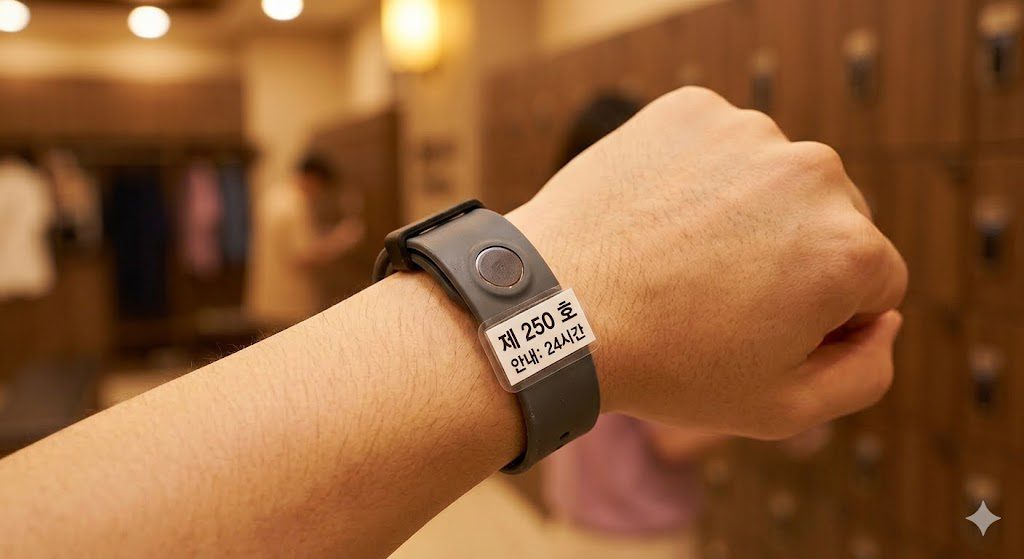
Food, drinks, massages, and body scrubs cost extra — but you pay for those with your wristband key, not cash. The wristband acts as your locker key, your ID, and your credit card all in one. You settle the total bill when you leave.
Pro tip: Avoid going on Saturday evenings or public holidays. Prices go up and it gets extremely crowded. Weekday afternoons are the sweet spot.
Step-by-Step Guide: Your First Jjimjilbang Visit
Walking into a jjimjilbang for the first time can feel overwhelming. There are lockers everywhere, people walking around in matching outfits, and signs mostly in Korean. But the process is actually very simple once you know the flow.
1. Store Your Shoes and Check In
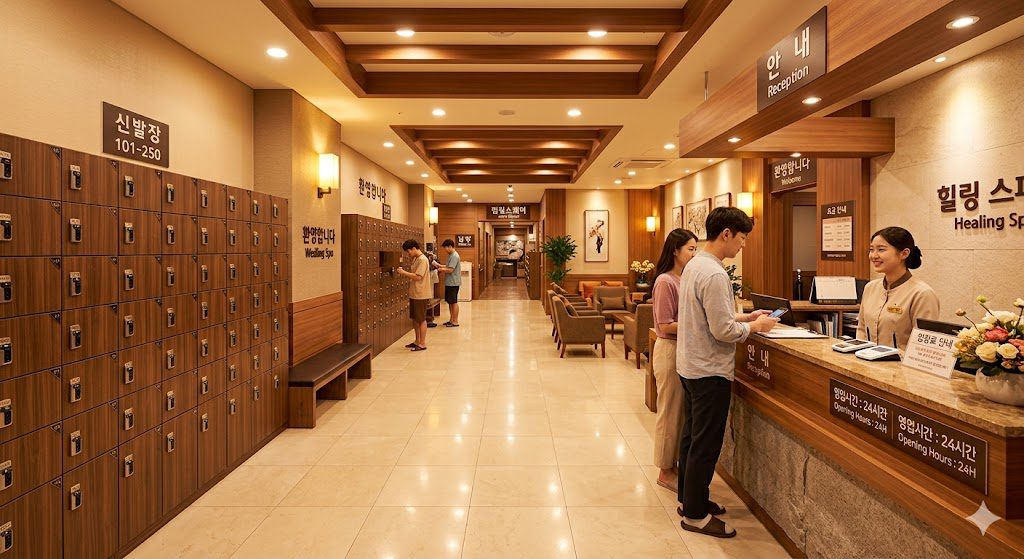
The moment you walk in, you’ll see rows of shoe lockers near the entrance. Take off your shoes, put them in an open locker, and take the key.
Head to the front desk. Tell them you want the jjimjilbang (full spa + sauna) — not just the mogyoktang (bath only). They’ll ask if you’re staying daytime or overnight. Pay the entry fee (card is accepted almost everywhere), and they’ll hand you:
- A wristband key (electronic, with your locker number)
- Two towels (one small, one large)
- A uniform set (t-shirt and shorts)
Some places have separate shoe locker keys and main locker keys. Don’t lose either — there’s usually a ₩5,000–₩10,000 replacement fee.
2. Get Changed Into Your Uniform
Follow the signs to the gender-separated locker room. Find the locker that matches your wristband number. Inside, you’ll change into the provided uniform.
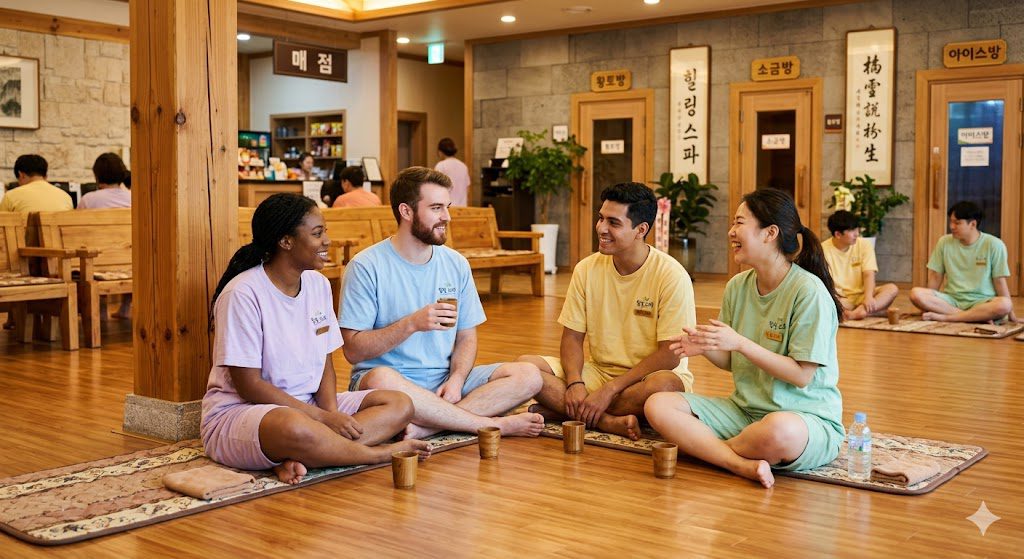
Here’s what most first-timers don’t realize: the uniform is for the co-ed common areas (sauna rooms, sleeping area, restaurant). The bathing area is completely separate and gender-segregated — and yes, everyone is naked there. More on that in a moment.
Put your clothes, bag, and valuables in your locker. Keep just your wristband and towel.
3. Hit the Baths — Yes, You’ll Be Naked
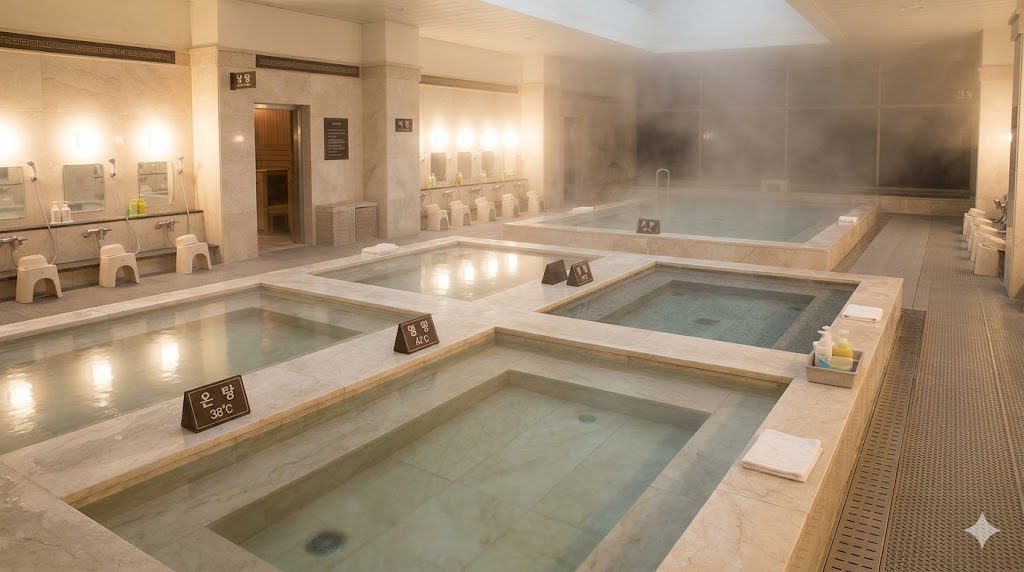
This is the part that makes most foreign visitors nervous. Let me be straightforward: the bathing area is fully nude. No swimsuits. No towels in the water. Everyone — grandmas, teenagers, you — is naked.
But here’s what I always tell first-time visitors: nobody is looking at you. Koreans have been doing this since childhood. It’s completely normal, and within five minutes you’ll forget you’re naked too.
The bathing area typically includes:
- Shower stations — Sit down, scrub thoroughly before entering any pool (this is non-negotiable)
- Hot pools — Multiple temperatures, usually ranging from 38°C to 45°C
- Cold plunge pool — Around 15°C. Great after the hot pools
- Warm pool — Around 35°C. The most comfortable one
- Foot baths and sometimes outdoor pools
Spend as long as you want here. Most Koreans alternate between hot and cold pools for circulation. There’s no rush.
Body scrub (때밀이): For an extra ₩20,000–₩40,000, you can get a professional Korean body scrub. An ajumma (Korean auntie) will scrub every inch of your body with an Italy towel until your dead skin rolls off like eraser shavings. It sounds intense — because it is — but your skin will feel like a baby’s afterward. Highly recommended at least once.
4. Explore the Sauna Rooms
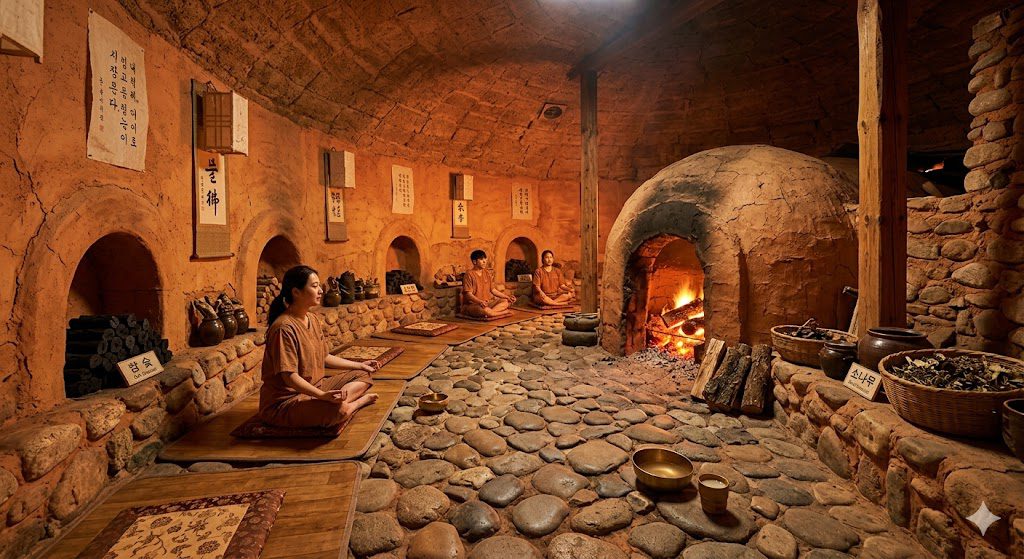
After bathing, dry off, put your uniform back on, and head to the co-ed common area. This is where the real jjimjilbang magic happens.
You’ll find multiple themed sauna rooms, each with different temperatures and materials:
- Charcoal room (숯가마) — Dry heat, around 60–80°C. Detoxifying.
- Salt room (소금방) — Walls lined with Himalayan salt blocks. Good for skin and breathing.
- Jade room (옥방) — Infrared heat from jade stones. Gentle and soothing.
- Loess room (황토방) — Clay-based sauna. Traditional Korean style.
- Ice room (얼음방) — Yes, a freezing cold room. Perfect for cooling down between rounds.
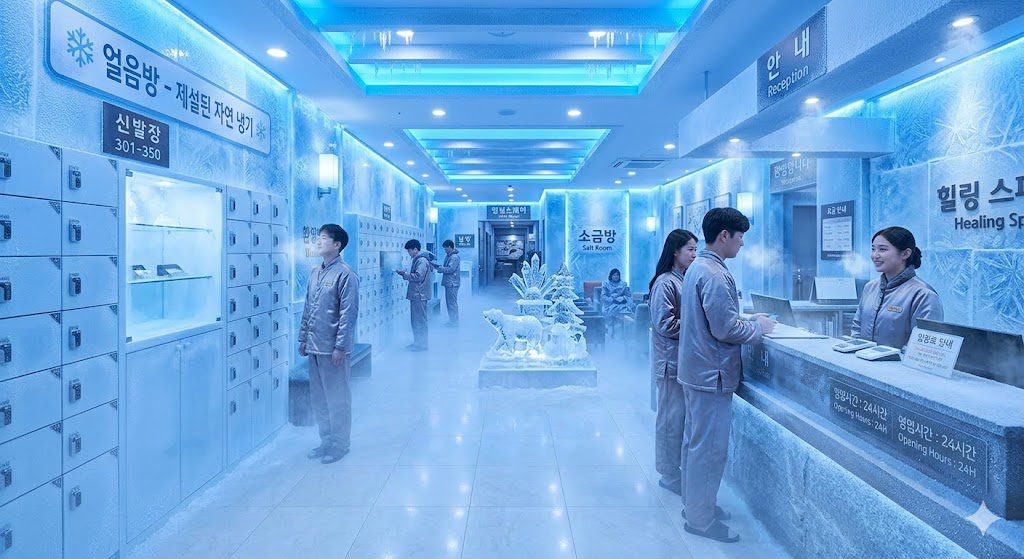
The local strategy is simple: spend 10–15 minutes in a hot room, then cool down in the ice room. Repeat. This hot-cold cycle is what Koreans believe gives you the best health benefits.
Most sauna rooms also have heated floors, so you’ll see people just lying on the ground with their eyes closed. That’s perfectly normal — grab a spot and relax.
5. Eat, Relax, and Sleep
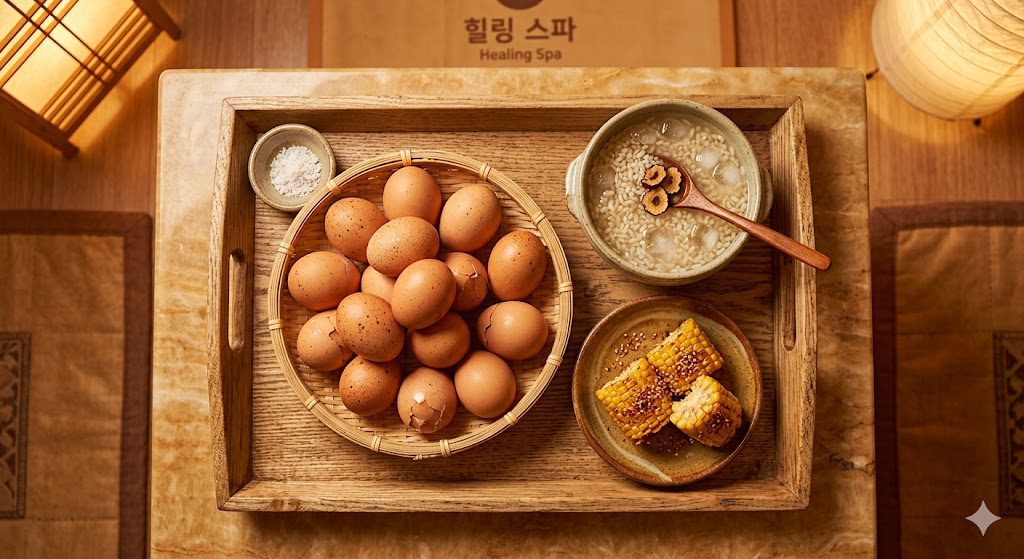
No jjimjilbang visit is complete without the food. Head to the on-site restaurant or snack bar and order the holy trinity of jjimjilbang food:
- Baked eggs (맥반석 계란) — Slow-cooked in the sauna ovens. The shell turns brown and the egg gets a slightly smoky, sweet flavor. Usually ₩1,000–₩2,000 for a bag.
- Sikhye (식혜) — Sweet rice punch drink. Cold, refreshing, and the perfect pairing with the eggs. Around ₩2,000–₩3,000.
- Roasted corn or sweet potatoes — Another classic combo.
Many larger jjimjilbangs also serve full meals — ramyeon, bibimbap, fried chicken, and more. Everything is charged to your wristband.
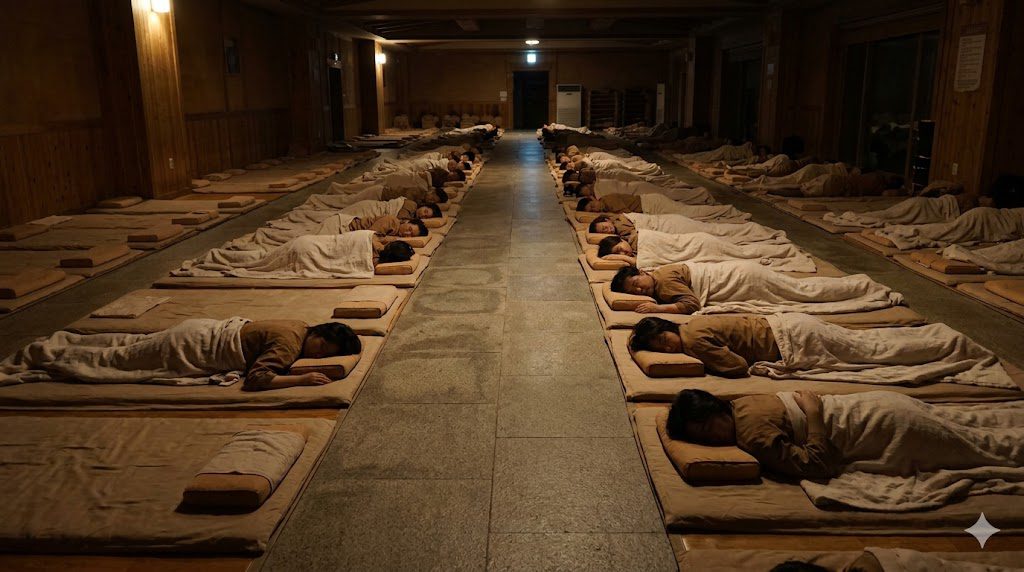
When you’re ready to rest, find the sleeping area. It’s usually a large, dimly lit room with mats or recliners on a heated floor. Grab a mat, a small pillow (sometimes provided, sometimes not), and settle in.
It’s not a hotel. People snore. The lights never fully turn off. But for ₩12,000, you’re getting a warm, safe place to sleep in the middle of Seoul — and that’s a deal that’s hard to beat.
Jjimjilbang Etiquette: 8 Rules You Must Know
Koreans won’t usually say anything if you break these rules — but they’ll definitely notice. Follow these and you’ll blend right in:
- Shower thoroughly before entering any pool. This is the #1 rule. Use soap and scrub properly. Skipping this is considered extremely rude.
- Don’t wear swimsuits in the bathing area. It’s nude only. Wearing a swimsuit signals that you think the space is dirty — which is offensive to regulars.
- Keep your small towel out of the pools. You can put it on your head (the classic Korean look), but never dip it in the water.
- Be quiet in the sauna rooms and sleeping areas. Whisper if you need to talk. Loud conversations are a major no-no, especially at night.
- Don’t take photos. This should be obvious — people are naked. Your phone should stay in your locker in the bathing area. In the common area, be very discreet.
- Don’t stare. Everyone is naked in the bath area. Look at the ceiling, the wall, the water — anywhere but at other people.
- Rinse your station after using it. In the shower area, spray down your seat and the area around it when you’re done.
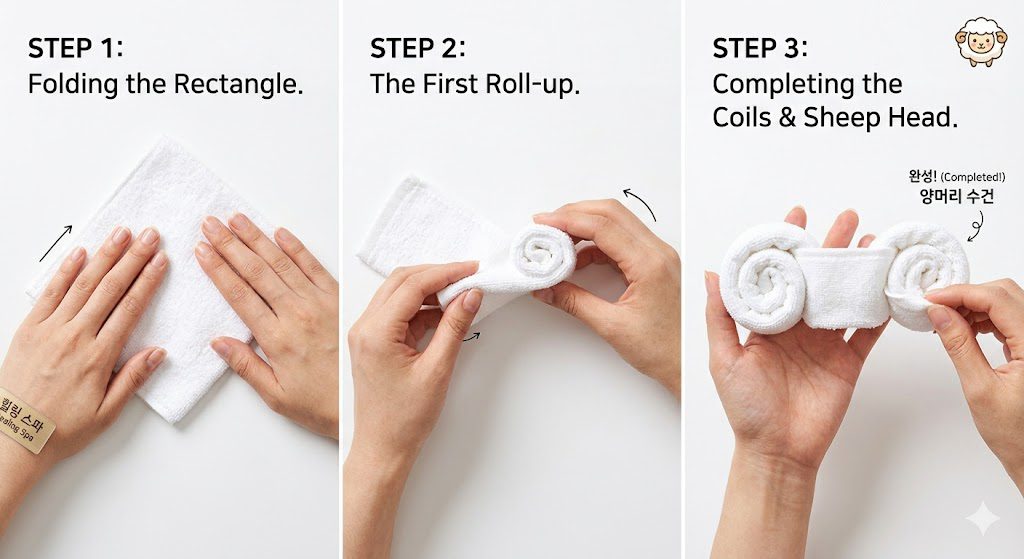
- Fold the sheep-head towel (optional but fun). You’ll see Koreans wearing small towels folded into a sheep shape on their heads in the sauna. It keeps sweat from dripping into your eyes and looks adorable. YouTube “Korean spa sheep towel” for a quick tutorial — it takes 30 seconds to learn.
Best Jjimjilbangs in Seoul
Not all jjimjilbangs are created equal. Here are my top picks, each offering a different vibe:
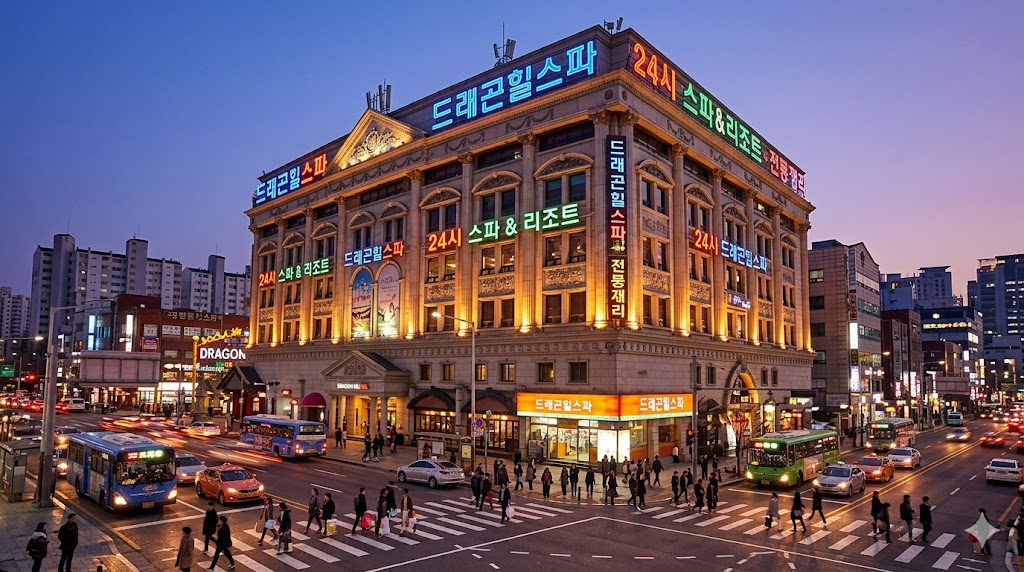
Dragon Hill Spa (드래곤힐스파) — Yongsan
Best for: First-timers who want the full experience
This is the most famous jjimjilbang in Seoul — and for good reason. Seven floors of saunas, pools, an outdoor terrace, a cinema, an arcade, and even a rooftop garden. It’s massive and can feel like a theme park.
- Location: 5-minute walk from Yongsan Station (Line 1)
- Price: ₩12,000 daytime / ₩15,000 nighttime
- English: Basic English signage. Staff can handle simple requests.
Siloam Sauna (실로암사우나) — Seoul Station
Best for: Budget travelers and overnight stays
Located right next to Seoul Station, Siloam is the go-to budget jjimjilbang. It’s no-frills but clean, well-maintained, and incredibly convenient if you have an early KTX train. The natural mineral water baths are a nice touch.
- Location: 3-minute walk from Seoul Station (Line 1/4)
- Price: ₩9,000 daytime / ₩12,000 nighttime
- English: Minimal, but the process is straightforward.
Spa Lei (스파레이) — Jamsil
Best for: Women-only, upscale experience
Spa Lei is a women-only jjimjilbang near Jamsil Station. It’s significantly more upscale than typical jjimjilbangs, with beautifully designed sauna rooms, a rooftop pool, and a quieter, more relaxed atmosphere. If you’re a solo female traveler who wants a comfortable first experience, this is your spot.
- Location: 5-minute walk from Jamsil Station (Line 2)
- Price: ₩18,000 daytime / ₩22,000 nighttime
- English: Decent English support.
Aquafield (아쿠아필드) — Hanam or Gangnam
Best for: Premium experience, couples, Instagram-worthy saunas
Aquafield is the premium tier. The Hanam branch (inside Starfield Mall) is enormous with outdoor foot baths and forest views. The Gangnam branch is more urban but equally luxurious. Both have stunning interior design and a much more modern feel than traditional jjimjilbangs.
- Price: ₩18,000–₩25,000 depending on day/time
- English: Good English signage and staff support.
Can You Sleep Overnight at a Jjimjilbang?
Yes — and many people do. In fact, using a jjimjilbang as overnight accommodation is one of Korea’s best-kept budget travel secrets.
Here’s what you need to know:
- No reservation needed. Just walk in anytime. The nighttime rate (usually after 8 PM) covers you until morning.
- It’s safe. Jjimjilbangs are family-friendly, well-lit, and have staff on-site 24/7. Your valuables stay locked up.
- It’s not a hotel. You’re sleeping in a shared room on a mat on the floor. Expect some snoring and people coming and going. Light sleepers should bring earplugs.
- Checkout is usually by 6–8 AM. After that, you’ll be charged for another entry.
I especially recommend this if you have a late-night arrival at Incheon Airport and don’t want to pay for a hotel. Take the airport bus or train to Seoul Station, walk to Siloam Sauna, and you’ve got a warm bed for under ₩12,000.
Jjimjilbang FAQ
Can I visit a jjimjilbang with tattoos?
Mostly yes. Korea’s attitude toward tattoos has relaxed significantly in recent years. Most jjimjilbangs in Seoul won’t turn you away, but some smaller or traditional ones outside Seoul might. Dragon Hill Spa, Siloam, and Aquafield are all tattoo-friendly.
Are jjimjilbangs co-ed?
The common areas (sauna rooms, sleeping area, restaurant) are co-ed — everyone wears the provided uniform. The bathing areas are strictly gender-separated. You’ll never encounter the opposite gender while naked.
Can I go alone?
Absolutely. Many Koreans go solo. It’s perfectly normal and actually very peaceful.
Do they speak English?
Large jjimjilbangs in Seoul (Dragon Hill, Aquafield) have some English signage and staff who can manage basic communication. Smaller neighborhood ones will have almost no English. But honestly, the process is so visual and intuitive that language is rarely a barrier.
How long should I stay?
Most people stay 2–4 hours for a regular visit. If you’re sleeping overnight, you’ll be there 8–10 hours. There’s no time limit — stay as long as you want within your entry period.
What should I bring?
Technically nothing — towels, uniform, and basic toiletries are provided. But I’d recommend:
- Your own shampoo/conditioner (the provided ones are basic)
- A phone charger (some places have outlets in common areas)
- Earplugs and an eye mask (if staying overnight)
- A plastic bag (for wet towels when you leave)
Is it safe to leave my belongings?
Your locker is secure — that’s what the wristband key is for. Don’t leave valuables unattended in the common area. Keep your passport and wallet in your locker at all times.
Final Tips From a Local
After decades of jjimjilbang visits, here are a few things I wish someone had told me to tell first-timers:
- Go on a weekday afternoon. It’s the most peaceful time. You might have entire sauna rooms to yourself.
- Stay hydrated. You’ll be sweating a lot. Drink water or sikhye regularly between sauna rounds.
- Try the body scrub at least once. Yes, it’s awkward. Yes, it’s worth it. You’ll leave feeling like a new person.
- Don’t rush. A jjimjilbang isn’t a checklist. The whole point is to slow down. Soak, sweat, eat, nap, repeat.
- Download Naver Maps before you go — it’s more accurate than Google Maps for finding jjimjilbangs in Korea.
A jjimjilbang visit is one of those experiences that you’ll never forget. It’s weird, wonderful, and deeply Korean. And once you’ve tried it, you’ll understand why locals keep coming back — week after week, for their entire lives.
For more tips on navigating Korean culture, check out my Korean Etiquette Guide and Best Neighborhoods in Seoul.