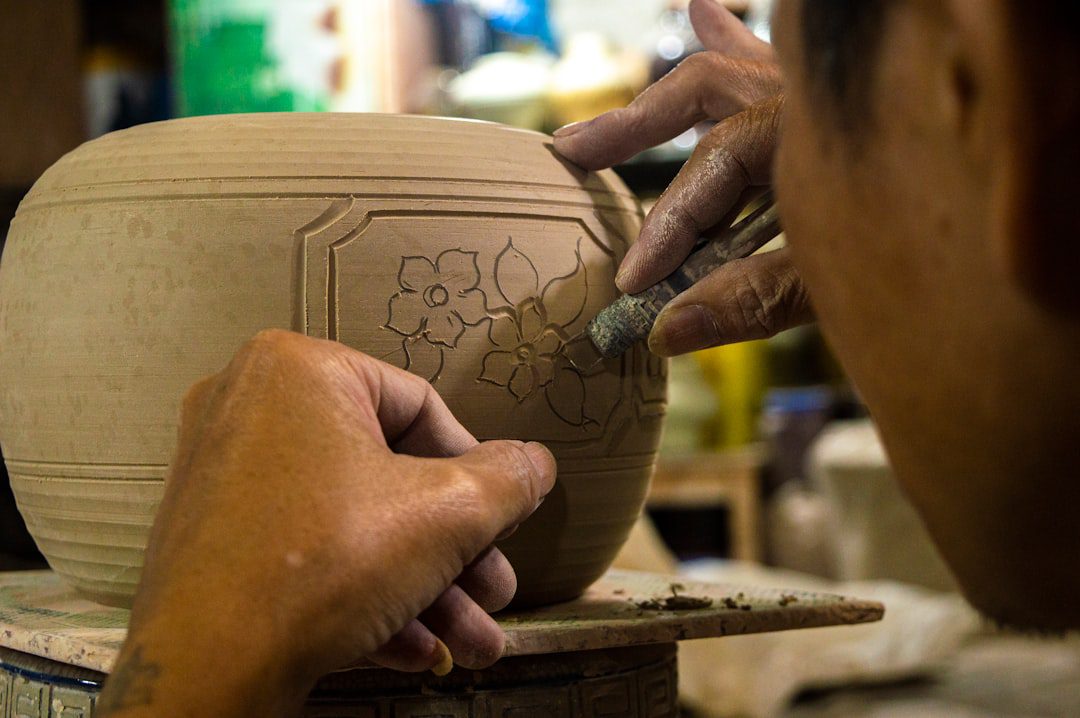
There’s something almost meditative about sitting at a pottery wheel in Seoul, hands covered in clay, watching a lump of earth transform into a bowl under your fingertips. I still remember my first pottery class in 1989—a cramped studio in Insa-dong where an elderly master named Kim Ji-won taught me that Korean ceramics isn’t just about creating objects. It’s about understanding patience, impermanence, and the Buddhist philosophy that runs through Korean culture like a thread through silk.
After 35 years here, I’ve taken classes at dozens of studios, visited kilns in the countryside, and built a collection of handmade pieces that tell the story of my life in Korea. What started as a tourist curiosity turned into a genuine love affair with the craft.
Whether you’re visiting for a week or planning a longer stay, learning pottery the Korean way—and shopping for authentic pieces—is one of the most rewarding experiences you can have. Here’s everything you need to know.
Why Korean Pottery Matters: A Brief History
Korean pottery has a lineage that stretches back over 10,000 years. But what makes it special—what makes visitors fall in love with it—is the blend of Confucian discipline and Buddhist simplicity that emerged during the Joseon Dynasty (1392–1910).
Unlike Chinese porcelain, which aimed for perfection and decoration, Korean potters embraced buncheong (분청)—pottery with soft, earthy glazes and intentional imperfections. They understood something that took me years to appreciate: a crack, an uneven glaze, a subtle color variation—these aren’t flaws. They’re the signature of human hands, the mark of authenticity.
During the Japanese occupation (1910–1945), Korean pottery was nearly lost. But master artisans kept the tradition alive, and today, Korea’s ceramics movement is experiencing a renaissance. Visitors often tell me that holding a Korean ceramic piece feels different—it carries weight, intention, and story.
Ted’s tip: If you want to understand Korean pottery deeply, visit the Leeum Samsung Museum of Art before you take a class. Seeing historical pieces firsthand makes your own creative experience richer. It’s free admission on certain days—check their website before you go.
Best Pottery Studios in Seoul for Classes
Insa-dong: The Traditional Heart
If you’re going to take a pottery class in Seoul, Insa-dong is where it should happen. This neighborhood—which I’ve written about extensively in our Insa-dong neighborhood guide—is the beating heart of Korean traditional arts. Dozens of small studios hide in alleyways, marked by modest wooden signs.
Studio Noe (스튜디오 노에) is my go-to recommendation for first-timers. Located just off the main Insa-dong street, Master Lee Yoon-ji runs classes in Korean, English, and Japanese. The studio is small—capacity for about 8 students—which means personalized attention.
| Studio | Class Duration | Price | Subway Access |
|---|---|---|---|
| Studio Noe | 2 hours (one-off) or 8-week course | ₩50,000 (drop-in) / ₩280,000 (course) | Line 3, Anguk Station (Exit 6) |
| Clay House Seoul | 90 minutes to 2 hours | ₩45,000–₩80,000 | Line 5, Jongno 3-ga Station (Exit 5) |
| Gongbangyo Studio | 2 hours | ₩55,000 | Line 3, Anguk Station (Exit 3) |
| Ceramic Culture Center | 1.5–3 hours | ₩40,000–₩60,000 | Line 3, Anguk Station (Exit 1) |
I recommend booking online through Korean platforms like Naver or Coupang Play—prices are often 10-20% cheaper than walk-in rates. Or call ahead; most studios have English-speaking staff during peak tourist hours.
Ted’s tip: Go to Insa-dong on a weekday morning (before 11 AM) if you can. The studios are less crowded, and you’ll get more one-on-one guidance. Plus, the neighborhood itself is quieter and more atmospheric—you’ll actually see where artisans work.
Gangnam: Modern & Trendy
If you’re staying in Gangnam, you don’t need to trek across the city. Several excellent studios have opened in the southern districts, catering to the Instagram-conscious crowd.
Pottery Studio Myung (도자기 스튜디오 명), near Nonhyeon Station (Line 7, Exit 5), offers both wheel-throwing and hand-building classes. Their “Instagram-worthy” pieces are genuinely beautiful—glazed in soft blues and sage greens. Classes run ₩60,000–₩75,000 for 2 hours.
Ceramic Lab Seoul (세라믹 랩 서울), near Apgujeong Station, is more upscale. They focus on contemporary ceramic art and often host exhibitions. One-time classes are ₩70,000, but if you book a 4-week package, it drops to ₩65,000 per session. Their Instagram following is massive, but the quality of instruction is legitimate.
Ted’s tip: Gangnam studios are pricier but offer flexible scheduling and English-speaking instructors as standard. Choose them if time is tight and you want zero language barriers.
Hongdae: Young Artists & Experimental Work
For a more bohemian vibe, Hongdae is worth exploring. This district is known for young artists and experimental work—pottery with attitude, if you will.
Open Studio Hongdae is a shared workspace where 15+ ceramic artists work and teach. You can drop in for classes (₩50,000–₩60,000) or watch artists work, and they’ll answer your questions. The atmosphere is creative, sometimes chaotic, always inspiring. Subway: Line 2, Hongik University Station (Exit 9).
What to Expect in a Korean Pottery Class
Hand-Building vs. Wheel-Throwing
Most introductory classes teach hand-building first—pinching, coiling, and slab techniques. This is genuinely the best entry point. You’ll create a small bowl or cup in one session, and it’s incredibly satisfying.
Wheel-throwing (the romantic image of clay on a spinning wheel) requires more skill. Most studios won’t let you try it until you’ve taken 3-4 classes. But when you finally sit at that wheel, something clicks. Your hands remember what centuries of Korean potters knew: the clay has its own logic. You don’t control it—you negotiate with it.
Ted’s tip: Don’t be discouraged if your first piece looks wonky. Every potter’s first bowl looks like it survived a minor earthquake. The beauty is in the attempt, not the perfection.
The Studio Experience: Class by Class
| Class Element | What Happens | Duration |
|---|---|---|
| Introduction & Materials | Master explains history, clay types, glazes; you select your clay | 10-15 min |
| Technique Demonstration | Master shows hand-building or wheel technique; very meditative to watch | 15-20 min |
| Your Turn | You work on your piece; master walks around helping, adjusting hands | 45-60 min |
| Finishing & Storage | Master helps smooth edges, adds your name; piece goes to studio kiln | 10-15 min |
| Firing & Pickup | Studio fires your piece (1-2 weeks later); you return to collect it | 1-2 weeks |
Important note: You don’t take your piece home immediately. After you hand-build or throw it, the studio stores it while it dries (3-5 days), fires it in a kiln (1-2 weeks), and then glazes it (if you want color). Total time: 2-3 weeks. Most studios will ship pieces internationally for ₩15,000–₩30,000, or you can pick them up on a later visit.
What You’ll Actually Create
First-time hand-building classes usually result in a small bowl (perfect size for rice, sauce, or tea). It won’t be perfectly symmetrical—Korean aesthetic actually values slight asymmetry (called wabi-sabi). Your bowl might be 4-5 inches wide, with walls about ¼ inch thick.
Wheel-throwing produces similar results: a humble vessel, imperfect, utterly charming. After my first wheel class in 1994, I made a cup with one wall thicker than the other. I still use it every morning. It’s ugly and perfect.
Ted’s tip: Ask the master to glaze your piece in a traditional Korean color—celadon (pale green), buncheong (ash-gray), or white. Avoid bright colors if you want something you’ll treasure long-term. The understated tones age beautifully.
Where to Buy Authentic Handmade Ceramics
Insa-dong: Galleries & Antique Shops
After your class, you’ll want to see what master artisans create. Insa-dong has over 100 ceramic galleries, from storefronts to hidden workshops. Walking the main street is like stepping through Korean art history.
Gomoon Gallery (고문 갤러리) specializes in historical reproduction pieces—bowls and vases inspired by Joseon Dynasty ceramics. Prices range from ₩80,000 to ₩500,000+. The owner speaks English and can explain the techniques behind each piece.
Yido Ceramics (이도 도자기) is my personal favorite. Master Yido (a Living National Treasure designation holder) creates serene, minimalist pieces. A simple celadon bowl costs ₩150,000–₩250,000. His work is expensive because his hands have 50+ years of mastery in them. If you’re serious about collecting, this is where to invest.
Dano Pottery Shop (다노 도자기) offers mid-range pieces: ₩30,000–₩100,000. They stock work from younger Seoul-based artists—excellent quality, fresher aesthetic. I bought a set of four rice bowls here in 2019, and they’re now among my most-used pieces.
| Shop | Price Range | Specialty | Hours |
|---|---|---|---|
| Gomoon Gallery | ₩80,000–₩500,000+ | Historical reproduction | 10 AM–6 PM daily |
| Yido Ceramics | ₩150,000–₩300,000 | Master artist, celadon | 11 AM–6 PM (closed Mondays) |
| Dano Pottery Shop | ₩30,000–₩100,000 | Contemporary young artists | 10 AM–7 PM daily |
| Soomkkyul Minjok Art | ₩40,000–₩150,000 | Folk ceramics, buncheong | 10 AM–6 PM (closed Sundays) |
Ted’s tip: Ask to see pieces in the back room. Most Insa-dong shop owners keep their best work out of sight—ask, and they’ll bring out pieces not shown to casual browsers. It’s worth a conversation.
Visiting Ceramic Villages: Icheon & Yeoju
If you have a day trip planned, the towns of Icheon (이천) and Yeoju (여주), about 1 hour southeast of Seoul, are pottery heaven. These regions have been ceramic production centers for centuries. Here, you’ll find master workshops, kilns, and affordable, high-quality pieces.
Icheon Ceramic Arts Village (이천도자관광단지) is the main tourist hub. Over 300 potters work in individual studios clustered in this area. You can visit artist studios, watch artisans work, and buy directly. Prices are 30-50% cheaper than Insa-dong because there’s no middle retailer. A celadon bowl that costs ₩120,000 in Seoul goes for ₩70,000–₩80,000 here.
Getting there: Take the subway to Dong Seoul Bus Terminal (Line 2 or 5), then catch an intercity bus to Icheon (₩6,000, 1 hour 20 minutes). Buses depart every 30 minutes.
Yeoju Ceramic Road (여주 도자로) is quieter and more authentic—fewer tourists, more real working studios. The artists here are often third or fourth-generation potters. I spent an afternoon here in 2015 and left with three pieces that still sit on my kitchen shelves. Many studios offer informal classes if you ask.
Getting there: Same bus terminal, bus to Yeoju (₩5,500, 1 hour). From the bus station, taxi to the Ceramic Road (₩8,000–₩10,000).
| Location | Travel Time from Seoul | Price Level | Best For |
|---|---|---|---|
| Icheon Ceramic Arts Village | 1.5–2 hours by bus | Mid-range (₩50,000–₩150,000) | Large selection, tourist infrastructure |
| Yeoju Ceramic Road | 1.5 hours by bus | Budget-friendly (₩30,000–₩100,000) | Authentic artist interaction, bargaining |
| Gwangju Ceramics District | 1 hour 20 min by subway to Gwangju City | Mid-range | Contemporary art, workshops |
Ted’s tip: Bring cash. Many village artisans don’t take cards, and some will give you a 10-15% discount for cash payment. Also, email or call ahead to larger studios—if you mention you’re visiting from abroad and interested in learning about their work, many artists will give you a personal tour or a small gift.
Museum Shops & Art Fairs
The Leeum Samsung Museum of Art has an exceptional gift shop with contemporary ceramic pieces selected by curators. Prices are higher (₩100,000–₩400,000), but the quality is guaranteed. It’s a good way to learn what “museum-quality” looks like before investing in more expensive pieces.
The Seoul Ceramics Art Fair happens twice a year (April and November) at COEX Convention Center in Gangnam. You’ll see 100+ exhibitors, from established artists to emerging makers. Prices vary, but you can buy directly from artists without gallery markup.
Ted’s tip: Follow Korean pottery Instagram accounts and gallery websites. Artists and galleries announce pop-up shows, special exhibitions, and limited releases. I’ve found some of my favorite pieces this way—small runs of ₩20,000–₩50,000 pieces that disappear in days.
How to Shop Like a Local: Etiquette & Tips
Understanding Pricing & Value
Korean pottery pricing can be confusing for first-time buyers. The same-sized bowl might cost ₩50,000 at one shop and ₩200,000 at another. Here’s how to evaluate:
| Price Range | What You’re Paying For | Best For |
|---|---|---|
| ₩20,000–₩50,000 | Young artists, student work, mass production with quality control | Daily use, experimenting, gifts |
| ₩50,000–₩150,000 | Established contemporary artists, handmade, signed | Collections, special pieces, keepsakes |
| ₩150,000–₩400,000 | Master artists (20+ years experience), rare glazes, museum-quality | Investment pieces, serious collecting |
| ₩400,000+ | Recognized masters, National Treasure status, gallery representation | Serious collectors, heirloom pieces |
What to Look For in Quality Handmade Pieces
Run your hands over it. Feel the glaze. Does it feel smooth or slightly rough? Both are fine—but it should be intentional, not accidental. Korean potters often leave subtle texture that invites touch.
Check the bottom. A handmade piece will have a rough base where it was removed from the wheel. You might see a maker’s stamp or initials. Mass-produced pieces have perfectly smooth bottoms.
Hold it up to light. Hand-thrown pottery is often slightly thinner on one side. Uneven thickness is a sign of authentic wheel-work, not a flaw.
Look at the glaze. Handmade glazes have variation—color pooling in crevices, tiny bubbles, color shifts. This is beautiful. Uniform, perfect glaze means industrial production.
Ted’s tip: Ask the artist or shopkeeper, “Did you make this?” or “Who made this?” If they hesitate or give a vague answer, it’s probably mass-produced. Real artisans are proud to discuss their work.
Shipping & Packing for Travel
Ceramic pieces are fragile, but Korean shops have perfected shipping. If you buy a piece in Insa-dong, the shop will pack it in layers of bubble wrap and sturdy boxes (usually free for purchases over ₩100,000).
For international shipping, expect these costs:
| Package Type | Estimated Cost | Delivery Time | Fragility Risk |
|---|---|---|---|
| 1-3 small bowls (DHL) | ₩25,000–₩45,000 | 5-7 days | Very low |
| 5-10 pieces (Korea Post) | ₩35,000–₩60,000 | 10-14 days | Low |
| Large vase or platter (special packaging) | ₩50,000–₩100,000 | 7-10 days | Low |
Ted’s tip: If you’re buying multiple pieces, ask the shop to consolidate into one shipment. It’s cheaper than sending separate packages. Also, insure for 120% of the purchase price—Korean post is reliable, but accidents happen.
Advanced: Finding the Real Masters
If you’re serious about Korean ceramics, you’ll eventually want to meet the artists themselves. Master potters often work in studios you won’t find in guidebooks.
National Living Treasures
Korea designates certain master artisans as “Living National Treasures” (무형문화재). These are potters with 30+ years of mastery, recognized by the government. They rarely sell in shops—pieces are shown in museums or go directly to serious collectors.
But here’s the secret: you can visit their studios. Many accept appointments or limited visitors. Contact the Korean Heritage Foundation (문화재청) website—they list Living Treasures by discipline. Email the foundation in Korean, or ask your hotel concierge to help arrange a meeting.
I once spent an afternoon with a Living National Treasure named Park Sun-kyu in his studio near Yeoju. He didn’t charge me anything—we drank tea, and he explained the difference between Joseon-era celadon and modern interpretations. I left without buying anything, but the conversation was worth more than the piece I would have purchased.
Artist Studios: Appointment-Only Visits
Many mid-level artists (10-25 years experience) open their studios by appointment. They often offer 3-4 hour experiences: watching them work, trying a technique yourself, and buying directly at studio prices (20-30% cheaper than galleries).
These experiences cost ₩100,000–₩200,000, but you get a piece and an education. Some artists offer these through their websites; others through art experience platforms like Korean Culture Experience or Airbnb Experiences.
Ted’s tip: Use Google Translate to email artists directly. Most Korean potters speak at least basic English and appreciate genuine interest in their work. A simple email: “I’m visiting Korea and love Korean pottery. Would you have time for a studio visit?” Opens many doors.
Pottery as Souvenir: What Makes a Good Piece
Not every ceramic you love will make a good long-term keepsake. After decades of collecting, I’ve learned that the best pottery buys have these qualities:
Functionality: The piece should actually work—a bowl that holds rice or tea, a mug you can drink from, a plate you can eat off. Decorative-only pieces look lovely but gather dust. Functional pieces integrate into your life and develop patina over years.
Timelessness: Avoid trendy colors or obvious contemporary references. Celadon (pale green), buncheong (ash-gray), white, and deep blue will feel relevant 20 years from now. Neon glazes or pieces with Instagram-worthy geometric patterns date quickly.
Connection: The best souvenir is one with a story. Buy from the artist if possible, get their name, ask about the glaze. Your ₩80,000 bowl becomes a ₩80,000 memory when you can say, “I met the woman who made this in a studio near Bukchon.”
Tea-cup test: If it’s a drinking vessel, use it. Real pottery should improve with age—water stains, tiny cracks, patina from use all add character. If you’re afraid to use it, it’s not the right piece.
Ted’s tip: Buy one really good piece over several mediocre ones. I’d rather own a ₩150,000 celadon bowl from an artist I met than five ₩30,000 tourist pieces. In 10 years, you’ll only remember the special one.
Budget Planning: Classes, Shopping & Travel
| Experience | Cost | Best For |
|---|---|---|
| One pottery class (Seoul) | ₩45,000–₩75,000 | First-timers with limited time |
| 4-week pottery course | ₩220,000–₩320,000 | Serious learners staying 1+ month |
| Icheon day trip (bus, lunch, shopping) | ₩100,000–₩200,000 | Museum + artist studios |
| Handmade bowl (Insa-dong) | ₩50,000–₩120,000 | Quality daily-use piece |
| Master artist piece | ₩150,000–₩500,000+ | Investment, heirloom quality |
| International shipping (small bowl) | ₩20,000–₩40,000 | Getting pieces home safely |
For a typical visitor (1 week in Seoul): Budget ₩150,000–₩250,000 for a pottery class, two handmade pieces, and Insa-dong gallery visits. This gives you an authentic experience, a personal creation, and curated souvenirs—without breaking the bank.
Frequently Asked Questions
Do I need pottery experience to take a class?
Absolutely not. Korean studios welcome complete beginners. Most teachers expect you to have no prior experience and tailor instruction accordingly. Your first piece will be simple—a bowl or cup—but you’ll create it yourself, fire it, and take it home. That’s the magic of it.
How long does it take to get my pottery piece after class?
After your class, the studio stores your piece for 3-5 days while it dries. Then it goes into the kiln (1-2 weeks). Final glazing takes another few days. Total: 2-3 weeks. Most studios will hold your piece for pickup or ship internationally if you’ve left Korea. Ask about shipping costs before you class ends.
Is handmade pottery from Korea food-safe?
Quality handmade Korean pottery is absolutely food-safe. Kilns reach temperatures that seal the clay completely. The glazes used in established studios are non-toxic. However, very old pieces or those from unvetted sources might have lead in the glaze (rare, but possible). Buy from reputable galleries or directly from artists, and you’re completely safe. My 30-year-old rice bowl from Insa-dong is used daily without any concerns.
Can I bargain on prices in Korean ceramics shops?
In Insa-dong galleries and urban areas, prices are fixed—bargaining isn’t expected. However, in ceramic villages (Icheon, Yeoju), you can politely negotiate, especially if you’re buying multiple pieces or paying cash. Expect 10-15% discounts on larger purchases. Start with, “Is there a volume discount?” rather than aggressive haggling—it’s more respectful of the artist’s work.
What’s the difference between buncheong and celadon?
Celadon is elegant—pale jade green glaze, smooth, Confucian in its restraint. Buncheong is more rustic—earthy, ash-gray tones, intentionally imperfect. Both are authentic Korean traditions. Celadon appeals to collectors; buncheong appeals to people who want a piece that looks beautiful in daily use. Neither is “better”—it depends on your aesthetic.
Are ceramic pieces expensive to ship internationally?
Not terribly. A small bowl ships for ₩20,000–₩40,000 to North America or Europe via DHL or Korea Post. Large pieces cost more, but reputable shops use excellent packing. I’ve shipped 50+ pieces over 35 years and lost exactly one (my fault—I didn’t insure it). Insurance is affordable—about 10% of the purchase price—and recommended.
Should I visit Icheon or Yeoju—or both?
Icheon is more touristy but has broader selection and infrastructure. Yeoju is more intimate, with authentic working artists and quieter studios. If you have a day, pick one based on energy: Icheon for variety and ease, Yeoju for depth and authenticity. If you have two days, do both. They’re only 30 minutes apart by bus.
Can I visit a ceramic artist’s studio without a class?
Many artists welcome studio visitors by appointment, especially if you email ahead expressing genuine interest. You won’t pay a class fee, but most expect you to buy something—a small piece (₩30,000–₩80,000) is appropriate if you’ve spent time in their space. Some offer tea and conversation for free; others appreciate a modest purchase. The etiquette is: visit, learn, buy what speaks to you, and leave with respect for their time.
Final Thoughts
Korean pottery isn’t a souvenir category—it’s a philosophy. Every handmade piece carries intention: the artist’s hands, the clay’s memory, the fire’s unpredictability. In a world of mass production, that matters profoundly.
I think back to my first pottery class, sitting nervously at that wheel in 1989, hands shaking as the clay spun beneath my palms. The master said nothing—just adjusted my wrists gently and let the clay teach me. That bowl I made is long gone, but the feeling remains: the shock of creation, the humility of learning something ancient from someone who’d spent a lifetime perfecting it.
When you take a pottery class in Seoul, you’re not just making a bowl. You’re connecting to 10,000 years of Korean hands shaping earth, finding beauty in imperfection, understanding that the cracks and uneven edges are what make something worth keeping.
— Ted K
Image Credits: Photos sourced from Unsplash. By using this site, you agree to our Privacy Policy and Disclaimer.