You don’t need to speak fluent Korean to travel in Korea. But knowing a handful of key phrases? That changes your entire trip.
I’ve watched thousands of tourists struggle through Seoul over the past 35 years — and the ones who learn even 10 basic Korean phrases have a dramatically better experience. Shopkeepers give them discounts. Restaurant owners bring out extra side dishes. Taxi drivers actually smile.
This guide gives you 50+ essential Korean phrases for travel, organized by real situations you’ll encounter every day. Each phrase includes Hangul (Korean script), romanized pronunciation, and the English meaning. Bookmark this page — you’ll be pulling it up constantly.
Quick Note: How Korean Pronunciation Works
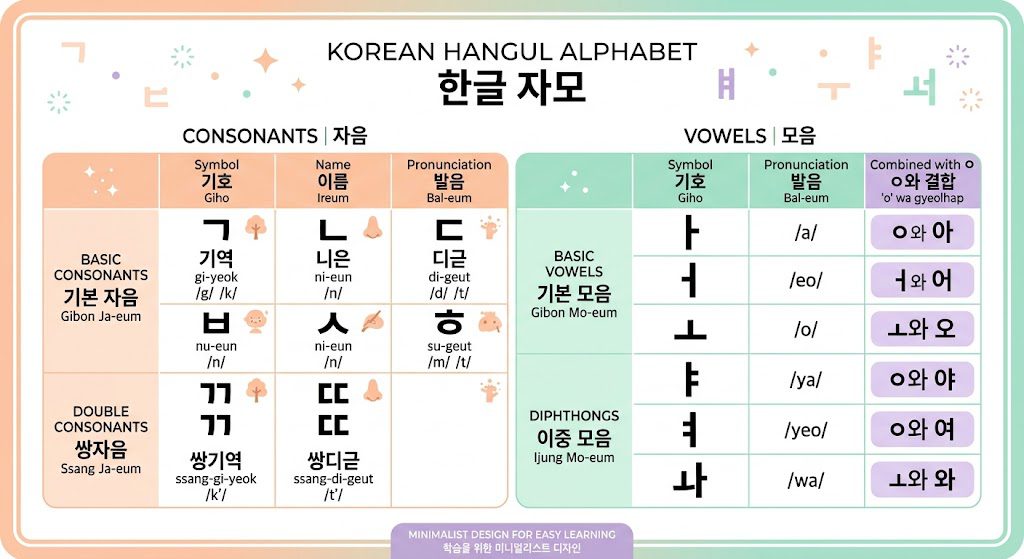
Korean uses its own alphabet called Hangul (한글). The good news? It was specifically designed to be easy to learn. Many travelers pick up the basics in just a few hours.
In this guide, I’ve included romanized pronunciation in parentheses. Here are a few tips to read them correctly:
- eo = sounds like “uh” (not “ee-oh”)
- eu = sounds like the “oo” in “book” but with unrounded lips
- ae = sounds like “eh”
- j = sounds like the “j” in “just”
- g = sounds between “g” and “k”
Don’t stress about perfect pronunciation. Koreans genuinely appreciate any effort, and context will fill in the gaps.
Greetings and Basic Manners
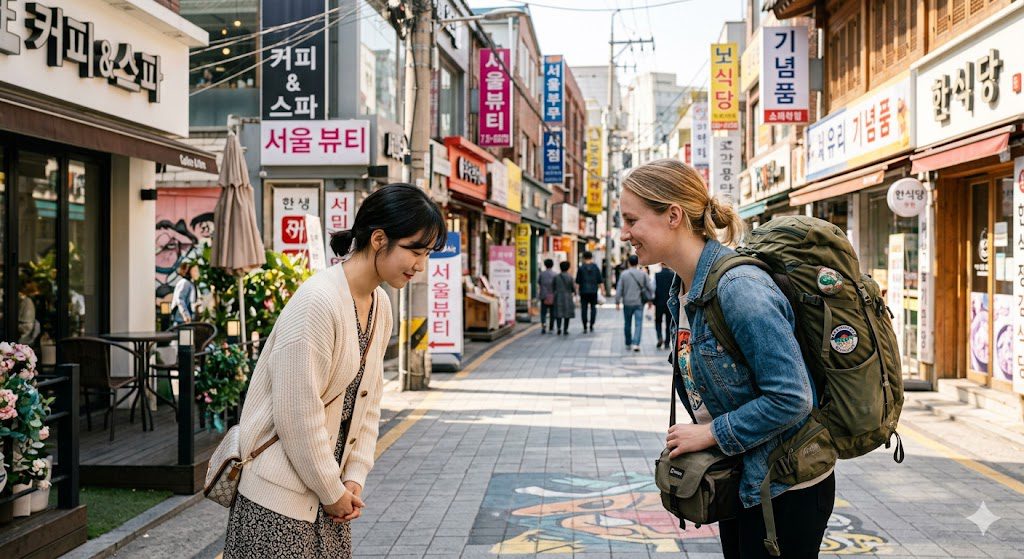
These are the phrases you’ll use dozens of times a day. Master these first.
| Korean | Pronunciation | Meaning |
|---|---|---|
| 안녕하세요 | an-nyeong-ha-se-yo | Hello |
| 감사합니다 | gam-sa-ham-ni-da | Thank you |
| 죄송합니다 | joe-song-ham-ni-da | I’m sorry |
| 네 | ne | Yes |
| 아니요 | a-ni-yo | No |
| 괜찮아요 | gwaen-chan-a-yo | It’s okay / I’m fine |
| 실례합니다 | sil-lye-ham-ni-da | Excuse me |
| 안녕히 가세요 | an-nyeong-hi ga-se-yo | Goodbye (to someone leaving) |
| 안녕히 계세요 | an-nyeong-hi gye-se-yo | Goodbye (when you’re leaving) |
Pro tip: Korean has two levels of “goodbye.” Use 안녕히 가세요 when the other person is leaving (like a shopkeeper saying bye to you). Use 안녕히 계세요 when you’re the one walking away. When in doubt, a smile and a slight bow works perfectly.
At Restaurants and Cafes
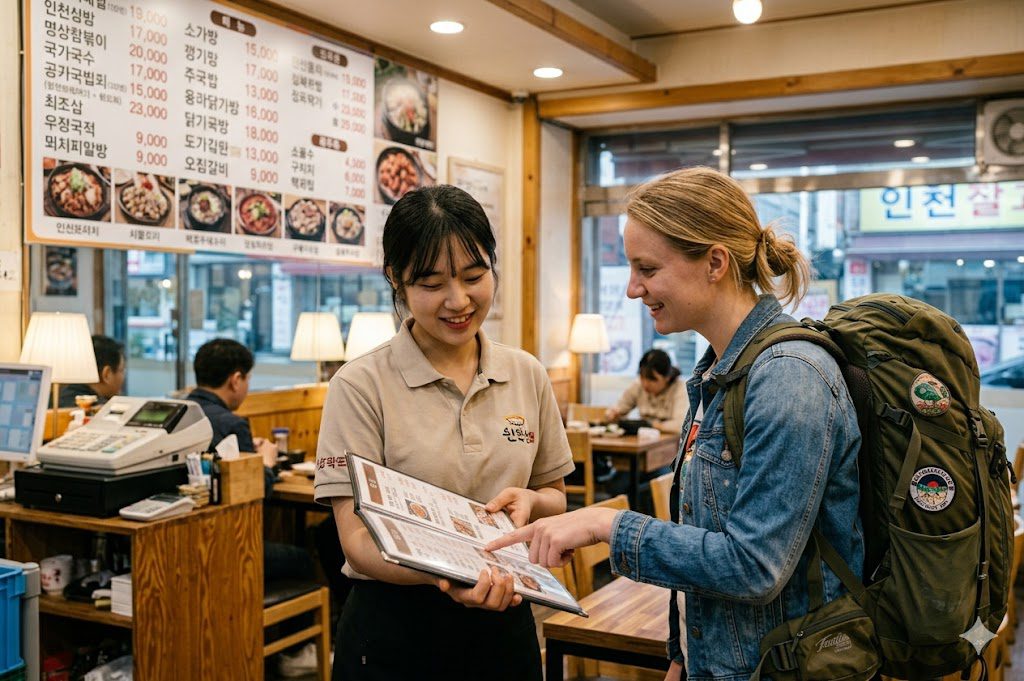
Eating is half the reason you’re in Korea. These phrases will get you through any restaurant, street food stall, or cafe.
| Korean | Pronunciation | Meaning |
|---|---|---|
| 메뉴 주세요 | me-nyu ju-se-yo | Menu, please |
| 이거 주세요 | i-geo ju-se-yo | This one, please (pointing) |
| 물 주세요 | mul ju-se-yo | Water, please |
| 맥주 주세요 | maek-ju ju-se-yo | Beer, please |
| 소주 한 병 주세요 | so-ju han byeong ju-se-yo | One bottle of soju, please |
| 계산이요 | gye-san-i-yo | Check, please / Bill, please |
| 카드 돼요? | ka-deu dwae-yo? | Can I pay by card? |
| 맵지 않게 해주세요 | maep-ji an-ke hae-ju-se-yo | Not spicy, please |
| 맛있어요! | ma-si-sseo-yo! | It’s delicious! |
| 잘 먹겠습니다 | jal meok-ge-sseum-ni-da | I’ll eat well (said before eating) |
| 잘 먹었습니다 | jal meo-geo-sseum-ni-da | I ate well (said after eating) |
| 하나 더 주세요 | ha-na deo ju-se-yo | One more, please |
The magic word is 주세요 (ju-se-yo), which means “please give me.” Combine it with literally anything: point at a dish and say “이거 주세요” and you’re golden. It’s the single most useful phrase in Korea.
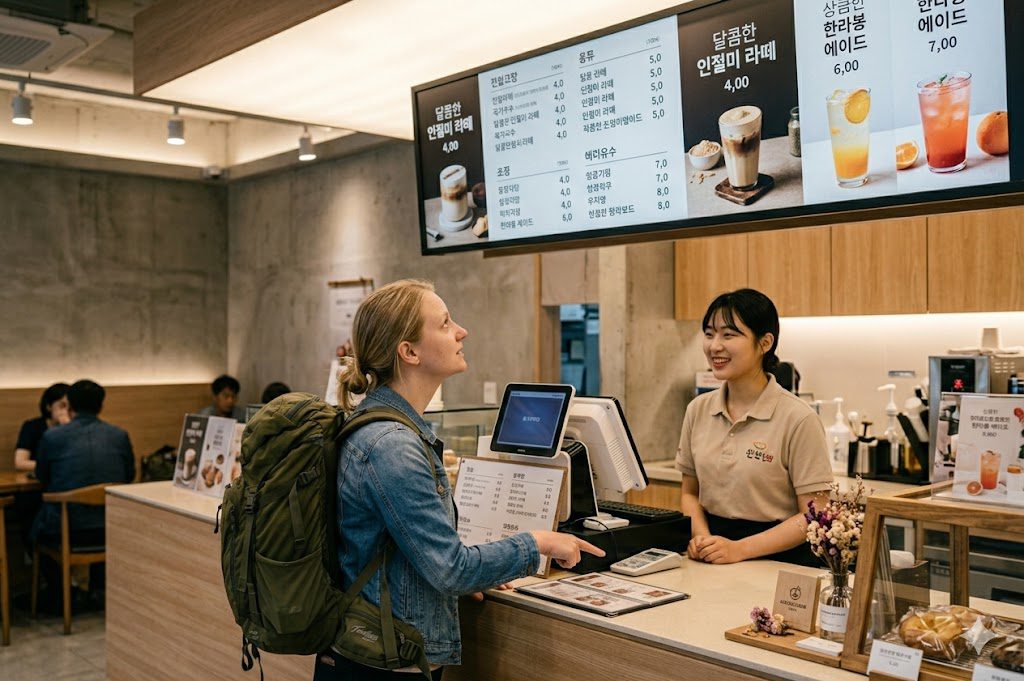
At Korean cafes, ordering is easy since most menus have photos and English names. But these help:
| Korean | Pronunciation | Meaning |
|---|---|---|
| 아메리카노 한 잔 주세요 | a-me-ri-ka-no han jan ju-se-yo | One Americano, please |
| 아이스로 주세요 | a-i-seu-ro ju-se-yo | Iced, please |
| 뜨거운 걸로 주세요 | tteu-geo-un geol-lo ju-se-yo | Hot, please |
| 포장이요 | po-jang-i-yo | To go, please |
Fun fact: Korea is obsessed with iced Americanos. Even in winter. If you order “아메리카노” without specifying, they’ll usually ask “ice? hot?” — so just be ready.
Getting Around: Directions and Transportation
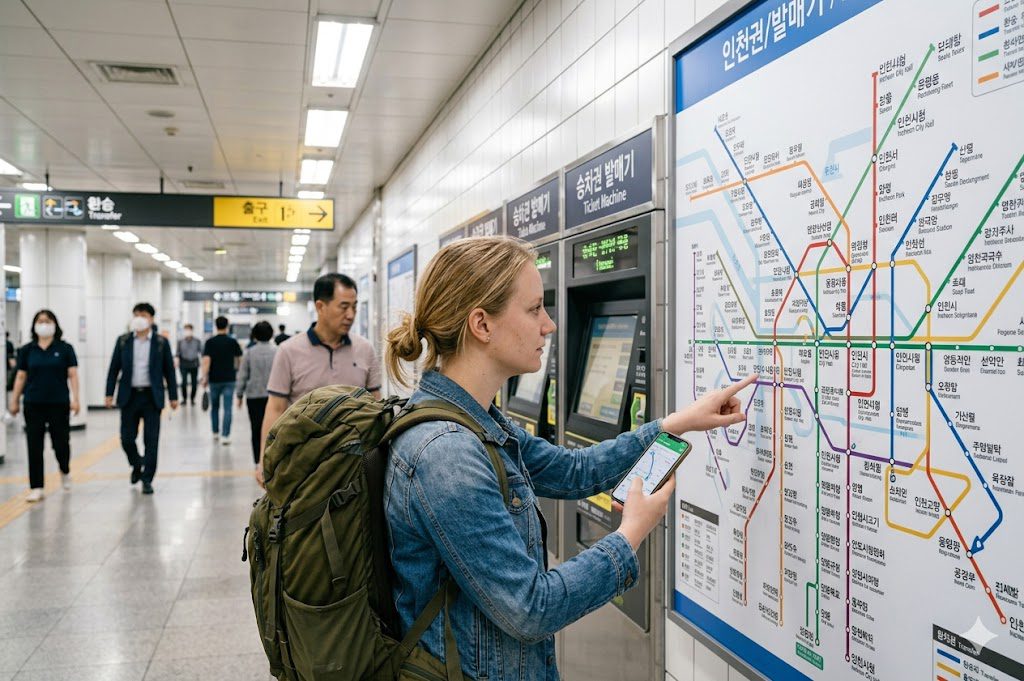
Seoul’s public transportation is world-class, but these phrases help when you need to ask for directions or talk to a taxi driver.
| Korean | Pronunciation | Meaning |
|---|---|---|
| 여기가 어디예요? | yeo-gi-ga eo-di-ye-yo? | Where is this place? |
| ____ 어디예요? | ____ eo-di-ye-yo? | Where is ____? |
| 지하철역이 어디예요? | ji-ha-cheol-yeok-i eo-di-ye-yo? | Where is the subway station? |
| 화장실이 어디예요? | hwa-jang-sil-i eo-di-ye-yo? | Where is the restroom? |
| 여기로 가주세요 | yeo-gi-ro ga-ju-se-yo | Please go here (showing address to taxi driver) |
| 여기서 세워주세요 | yeo-gi-seo se-wo-ju-se-yo | Please stop here |
| 얼마나 걸려요? | eol-ma-na geol-lyeo-yo? | How long does it take? |
| 직진이요 | jik-jin-i-yo | Go straight |
| 왼쪽이요 | oen-jjok-i-yo | Left |
| 오른쪽이요 | o-reun-jjok-i-yo | Right |
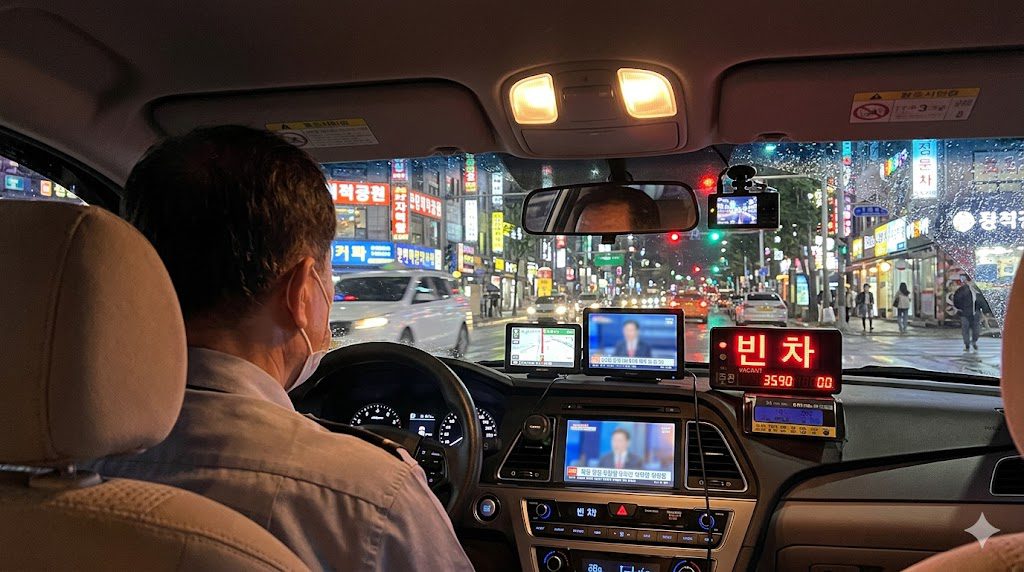
Taxi tip: Most taxi drivers in Seoul don’t speak much English. The easiest approach is to show them the address on your phone in Korean — open Naver Maps and show the screen. Say “여기로 가주세요” (please go here) and you’re set. When you’re close to your destination, say “여기서 세워주세요” (please stop here).
Shopping and Paying
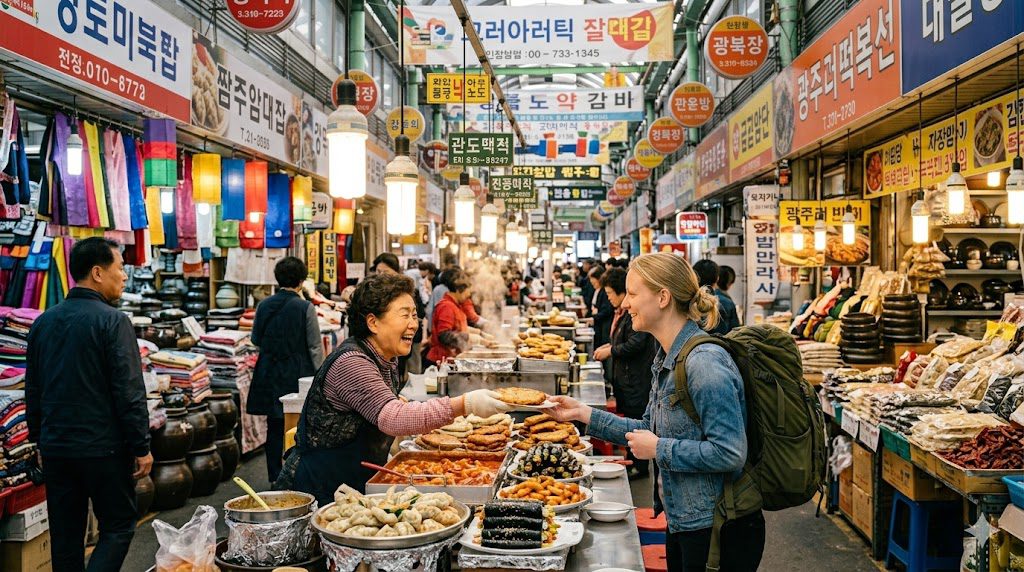
Whether you’re at Myeongdong, a traditional market, or an underground shopping mall, these phrases are essential — especially for haggling at markets.
| Korean | Pronunciation | Meaning |
|---|---|---|
| 이거 얼마예요? | i-geo eol-ma-ye-yo? | How much is this? |
| 너무 비싸요 | neo-mu bi-ssa-yo | It’s too expensive |
| 깎아주세요 | kkak-ka-ju-se-yo | Please give me a discount |
| 카드 돼요? | ka-deu dwae-yo? | Can I pay by card? |
| 현금만 돼요? | hyeon-geum-man dwae-yo? | Cash only? |
| 영수증 주세요 | yeong-su-jeung ju-se-yo | Receipt, please |
| 봉투 주세요 | bong-tu ju-se-yo | Bag, please |
| 좀 더 볼게요 | jom deo bol-ge-yo | I’ll look around more |
Haggling tip: Haggling is acceptable at traditional markets like Dongdaemun, Namdaemun, and Gwangjang Market — but not at regular stores, convenience stores, or malls. A friendly “깎아주세요” with a smile can save you 10–30% at market stalls, especially if you’re buying multiple items.
Numbers: The Basics You Need
Korea has two number systems (yes, really). For travel purposes, you mainly need Sino-Korean numbers — these are used for prices, phone numbers, addresses, and time.
| Number | Korean | Pronunciation |
|---|---|---|
| 1 | 일 | il |
| 2 | 이 | i |
| 3 | 삼 | sam |
| 4 | 사 | sa |
| 5 | 오 | o |
| 6 | 육 | yuk |
| 7 | 칠 | chil |
| 8 | 팔 | pal |
| 9 | 구 | gu |
| 10 | 십 | sip |
| 100 | 백 | baek |
| 1,000 | 천 | cheon |
| 10,000 | 만 | man |
Price tip: When Koreans say prices, they often drop the trailing zeros. So “오천” (o-cheon) means 5,000 won, and “삼만” (sam-man) means 30,000 won. Once you learn the pattern, reading prices becomes easy.
Emergencies and Urgent Situations
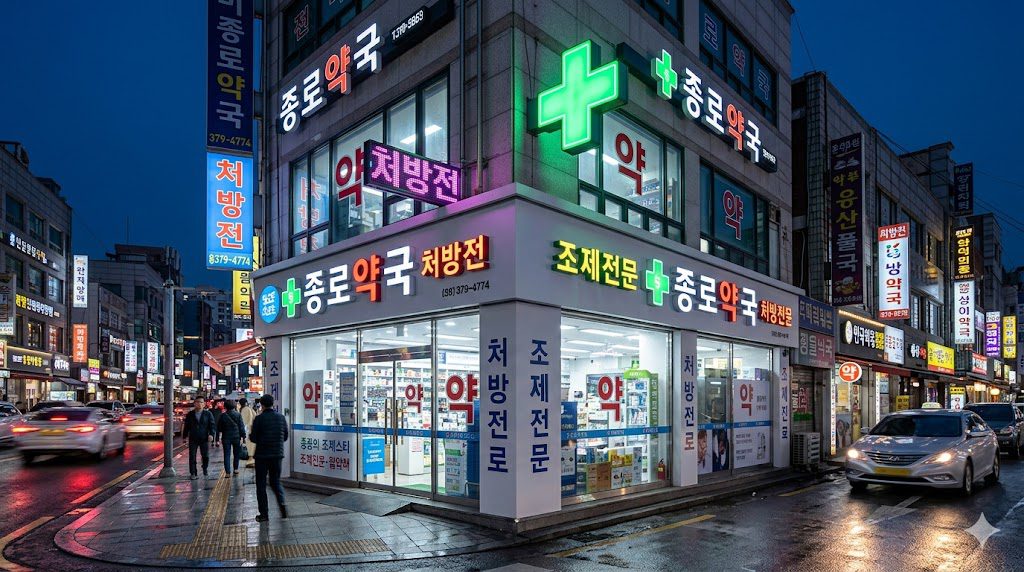
Hopefully you won’t need these, but keep them saved on your phone just in case.
| Korean | Pronunciation | Meaning |
|---|---|---|
| 도와주세요! | do-wa-ju-se-yo! | Help me, please! |
| 경찰을 불러주세요 | gyeong-chal-eul bul-leo-ju-se-yo | Please call the police |
| 병원이 어디예요? | byeong-won-i eo-di-ye-yo? | Where is the hospital? |
| 약국이 어디예요? | yak-guk-i eo-di-ye-yo? | Where is the pharmacy? |
| 아파요 | a-pa-yo | I’m sick / It hurts |
| 배가 아파요 | bae-ga a-pa-yo | My stomach hurts |
| 머리가 아파요 | meo-ri-ga a-pa-yo | I have a headache |
| 알레르기가 있어요 | al-le-reu-gi-ga i-sseo-yo | I have an allergy |
Emergency numbers in Korea:
- 112 — Police
- 119 — Fire / Ambulance
- 1330 — Korea Travel Hotline (English, Chinese, Japanese available 24/7)
The 1330 hotline is incredibly useful. They can help with translation, directions, tourist complaints, and medical emergencies — all in English. Save this number before your trip.
Useful Everyday Phrases
These don’t fit neatly into one category but you’ll use them constantly.
| Korean | Pronunciation | Meaning |
|---|---|---|
| 한국어 못해요 | han-guk-eo mot-hae-yo | I can’t speak Korean |
| 영어 할 수 있어요? | yeong-eo hal su i-sseo-yo? | Can you speak English? |
| 이거 뭐예요? | i-geo mwo-ye-yo? | What is this? |
| 사진 찍어주세요 | sa-jin jji-geo-ju-se-yo | Please take my photo |
| 와이파이 비밀번호가 뭐예요? | wa-i-pa-i bi-mil-beon-ho-ga mwo-ye-yo? | What’s the Wi-Fi password? |
| 천천히 말해주세요 | cheon-cheon-hi mal-hae-ju-se-yo | Please speak slowly |
| 다시 한번 말해주세요 | da-si han-beon mal-hae-ju-se-yo | Please say it again |
| 잠시만요 | jam-si-man-yo | Just a moment |
“이거 주세요” and “이거 뭐예요?” — These two phrases alone will carry you through 80% of daily interactions in Korea. Point at something and ask what it is, or point and ask for it. Simple, effective, and Koreans love it when you try.
Bonus: Phrases That Will Impress Locals
These aren’t essential for survival, but dropping them naturally will make Koreans light up.
| Korean | Pronunciation | Meaning |
|---|---|---|
| 한국 너무 좋아요 | han-guk neo-mu jo-a-yo | I love Korea so much |
| 한국 음식 최고예요 | han-guk eum-sik choe-go-ye-yo | Korean food is the best |
| 또 올게요 | tto ol-ge-yo | I’ll come again |
| 한국어 배우고 있어요 | han-guk-eo bae-u-go i-sseo-yo | I’m learning Korean |
| 대박! | dae-bak! | Amazing! / Wow! (slang) |
Trust me on this: saying “한국 음식 최고예요” to a restaurant owner will get you the biggest smile of your trip. Koreans take enormous pride in their food, and hearing a foreigner say it’s the best genuinely makes their day.
Tips for Using Korean as a Tourist
After watching tourists navigate Korea for decades, here’s what actually works:
- Screenshot this page. Seriously. Save the tables to your phone’s photos so you can pull them up without internet.
- Start with 5 phrases. Don’t try to memorize everything. Master 안녕하세요, 감사합니다, 이거 주세요, 이거 얼마예요, and 화장실이 어디예요 — these alone cover most situations.
- Learn to read Hangul. Even if you can’t understand the words, being able to sound them out helps enormously — especially for reading subway station names and restaurant menus. It takes about 2 hours to learn.
- Use Google Translate’s camera feature. Point your camera at Korean text and it translates in real-time. Not perfect, but good enough for menus and signs.
- Don’t be afraid to butcher pronunciation. Koreans don’t expect foreigners to speak Korean. Any attempt — even a terrible one — is met with genuine warmth and enthusiasm.
- Add “-yo” to sound polite. Most phrases ending in “-yo” are in the polite form, which is appropriate for all situations as a tourist.
For more on Korean customs and social norms, check out my Korean Etiquette Guide. And if you’re planning your trip, don’t miss Best Korean Apps for Tourists — several apps include built-in translation features that pair perfectly with the phrases in this guide.
Learning even a few Korean phrases transforms you from a tourist into a guest. And in Korea, guests are treated like family.